
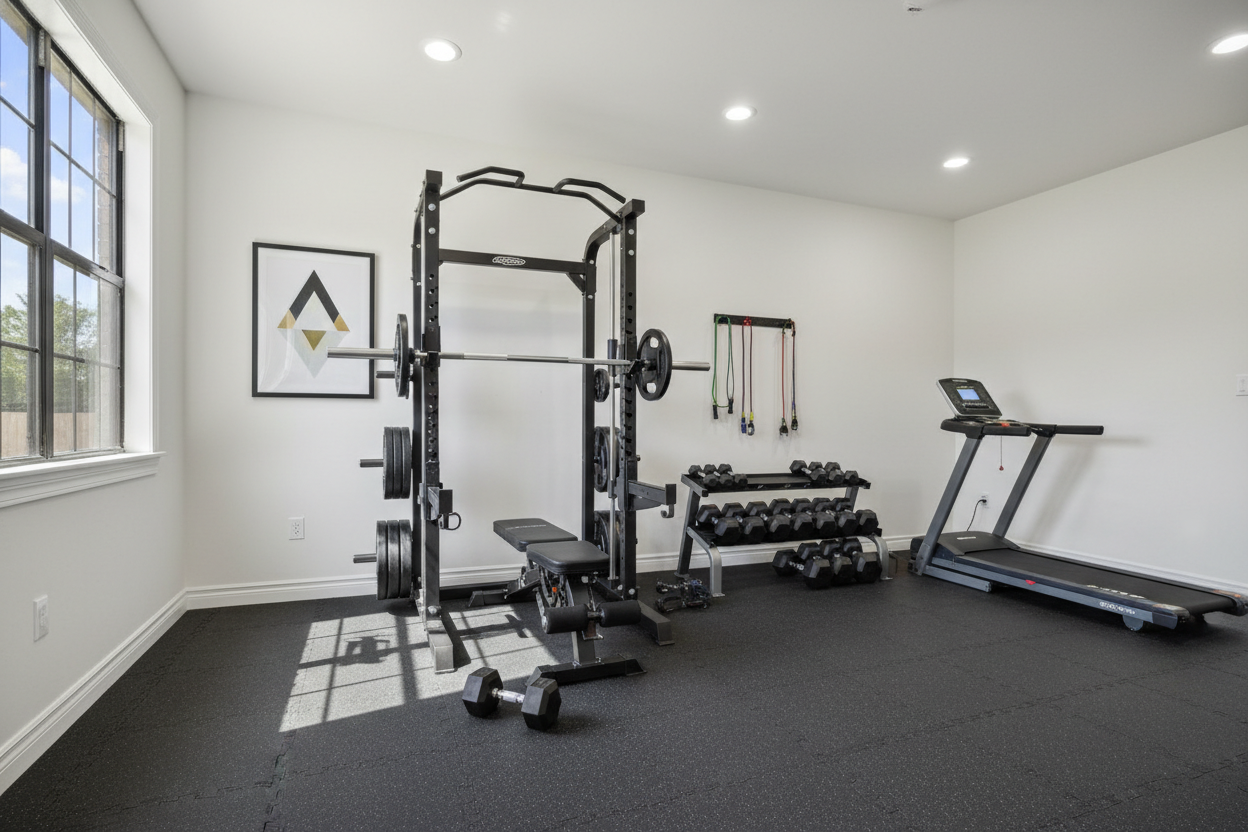
I used to be a total barbell snob. If it wasn't a rusty 45-pound bar and a pile of iron plates, I didn't think it was worth my time. I spent years chasing a bigger chest, but I eventually hit a wall. No matter how much I tweaked my grip or arched my back, my chest growth stalled while my front delts and rotator cuffs did all the screaming. It took a shoulder tweak and a midnight session in my garage to realize that my obsession with 'free weight purity' was actually holding me back. I started looking into the smith machine bench press: muscles worked and realized I was missing out on the most efficient way to actually isolate my pecs.
The reality is that most home gym owners are terrified of the Smith machine because some guy on the internet told them it's 'cheating.' But when you're training alone in a garage at 10 PM, safety and mechanical tension matter more than ego. After six months of swapping my primary press for the fixed-track version, my chest finally started filling out again. I stopped worrying about the bar drifting over my face and started focusing on the deep stretch that only a stable path can provide.
- Primary Target: The Pectoralis Major (specifically the sternocostal head) gets the most direct stimulus.
- Secondary Support: Anterior deltoids and triceps brachii handle the heavy lifting at the start and finish.
- Stabilizer Role: Reduced significantly, which is actually a benefit for pure hypertrophy.
- Safety: Built-in safety catches make it the king of solo training.
Why I Stopped Caring About Free Weight Purity
I remember the day I finally gave in. I was trying to hit a new PR on a standard flat bench, and about halfway through the set, the bar started tilting. My left stabilizer muscles—whatever tiny fibers were left in my rotator cuff—decided they were done for the day. I had to dump the plates, making a noise that probably woke up the entire neighborhood. That's when I asked myself: Will the Bench Press on a Smith Machine Actually Build a Bigger Chest? The answer, I found, was a resounding yes, precisely because it removes that shaky instability.
In a home gym, you don't always have a spotter. You have a rack, some plates, and maybe a dog watching you from the corner. When you remove the need to balance the bar, you can push your muscles to absolute, grinding failure without the fear of a 225-pound guillotine. I found that by switching to the Smith, I could actually feel my chest fibers tearing (the good kind) instead of just feeling my joints complaining. It’s about being a bodybuilder, not just a weight-mover.
The Core Anatomy: Smith Machine Bench Press: Muscles Worked
When we talk about the smith machine bench press: muscles worked, we’re looking at a very specific mechanical advantage. Because the bar moves on a fixed vertical (or slightly angled) track, your body doesn't have to spend energy on the 'z-axis'—that forward and backward wobble that happens with a barbell. This means the force you generate goes directly into the vertical plane. During the concentric phase (the push), your motor units are recruited with one goal: move the weight up. During the eccentric phase (the lowering), you can control the tempo much more effectively than with a free bar.
This lack of lateral movement means you can actually lift more weight or perform more reps with the same weight. You aren't 'weaker' on a Smith machine; you are simply more efficient. The muscle fibers are recruited in a predictable, repeatable pattern, which is the secret sauce for progressive overload. If you can’t replicate the exact path of the bar every time, you can’t truly know if you’re getting stronger or just getting better at balancing.
The Pectoralis Major (Your Main Engine)
The star of the show is the pectoralis major. On a Smith machine, you can position your body so the bar lands exactly where you want it every single time. For most, that’s right across the nipple line. Because you don't have to worry about the bar drifting toward your throat, you can comfortably sink the bar deep into your chest, creating a massive stretch. This stretch-mediated hypertrophy is where the real growth happens. I’ve found that I can get about 10-15% more range of motion on the Smith because I’m not afraid of losing control at the bottom of the rep.
Anterior Deltoids and Triceps (The Supporting Cast)
Your front delts and triceps are still going to work, don't worry. The anterior deltoids take the brunt of the load at the very bottom of the movement. However, because the path is fixed, you can often tuck your elbows more aggressively than you would with a barbell, which can actually take some of the strain off the shoulder joint and put it back on the triceps. The triceps handle the lockout, and since you can safely use a closer grip on the Smith without the bar wobbling, it becomes a phenomenal tool for tricep thickness as well.
The Elephant in the Room: What Happens to the Stabilizers?
Critics love to point out that the Smith machine 'turns off' your stabilizer muscles. They’re right—and that’s exactly why it works. If your goal is to grow a massive chest, your stabilizers are often the weak link. Your chest is much stronger than the tiny muscles in your shoulder that keep the bar level. When those stabilizers fatigue, your set is over, even if your chest still has three reps left in the tank. By removing the stabilizers from the equation, you allow your pecs to be the primary limiting factor. That is the definition of targeted hypertrophy.
The Real-World Benefits of Smith Machine Bench Press
The benefits of smith machine bench press go way beyond just muscle isolation. The biggest one for me is the mental aspect. When I know I can just flick my wrists and lock the bar at any point, I’m willing to go for that 'maybe' rep—the one that actually triggers growth. You also get constant tension. With a barbell, there’s a lot of micro-resting and adjusting. On the rails, it’s a smooth, continuous loop of tension. To get the most out of this, I recommend a solid Multi Function Bench Press Set that allows you to position yourself perfectly under the bar.
Another of the smith machine bench press benefits is the ability to use advanced techniques like rest-pause or drop sets without needing a partner to help you strip plates or save your life. I’ve done drop sets on the Smith that would have been impossible—and dangerous—with a free barbell. It turns your home gym into a high-intensity laboratory where you can experiment with failure safely.
How Adjusting Your Bench Angle Changes the Burn
Don't just stick to the flat bench. The beauty of the fixed path is how it interacts with different bench angles. When you move to an incline, you’re targeting the clavicular head (the upper chest). On a Smith machine, you can find that 'sweet spot' angle—usually around 30 degrees—and stay in it. If your machine has a slight slant to the uprights, you need to be careful about which way you face. I highly recommend reading up on The Angled Smith Machine Bench Press: Stop Guessing Which Way to Face to make sure you aren't fighting the natural arc of your shoulders.
Is It Time to Reprogram Your Chest Day?
If your chest hasn't grown in six months, stop doing the same three sets of ten on the barbell. Integrating the Smith machine doesn't mean you're giving up on 'real' lifting; it means you're getting smarter. I usually start my workout with a heavy Smith press to pre-exhaust the chest before moving into dumbbells. If you want the best of both worlds—the stability of a machine with the freedom of independent movement—you might even look into a Weight Bench Chest Press Machine Independent Arms Z1 Pro which bridges the gap between a fixed track and free weights.
FAQ
Is the Smith machine bench press harder or easier?
It's 'easier' in terms of balance, which makes it 'harder' on the target muscle. You can't use momentum or 'cheat' the bar's path, so your pecs have to do 100% of the work. You’ll likely find you can move more weight, but the burn is much more intense.
Does the Smith machine build as much muscle as a barbell?
For pure hypertrophy (size), many argue it's actually better. By removing the limiting factor of stabilizer fatigue, you can push the primary movers closer to failure, which is the main driver of muscle growth.
Is it safe for your shoulders?
Yes, provided you don't tuck the bench too far back. Because the bar path is straight, you need to make sure your elbows aren't flared at a 90-degree angle, which can pinch the subacromial space. Keep a slight tuck, and your shoulders will actually feel better than they do with a barbell.
Share:
Why You Keep Quitting: How Workout At Home Routines Actually Stick
Is the Best Exercise Machine Actually Built for Your Body?