
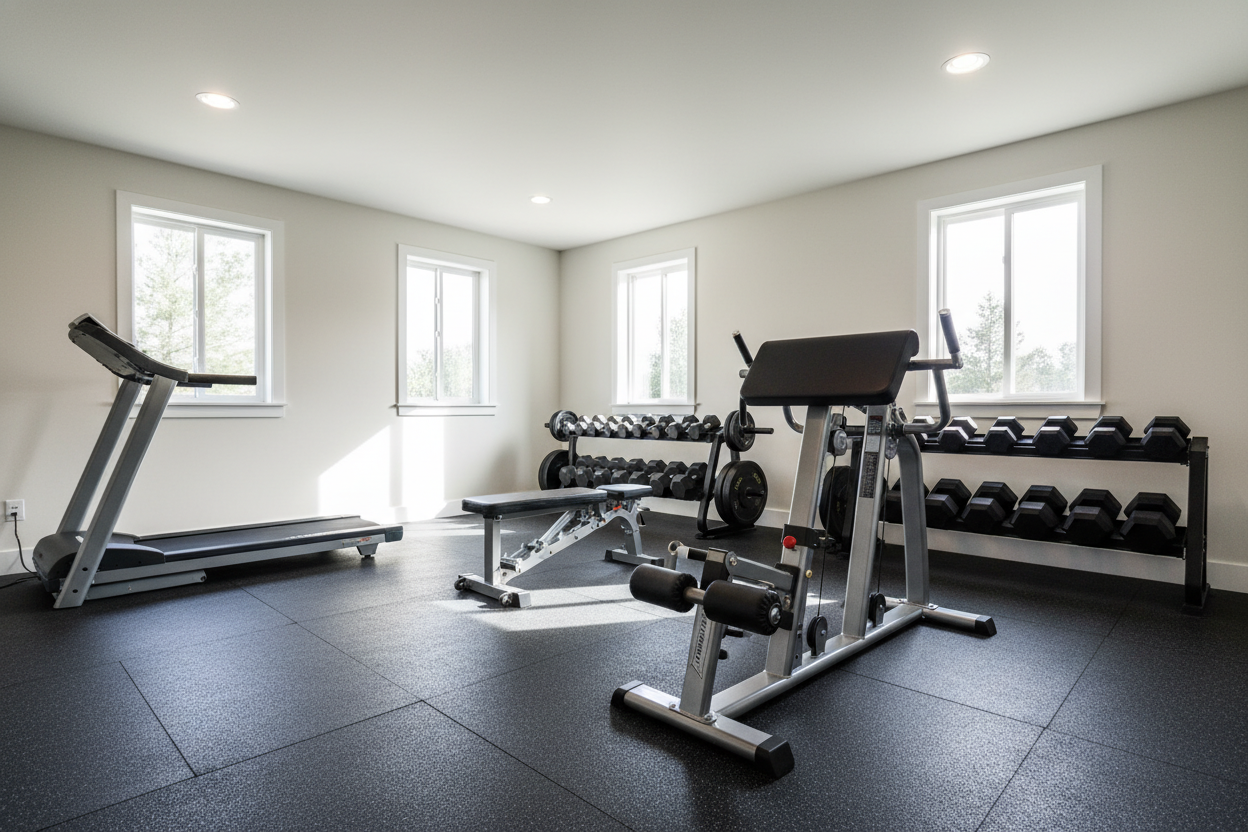
We've all been there. You're trying to ask a guy in a cut-off hoodie if you can jump in on a set, but you have no idea what to call the machine he’s using. You end up pointing awkwardly and saying, 'Hey, are you done with the... back thing?' It’s embarrassing, especially when you’ve been lifting for years and should know better.
Searching for a lower back machine gym name shouldn't feel like a riddle. Most commercial gyms are notorious for having zero labels on their equipment, leaving you to guess based on the faded stickers from 1994. Stop Pointing At Gear Every Back Workout Machine Name Explained is my usual advice for anyone tired of the guessing game. It’s time to learn the lingo so you can stop gesturing like a mime and start training with intent.
- Most common: The 45-Degree Back Extension.
- Old school: The Roman Chair (90-degree).
- Beginner friendly: The Selectorized Seated Back Extension.
- Home hack: Using a barbell or a rack.
The Frustration of Describing Gym Equipment
Commercial gyms are a maze of steel and cables, and for some reason, the manufacturers love to keep the names a secret. I’ve heard people call the lower back station the 'back-breaker,' the 'reverse sit-up thing,' and my personal favorite, 'the bendy bench.' It makes it impossible to follow a program when your coach writes 'hyperextensions' and you’re looking for a machine that says exactly that.
The truth is, several different pieces of gear target the spinal erectors, but they all have very specific names. Knowing the correct lower back machine gym name doesn't just save you from social awkwardness; it helps you understand the mechanics of the movement you're actually performing. If you can't name the tool, you probably aren't using it to its full potential.
So, What Is the Actual Machine Called?
When you're looking for a lower back machine name, you're usually looking for one of three things. These aren't interchangeable, though they all hit the posterior chain. The mechanics change depending on the angle of your torso and where the resistance is coming from. Some bias the glutes, while others are pure spinal erector isolation.
The 45-Degree Back Extension
This is the one you’ll see in 90% of commercial gyms. Your feet are anchored at an angle, and your hips rest against a pad. Because you're at a 45-degree incline, there’s a constant tension on the hamstrings and glutes throughout the move. It’s great for high-volume work because the gravity curve is relatively forgiving at the top. Look for one with a wide, diamond-plate foot platform so you can adjust your stance to hit different parts of your posterior chain.
The Roman Chair (90-Degree Hyperextension)
The Roman Chair is the meaner, older brother. Here, your legs are parallel to the floor. When you hinge down, your head is literally pointing at the ground. This creates a massive stretch in the hamstrings and puts a huge demand on the lower back to pull you back to a horizontal position. It's intense, and if you have a history of disc issues, you need to be very careful with your range of motion here. I prefer these for weighted work because the horizontal starting position makes it easier to hold a plate without it sliding into your chin.
The Selectorized Seated Back Extension
This is the pin-loaded version. You sit in a chair, set the weight, and push a padded roller backward with your upper back. It’s perfect for isolating the erectors without involving the legs. I often suggest this for people who have fried their hamstrings on leg day but still need to get their spinal work in. It’s also much easier to track progress since you can just look at the weight stack instead of guessing how much a 'bodyweight' rep counts for.
How to Hack the Movement Without the Dedicated Machine
If you’re training in a garage, floor space is more valuable than gold. Buying a dedicated back extension unit is a tough sell when it only does one thing. I’ve spent years figuring out how to get that same pump without the footprint of a Roman Chair. One of the easiest ways is to use a Smith Machine Home Gym Station as an anchor. You can set the bar low, pad it with a squat sponge, and hook your heels under it while lying on a flat bench.
If you're finding that Lower Back Pain On Rdls Try This Smith Machine Hamstring Fix is a recurring theme in your training, swapping to a DIY back extension can be a lifesaver. You can also do 'Good Mornings' with a barbell, which hit the exact same muscles, though the stability isn't as high. Another pro tip: if you have a power rack, set the spotter arms low and use a barbell to create a makeshift anchor for your feet while you hinge off the end of a bench.
Is It Worth Buying One for Your Garage?
Honestly? Unless you have a massive warehouse, probably not. Most dedicated back extension machines are 'floor hogs.' They take up a 4x3 foot area and you only use them for maybe six sets a week. I’d rather see you put that money toward something that serves multiple purposes. For the price of a high-end Roman Chair, you could be looking at a Compact 30 Degree Leg Press Hack Squat Combo Machine Lm L5 which covers your entire lower body in one footprint.
I once bought a standalone hyperextension bench because I thought I needed it for 'optimal' accessory work. It ended up becoming a very expensive rack for my gym towels. If you’re tight on space, stick to RDLs, Good Mornings, or the Smith machine hack I mentioned earlier. Only buy the dedicated unit if you are a competitive powerlifter who needs that specific isolation twice a week.
Personal Experience: The 'Snap' That Taught Me Respect
A few years back, I was ego-lifting on a 45-degree extension, holding a 45-lb plate against my chest. I went for a 'maximal' range of motion, dipping way too low and then snapping back up like a spring. I felt a pop that kept me out of the rack for three weeks. The machine isn't the problem; it's the lack of control. Now, I focus on a slow, 3-second eccentric and a hard squeeze at the top. You don't need a 100-lb dumbbell to get results; you just need to stop treating it like a momentum exercise.
FAQ
What is the difference between a back extension and a hyperextension?
Technically, a back extension stops when your spine is neutral (straight). A hyperextension goes past neutral into an arch. For most people, sticking to the neutral 'extension' is safer and just as effective for muscle growth. Arching too far back just pinches the vertebrae without adding much muscle stimulus.
Can I do these on the floor?
You can do 'Supermans' where you lie on your stomach and lift your chest and legs, but the range of motion is tiny compared to a machine. It’s better than nothing, but it won't build the same thickness in the erectors as a Roman Chair will.
How often should I train my lower back?
Twice a week is usually plenty. Your lower back is already working hard to stabilize you during squats and deadlifts, so treat these as accessory movements at the end of your workout rather than the main event.
Share:
I Loved Free Weights. Now I Exercise With Machine Rigs Daily.
I Tested 50 Gadgets: Here Are My Actual Home Workout Essentials