
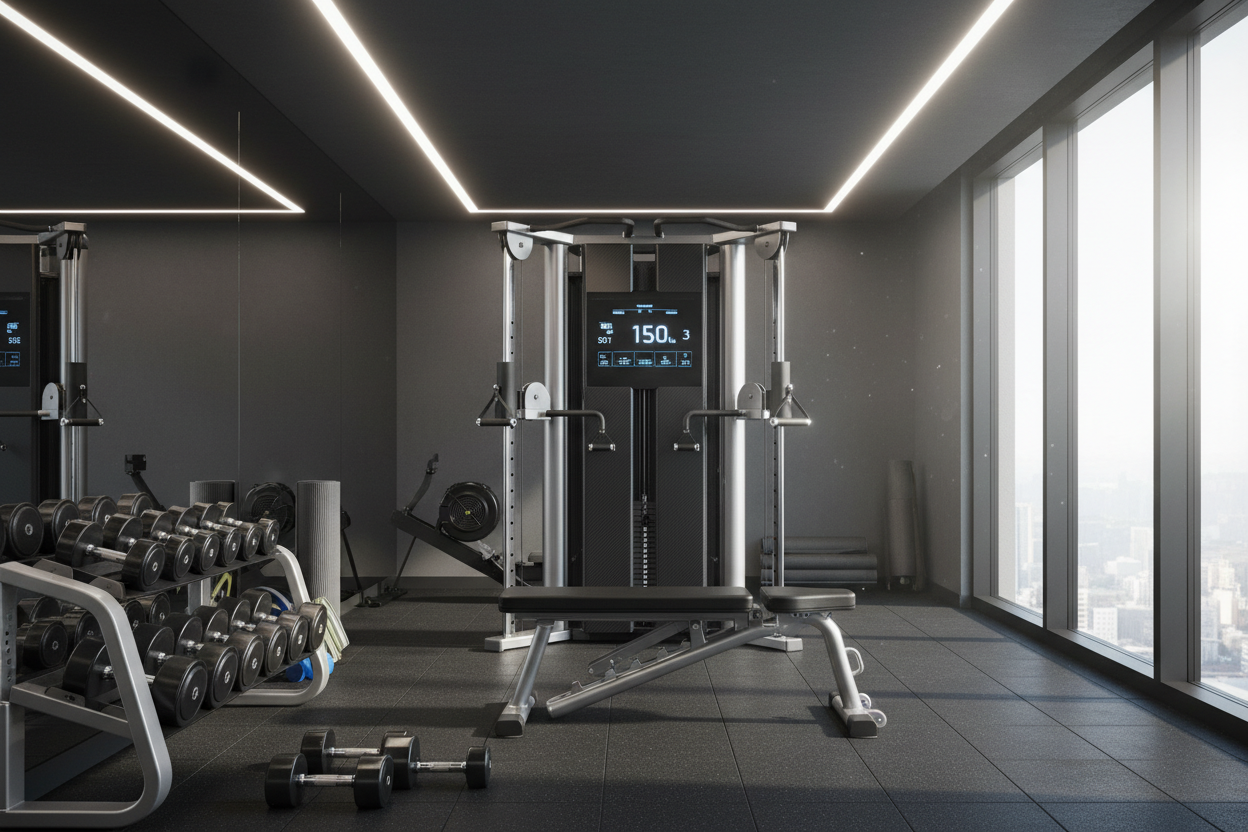
I have spent the last decade tripping over 45-pound iron plates and scrubbing rust off barbell knurling with a wire brush. My garage is a shrine to old-school lifting gear. But when I first stood in front of a digital weights machine, I felt like a caveman staring at a Tesla. It is weird, it is silent, and it is surprisingly humbling.
We are used to gravity being the primary source of resistance. You pick a thing up, gravity pulls it down. But the new wave of home gym tech is ditching the iron for software. After loading, dropping, and sweating on these systems, I have realized that 'digital weight' is not just a marketing gimmick—it is a completely different physical experience that will probably make you feel weaker than you actually are.
- No Inertia: You cannot 'cheat' the weight by using momentum; the tension is constant from start to finish.
- Eccentric Overload: These machines can actually pull back harder on the way down than you pushed on the way up.
- Space Efficiency: You get 200+ lbs of resistance in a footprint smaller than a yoga mat.
- The Subscription Trap: Most of these systems require a monthly fee to keep the 'smart' features active.
Wait, How Do Digital Weights Work Anyway?
At the heart of every digital weight system is an electric motor and a magnetic field. Instead of stacks of iron plates, these machines use electromagnetic weights. When you pull the cable, the motor generates resistance by fighting against you. The computer inside the machine adjusts that magnetic field hundreds of times per second to ensure the resistance stays exactly where you set it.
This is how a digital exercise machine can simulate the feel of a 100-pound dumbbell without actually weighing 100 pounds. Because it is controlled by software, the machine can change the weight instantly. You can go from a heavy set of five to a burnout set of twenty with a tap on a screen. There is no clanging of plates or fumbling with pins—just a faint hum of the motor.
Digital Weight vs Free Weight: The Eccentric Trap
If you have spent your life training with barbells, the first thing you will notice is the lack of momentum. In a traditional lift, you can use a little 'body English' to get the weight moving. Once it is in motion, inertia helps you through the sticking point. On a digital weight lifting system, there is no inertia. If you stop moving, the tension stays exactly the same. It is relentless.
The real 'gotcha' is the eccentric portion of the lift. Many of these systems offer a mode that increases the weight on the way down. You might press 100 pounds up, but the machine forces you to resist 130 pounds on the way back to your chest. It is a brutal way to train that leads to massive soreness. You have to ask yourself: can a digital weight machine actually replace heavy iron? For pure hypertrophy and convenience, the answer is often yes, but you lose that specific 'skill' of balancing a live barbell.
The Brutal Reality of a Digital Squat Machine
Squatting on an automatic workout machine is a reality check. When you squat with a barbell, there is a brief moment of 'rest' at the top where your joints are locked out and the skeletal system takes the load. A digital squat machine often keeps the tension 'on' even at the top of the movement. Your quads never get a break.
It feels very similar to the guided, stable path of a machine, and you can definitely see some Smith machine squat benefits here, such as increased stability and the ability to push to absolute failure without needing a human spotter. However, the 'digital' feel is even smoother—there is no friction from guide rods, just a pure, magnetic pull toward the floor.
The Hidden Costs of Building a Digital Weight Gym
Now for the reality check. Building a digital weight gym is expensive, and I am not just talking about the $3,000 entry price. Most of these 'new weight machine' setups are essentially paperweights without a high-speed Wi-Fi connection and a monthly subscription. If the company goes bust or your internet goes down, you might be left with a very expensive wall decoration.
Contrast that with a heavy-duty, analog chest press machine independent arms setup. That piece of equipment will work in a power outage, it does not need a software update, and it will still be functional 30 years from now. With electromagnetic gym equipment, you are buying into an ecosystem, not just a piece of steel. You have to decide if the data tracking and space savings are worth the 'planned obsolescence' risk.
You Still Can't Escape the Need for Analog Gear
Even if you go full 'cyber-athlete' with an electromagnetic weight machine, you still need the basics. The cables might be digital, but your body still needs to be braced against something solid. You cannot do a heavy seated row or a bench press if you are sliding across the floor.
I have seen people try to use these machines with cheap, flimsy furniture, and it is a recipe for a trip to the ER. You still need a sturdy weight bench that can handle your body weight plus the max output of the machine. Whether the weight comes from a magnetic coil or a block of lead, the physics of bracing and spinal neutral remains the same.
Personal Experience: The Day the Wi-Fi Died
I was halfway through a heavy deadlift session on a Tonal when my router decided to reboot. The machine immediately locked up. No resistance, no screen, just me standing there holding a limp bar. It was a stark reminder that while digital weights are incredibly efficient, they are also fragile. On the flip side, the data I got from that session showed me that my left side was pulling 12% harder than my right—something I never would have noticed with my old rusty plates. It is a trade-off I am still weighing every time I walk into the garage.
FAQ
Do digital weights feel 'lighter' than real weights?
Actually, they usually feel heavier. Because there is zero momentum and constant tension, a 50-lb setting on a digital machine feels more like 60 or 65 lbs of free weights.
Are digital weight machines noisy?
They are much quieter than a rack of iron. You will hear a whirring motor sound, but you won't wake up the neighbors with the sound of plates crashing together.
Can you use digital weights without a subscription?
Most brands allow a 'basic' mode without a subscription, but you lose the tracking, the eccentric modes, and the AI coaching that makes the machine worth buying in the first place.
Share:
Why My Aging Shoulders Demanded the Best Leverage Home Gym
I Maxed Out a Cheap Leg Press Machine (Here Is What Broke)