
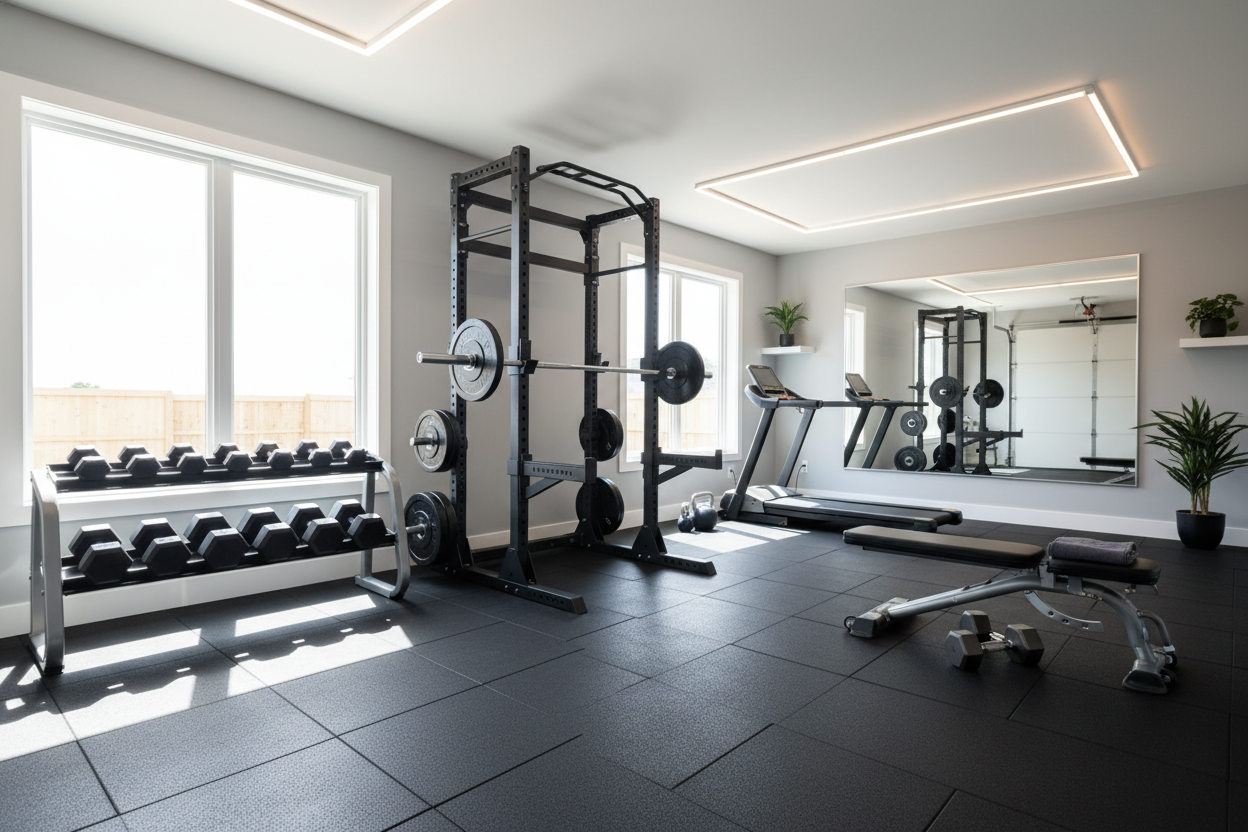
I was scrolling through social media last night, looking at home exercise room pictures, and I felt a physical twitch in my eye. You know the ones: sun-drenched lofts with pristine white oak floors, a single 10-lb kettlebell sitting on a marble pedestal, and maybe a succulent for 'vibes.' It looks like a spa, not a place where you are going to grind out a set of heavy squats until your legs shake.
If you are building a space to actually train, those viral home gym images are lying to you. They are staged by interior designers who have never cleaned chalk off a barbell or felt the floor vibrate after a heavy deadlift. If you copy them, you are going to end up with shattered flooring and a room that feels more like a closet than a powerhouse.
Quick Takeaways
- Hardwood and weights do not mix; you need 3/4-inch rubber flooring.
- Floating shelves are for books, not 50-lb dumbbells.
- Real training requires a footprint for a 7-foot barbell, which most 'aesthetic' photos ignore.
- Good lighting and mirrors can make a rugged, functional space look professional without sacrificing utility.
The Trap of the 'Aesthetic' Workout Space
The social media algorithm loves a clean line. It loves white walls, minimalist decor, and spaces that look like they have never seen a drop of sweat. Because of this, the most popular home gym photo results often feature gear that is essentially furniture. You see tiny chrome dumbbells and thin yoga mats that look great against a pastel wall but offer zero utility for anyone trying to build real strength.
When you build a gym based on a home gym pic you saw online, you are often prioritizing form over function. I have seen guys spend $5,000 on a 'smart' mirror and designer flooring only to realize they have no room to actually move. A functional gym is messy. It has racks, cable towers, and piles of plates. It requires durability that a designer showroom just cannot provide. If your gym looks like a guest bedroom, you probably aren't lifting heavy enough.
The reality is that a real gym is a workshop. You wouldn't expect a woodshop to look like a boutique hotel, so why do we expect our iron-pumping spaces to be so sterile? The best home gym pictures should show utility: organized weight pegs, bolted-down racks, and floors that can take a beating. That is the true aesthetic of a lifter.
Three Glaring Red Flags in Popular Gym Photos
If you look closely at those viral images of home gym setups, you will start to see the cracks—literally. Most of these rooms are structural nightmares waiting to happen. Here are the three most common mistakes people make when they prioritize 'the look' over the physics of weightlifting.
The Hardwood Floor Illusion
Nothing looks better than dark walnut floors, but the first time you drop a 45-lb plate, that wood is going to splinter into a thousand pieces. Even if you aren't dropping weights, the constant pressure of a heavy power rack will leave permanent indentations in your floor. If you are investing in serious home gym equipment, you need a foundation that can actually support it.
I have seen people try to get away with those cheap foam puzzle mats from the grocery store. Don't do it. They compress, they slide, and they offer zero protection for your subfloor. You need 3/4-inch recycled rubber—the kind of stuff they use in commercial crossfit boxes. It smells a bit like a tire shop for a week, but it is the only thing that will save your foundation from a cracked slab or ruined joists.
The Floating Shelf Disaster
I recently saw a home gym image where the owner had mounted their entire set of adjustable dumbbells on a floating wooden shelf. It looked beautiful. It was also a death trap. Most floating shelves are held up by small brackets and drywall anchors. Drywall is not meant to hold 100+ lbs of static weight, let alone the dynamic force of someone grabbing a weight quickly.
If you want to store gear on the walls, you have to hit the studs. Period. Use heavy-duty steel pegs or stringer boards. If it isn't bolted into the skeletal structure of your house, it doesn't belong on the wall. Watching your accent wall tear open because you wanted a 'clean' look is a fast way to ruin your motivation.
Where is the Heavy Metal?
Notice how most photos of home gyms feature a single yoga mat and maybe a resistance band? That is because real equipment is big, heavy, and hard to photograph. Most 'aesthetic' rooms completely ignore the footprint required for a power rack or a barbell. A standard Olympic bar is 7 feet long. If you don't have at least 9 or 10 feet of horizontal clearance, you are going to be punching holes in your drywall every time you try to load a plate.
You rarely see heavy-duty smith machine stations in these viral photos because they are massive steel structures that dominate a room. But if you actually want to train safely and effectively, that is exactly what you need. A gym without a rack is just a stretching room. Don't let a minimalist photo convince you that you don't need the steel.
How to Actually Make a Heavy-Duty Space Look Good
You don't have to choose between a dungeon and a designer showroom. You can make a rugged, heavy-lifting space look incredible with a few smart choices. First, ditch the overhead 'boob' lights. Use LED strip lighting or high-output 5000K shop lights to create a bright, energetic environment. It makes the steel look better and helps you stay focused during early morning sessions.
Organization is the key to a good-looking gym. Instead of leaning your bars in a corner, get a vertical bar holder. Use wall-mounted weight pegs to get your plates off the floor. This clears up floor space, making the room feel larger, and shows off the gear you've invested in. A wall of black iron plates looks just as good as any piece of art if it is organized correctly.
Finally, use mirrors. Not just for checking your form on squats, but to open up the space. A full-wall mirror reflects light and makes a 10x10 spare bedroom feel like a professional facility. Just make sure they are mounted securely and aren't in the direct 'drop zone' of your deadlift platform.
What You Should Actually Buy First
Stop buying neon signs and 'hustle' posters. Your budget should go toward the things that keep you safe and help you progress. Before you worry about the decor in your home gym pic, you need to secure your big three: a solid rack, a high-quality barbell, and enough weight to actually challenge yourself.
I always tell people to check out the gear you need for a beginner home gym before they start worrying about paint colors. A cheap bench will wobble when you're pressing 200 lbs, and a cheap bar will lose its knurling in six months. Buy the heavy stuff once, buy it right, and then worry about how it looks on Instagram later.
Personal Experience: The Foam Tile Mistake
Early in my lifting days, I tried to make my gym look 'clean' by using those grey interlocking foam tiles. I thought they looked professional. Then I tried to do a heavy set of lunges. The tiles slid right out from under me because they had no grip on the subfloor. I ended up with a strained groin and a very expensive lesson. I ripped them all out the next day and replaced them with horse stall mats. They weren't as 'pretty,' but I never slipped again. Function always beats fashion in the weight room.
FAQ
What is the best flooring for a home gym?
3/4-inch rubber stall mats are the industry standard. They are durable, absorb impact, and protect your subfloor better than any 'aesthetic' wood or foam option.
How much space do I really need for a home gym?
At minimum, you need an 8x8 foot area for a rack and barbell movements. If you want to include cardio or a cable machine, aim for 10x12 or larger.
Can I put a home gym on a second floor?
Yes, but you need to be mindful of weight distribution and noise. Avoid dropping heavy deadlifts on a second floor unless you've reinforced the joists or are using massive crash pads.
Share:
I Found the Best Adjustable Weight Bench for Tall Person Home Gyms
Why a Combo Unit Is Actually the Best Home Leg Machine You Can Buy