
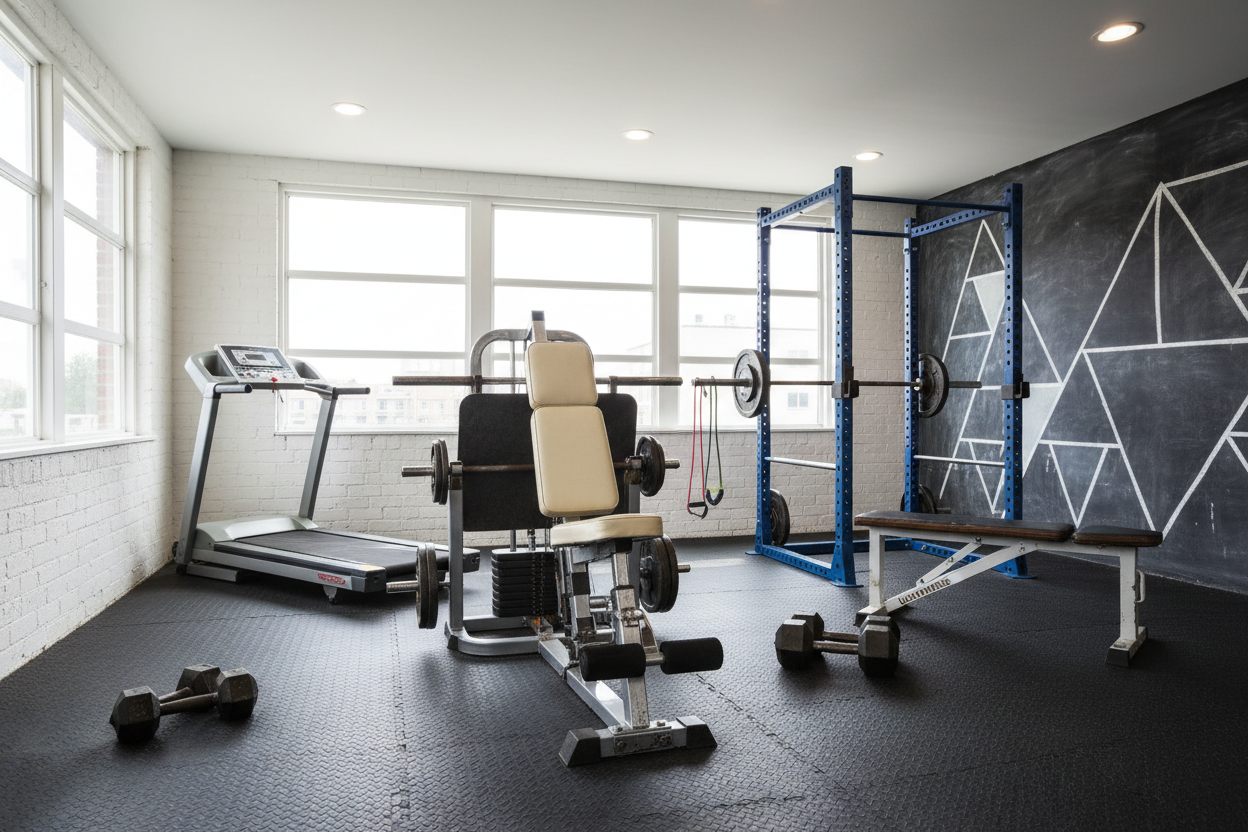
I still remember the smell of the first weight room I ever stepped into. It was a basement YMCA, humid as a swamp, and dominated by a massive chrome multi-station rig. It looked indestructible. When you see universal brand gym equipment pop up on Facebook Marketplace for a couple hundred bucks, that same nostalgia hits hard. You start thinking about how cool it would look in your garage.
But before you rent a U-Haul and recruit three friends to move 800 pounds of vintage iron, let's get real. I've spent years testing gear that ranges from $5,000 power racks to $50 Amazon specials. I know the difference between 'built to last' and 'obsolete junk.' Most of these old rigs fall into the latter category for anyone serious about modern training.
- Durability: High. These things are basically chunks of solid steel that will outlive us all.
- Footprint: Massive. They are the ultimate space-killers in a home gym.
- Biomechanics: Dated. Expect clunky arcs and limited adjustability.
- Maintenance: High. Finding replacement pulleys or specific cables for a 40-year-old machine is a nightmare.
The Irresistible Pull of Old-School Iron
There is something undeniably cool about the legacy of these multi-station rigs. In the 70s and 80s, Universal was the gold standard. They weren't just machines; they were the centerpiece of every high school weight room in America. The steel is thick, the chrome is usually heavy-duty, and the weight stacks don't have the 'plastic-y' feel of modern budget gear.
I get the appeal. You see that vintage logo and you think about the legends who trained on this stuff. But nostalgia doesn't build muscle—tension and proper range of motion do. While these machines were revolutionary 40 years ago, our understanding of biomechanics has moved on. Buying one now is like buying a vintage car: it looks great, but it is going to be a pain to drive every day.
Does a Universal Leg Machine Actually Hold Up Today?
The lower body stations are usually where these old rigs fail the hardest. A vintage universal leg machine typically uses a fixed pivot point that doesn't account for the varying lengths of a human femur. I’ve spent time on these, and the 'kick' at the top of a leg extension feels more like it is trying to shear my kneecap off than load my quads.
Modern engineering has solved this. If you are serious about leg day, a dedicated leg extension hamstring curl machine offers adjustable seat depths and cam systems that keep the resistance consistent throughout the entire movement. On the old Universal rigs, the weight often 'drops off' at the top or bottom, leaving your muscles under-stimulated. It is a lot of metal for very little actual isolation.
The Reality of the Universal Fitness Treadmill
If you find a universal fitness treadmill in the wild, my advice is usually to keep walking. These were often produced during the brand's later years or licensed out, and they rarely share the 'tank-like' build quality of the old weight stations. The motors in these aging units are often tired, and the shock absorption technology is non-existent. Running on one feels like running on a piece of plywood over a conveyor belt.
Parts are the biggest hurdle. If the control board fries or the belt tears, you are looking at a very expensive clothes hanger. I’ve seen guys try to 'restore' these, and they end up spending more on custom-cut belts than the machine is worth. Unless it is free and you just need something to walk on while watching the news, skip it.
The Brutal Math of Square Footage
This is where I get really opinionated. Your garage gym has a finite amount of 'real estate.' A classic Universal multi-station can easily eat up a 10x10 foot area once you account for the clearance needed to use every side. That is 100 square feet dedicated to fixed-path movements. That is insane.
For that same footprint, you could fit a full power rack, a bench, and a compact 30 degree leg press hack squat combo. You get more versatility and better movements. If you really love the 'all-in-one' feel, a modern Smith machine home gym station provides a Smith bar, a functional trainer cable system, and a pull-up station in a fraction of the space. It is about being a tactical athlete with your floor plan.
The Verdict: Leave It in the 80s or Haul It Home?
I once spent a whole weekend helping a buddy move a 6-station Universal rig into his basement. We had to take doors off hinges and use a floor jack. Three months later, he sold it because he realized he only used the lat pulldown. Don't be that guy. Most of us are better off with modular, modern equipment that evolves with our training.
Is a universal gym weight machine actually worth the space for the average lifter? No. Unless you are a collector or you have a 2,000-square-foot warehouse to fill, it is a nostalgia trap. Spend your money on a solid rack and some high-quality plates instead.
FAQ
Are old Universal machines better than new ones?
In terms of raw steel thickness, yes. In terms of ergonomics and muscle isolation, absolutely not. Modern pivot points and cable ratios are far superior for actual hypertrophy.
Can I still find replacement parts for Universal equipment?
It is tough. You will mostly be sourcing generic pulleys and having cables custom-made at a local wire rope shop. It is a DIY project, not a 'plug and play' situation.
Should I buy a Universal rig if it is under $200?
Only if you have the space to waste. Even at $200, the 'cost' is the massive amount of floor space it steals from better equipment like a squat rack or a functional trainer.
Share:
The Clunky, Heavy Reality of Lifting With a Titan Dumbbell
I Bought the Best At Home Workout Equipment Reddit Swears By