
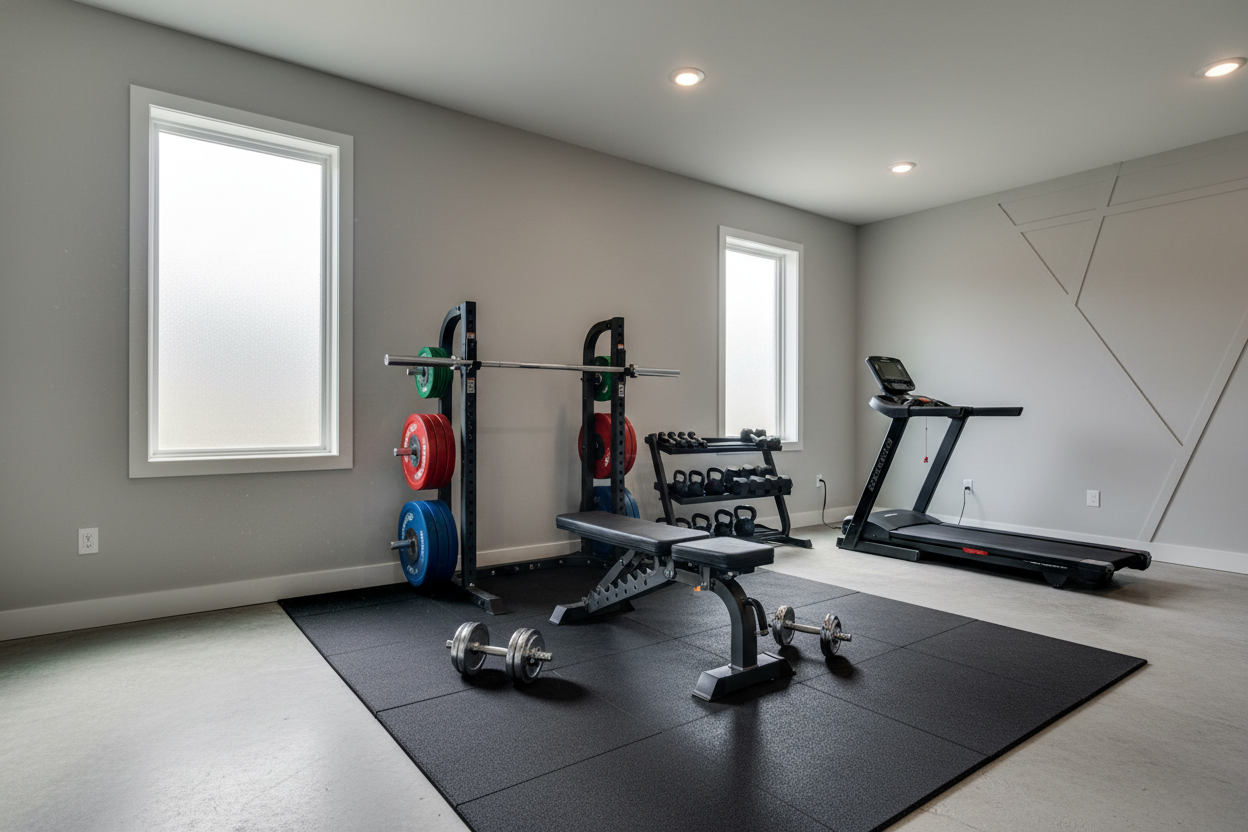
You know that feeling when you lay back for a heavy set of chest presses at the local powerhouse and the bench doesn't even flinch? It is like being anchored to the floor. Then you go home to your garage setup, and the thing creaks like a screen door in a hurricane. benches for gym settings are built differently because they have to survive 18 hours a day of abuse from 250-pound guys who do not respect the equipment.
Quick Takeaways
- Commercial gear uses 11-gauge steel; home gear often uses flimsy 14-gauge.
- A wide tripod base prevents the 'teeter-totter' effect during heavy dumbbell work.
- High-density foam (the kind that doesn't bottom out) is the difference between shoulder stability and injury.
- Ladder-style adjustments are faster and more secure than cheap pop-pins.
The Commercial Illusion: Why That Bench Feels Like a Tank
The secret to a rock-solid bench in gym environments is mass and materials. Most commercial units are welded from 3-inch by 3-inch, 11-gauge steel. When you sit down, you are supported by a frame that weighs nearly 100 pounds on its own. It does not matter if you are doing 100-pound rows or just sitting there catching your breath; the center of gravity is so low and the footprint so wide that it refuses to budge.
Then there is the upholstery. Commercial fitness benches use high-density, rebond foam. It feels stiff at first, but that is the point. When you have 315 pounds over your face, you do not want your shoulder blades sinking through the padding and hitting the plywood base. That stability allows you to drive your feet into the floor without the bench shifting an inch to the left.
Where Budget Brands Cut Corners on Home Gear
If you spent less than $150 on your bench, you are likely working with thin-walled steel and a narrow frame. Budget brands love to use a 'T-frame' design at the back, but they make the base so narrow that the unit feels so unstable the second you move off-center. It is a safety hazard disguised as a bargain.
Vinyl is another area where they skimp. Cheap benches exercise equipment usually comes with 'slick' vinyl. You start sweating, and suddenly you are sliding up the bench during your leg drive like you are on a slip-and-slide. A real commercial bench has a 'grippy' texture that locks you in place, ensuring your form stays tight even during the final, grinding reps of a set.
Finding a Fitness Adjustable Bench That Bridges the Gap
You do not need to spend $900 on a Life Fitness unit to get that 'bolted to the floor' feel. Look for a fitness adjustable bench that utilizes a ladder-style adjustment system rather than a pull-pin. Ladders are virtually fail-proof because gravity holds the adjustment arm in place. No more worrying if the pin actually clicked into the hole before you lay back with heavy weights.
A solid adjustable weight bench will also feature a tripod front-leg design. This is a pro-move because it gives your feet a place to go. Standard four-legged benches always seem to have a piece of steel exactly where you want to plant your heels for a bench press. Also, stop obsessing over spec sheets that claim a 1,500-lb capacity. If the bench weighs 40 pounds, that rating is a fantasy. Look for a bench weight of at least 70 pounds for real stability.
Do You Actually Need to Buy Used Commercial Gear?
Scouring Facebook Marketplace for benches gym owners are selling during a renovation can be a goldmine, but it comes with risks. Commercial foam is great, but it is also a sponge for a decade of other people's sweat. If the vinyl is cracked, you are looking at a biohazard that is expensive to reupholster.
Unless you find a steal on a name-brand unit like Rogue or Hammer Strength, you are usually better off buying a high-end consumer model. You get the 11-gauge steel and the grippy pad without the 'old gym' smell. It is time to upgrade your seating situation if your current pad has a permanent indent from your spine or if you find yourself holding your breath hoping the hinges hold up.
Personal Experience: The 'Amazon Special' Disaster
I once bought a folding bench because I wanted to save space in my one-bedroom apartment. Big mistake. The first time I tried to do step-ups on it, the locking mechanism sheared, and I ended up on the floor with a 50-pound dumbbell narrowly missing my toes. I realized then that my safety is worth more than the $80 I saved. Now, I won't touch a bench that weighs less than 65 pounds. If I can pick it up with one finger, I don't trust it with my life.
FAQ
What is the standard height for a gym bench?
The gold standard is 17 to 17.5 inches. This allows most lifters to get proper leg drive with their feet flat on the floor. Anything higher than 18 inches starts to feel like a throne and ruins your leverage.
Is a flat bench better than an adjustable one?
Flat benches are always more stable because they have no moving parts. If you only care about powerlifting, get a flat bench. If you want variety for incline and seated work, a high-quality adjustable is worth the extra cost.
How wide should the back pad be?
Look for 12 inches. A 10-inch pad is too narrow for most adults and leaves your shoulders hanging off the edge, while a 14-inch pad can interfere with your range of motion on the way down.
Share:
Don't Get Pinned: How to Use Smith Machine Safety Stops
I Tested a Used SA Gear Dumbbell to See If Cheap Iron Still Holds Up