
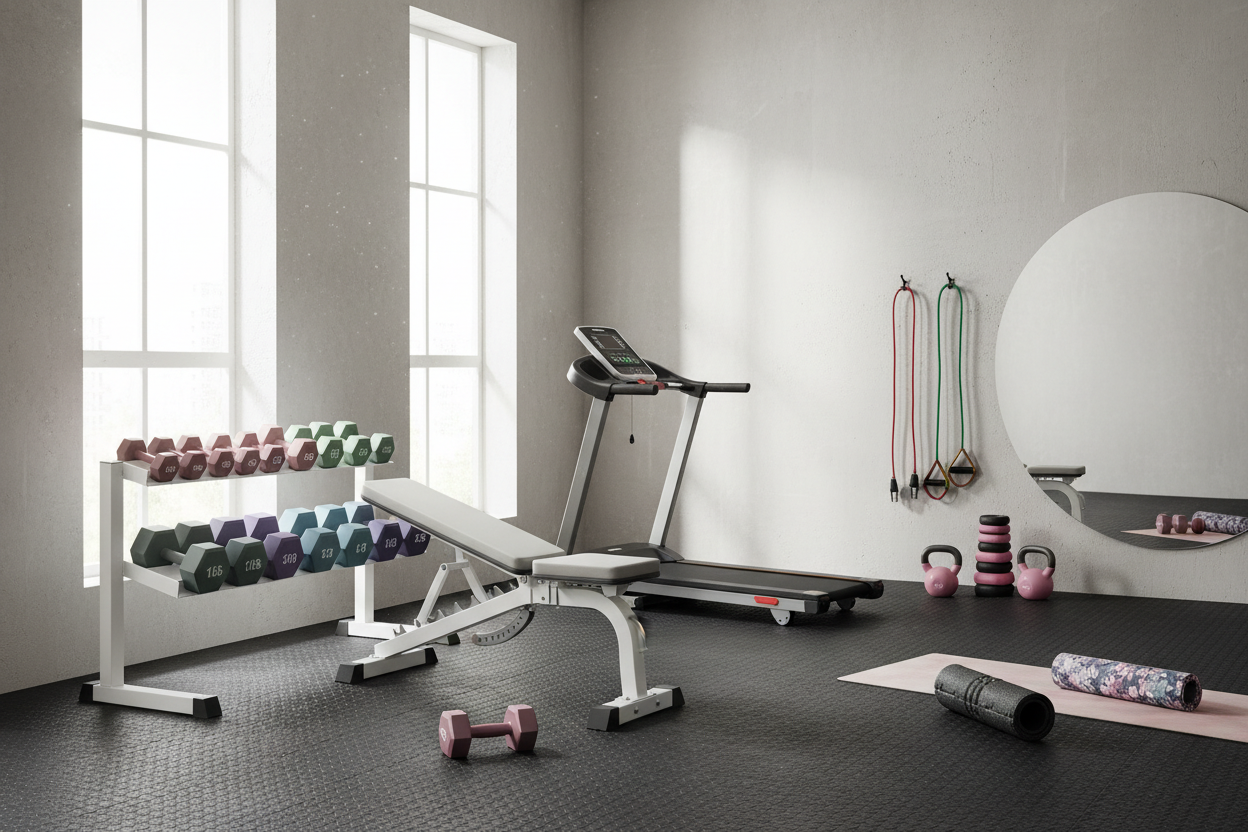
I remember the night I finally gave up on commercial gyms. Between the guy hogging the squat rack to do bicep curls and the creeping monthly fees, I decided to build my own space. I started where most do: a frantic midnight search for the best at home gym equipment for women. What I found was insulting. Page after page of 2-lb pink dumbbells, flimsy yoga mats, and 'thigh toners' that looked like they’d snap if you actually put effort into them.
If you want to get strong, you have to stop buying gear marketed toward 'toning' and start buying gear built for lifting. Real strength doesn't care about your gender, but biomechanics do. You need equipment that fits your frame without sacrificing the industrial-grade durability that keeps you safe when you're grinding out a PR.
Quick Takeaways
- Skip the 'Pink Tax': Color-coded gear is usually lower quality and higher priced.
- Check the Specs: Look for 11-gauge steel and 25mm barbell diameters for better grip.
- Prioritize the Rack: A solid power rack is the heart of any serious home setup.
- Think Small, Move Big: Compact cardio like magnetic bikes beat massive, cheap treadmills every time.
The Trap of the 'Women's Fitness' Aisle
The fitness industry has a bad habit of assuming women only want to 'sculpt' with low resistance. When you search for female-focused gear, algorithms push plastic-coated weights that max out at 10 lbs. This is a trap. You need progressive overload—the ability to add weight over time—to see any real change in bone density or muscle mass.
Buying flimsy gear is a waste of money because you'll outgrow it in three weeks. I’ve seen too many women get frustrated because their equipment limits their progress. It’s one of the main reasons Why the Best At Home Exercise Equipment for Women Isn't Pink. You need iron, steel, and high-tensile cables, not aesthetic props that match your curtains.
Biomechanics Over Branding: What Actually Matters
While the 'women's' branding is mostly fluff, there are real physical differences to consider. For example, a standard Olympic barbell has a 28mm to 29mm diameter. For many women with smaller hands, this makes a heavy deadlift feel like you're trying to hold onto a telephone pole. A 25mm 'women’s' bar isn't about being 'dainty'; it’s about getting a proper grip so your back works harder than your forearms.
Rack hole spacing is another big one. If a rack only has holes every 3 or 4 inches, you might find the safety bars are either too high for a full range of motion or too low to actually catch the bar. Look for 'Westside' hole spacing (1-inch gaps through the bench zone). It allows you to set your heights exactly where your body needs them, which is a massive safety win when training solo.
Building the Core of Your Setup
Instead of buying a dozen different gadgets, focus on a centralized Home Gym hub. You need a rock-solid power rack or squat stand and an adjustable bench. Everything else is secondary. A rack with a 500-lb capacity might seem like overkill now, but it provides the stability you need to feel confident under the bar.
When picking a bench, look for one that doesn't have a massive gap between the seat and the backrest. If you're shorter, a bench that sits 17 inches off the floor is much better for getting your feet flat and driving through your legs during a press than a standard 19-inch competition bench.
Why a Guided System Can Be a Game-Changer
If the idea of balancing a heavy barbell alone in your garage gives you anxiety, I get it. I’ve been there. This is where a Smith Machine Home Gym Station becomes a legitimate asset. It provides a fixed plane of motion and built-in safety catches that you can engage with a flick of the wrist.
It’s not 'cheating'—it’s a tool that lets you push to absolute failure on squats or lunges without worrying about ending up pinned under the weight. Plus, most modern Smith stations include integrated cable pulleys, giving you a full-body setup in a single footprint.
Cardio Gear That Doesn't Eat Your Floor Space
Most home treadmills under $1,000 are junk. They shake, the motors burn out, and they take up half the room. If you want a metabolic burn without the bulk, look at high-resistance stationary cycles. A Foldable Upright Exercise Bike is a smart move for smaller spaces.
I prefer magnetic resistance over felt pads because it’s virtually silent. If you’re training early in the morning while the rest of the house is asleep, you don't want a bike that sounds like a jet engine. Look for at least 10-16 levels of resistance so you can actually do interval sprints rather than just spinning your wheels.
How to Phase Your Upgrades (So You Don't Go Broke)
You don't need to drop $5,000 on day one. Start with a quality rack, a 25mm bar, and about 160 lbs of plates. That’s enough to handle squats, deadlifts, and presses for a long time. Once you’ve established the habit, add the 'fun' stuff like cable attachments or specialty bars.
Phase out the cheap stuff as you go. If you started with those colorful sand-filled kettlebells, replace them with cast iron one by one. The goal is to build a gym that lasts a decade, not one that ends up in a landfill by next summer.
Personal Experience: My 'Wobble' Moment
I once bought a 'highly rated' adjustable bench from a big-box store because it was on sale for $80. The first time I tried to dumbbell press 40s, the frame literally groaned and shifted two inches to the left. I nearly dropped a weight on my face. That was the day I realized that 'budget' equipment is often just dangerous. I sold it for $20 on Marketplace and bought a heavy-duty tripod bench that hasn't budged in four years. Buy once, cry once.
FAQ
Do I really need a 'women's' 15kg barbell?
You don't *need* it, but the 25mm grip diameter is a massive advantage for anyone with smaller hands. It allows for a more secure grip, which means you can lift heavier weights before your grip gives out.
Is a Smith machine better than free weights?
Neither is 'better,' but a Smith machine is significantly safer for solo lifters who want to push their limits without a spotter. It’s also great for isolating specific muscles like quads or glutes.
How much floor space do I actually need?
You can fit a high-quality rack and bench in a 6x8 foot area. If you use a foldable bike or vertical plate storage, you can keep a very small footprint without sacrificing the quality of your workout.
Share:
How to Tell if an Olympic Weight Set With Bar Is Total Junk
Stop Wobbly Lunges: 5 Brutal Glute Exercises on Smith Machine