
I spent years as a total barbell purist, convinced that if a movement wasn't performed with a free-swinging bar, it was basically cardio. My calves paid the price for that ego. I would load up a standard barbell, wobble like a newborn deer trying to balance it on my traps, and quit the set not because my muscles were burning, but because my ankles were vibrating from the stability tax.
Eventually, I got tired of having legs that looked like upside-down bowling pins. I swallowed my pride and walked over to the rack I usually ignored. Once I started the calf raise on smith machine, everything changed. I could finally stop worrying about falling over and actually focus on moving the weight with my legs.
Quick Takeaways
- Eliminates balance issues, allowing for 100% focus on calf contraction.
- Allows for safe, heavy loading that is nearly impossible with a free barbell.
- Provides a superior stretch at the bottom of the movement when using a block.
- Easy to rack the weight at any point if you hit absolute failure.
Why Free Weight Calf Raises Are a Wobbly Waste of Time
The standing barbell calf raise is a great exercise on paper, but a nightmare in practice. When you have 225 lbs or more on your back, your core, ankles, and smaller stabilizer muscles are working overtime just to keep you upright. You end up cutting your range of motion short because you're afraid of tipping over.
Most people fail their set because their balance gives out, not because their gastrocnemius is actually fatigued. That is a waste of a training session. By switching to a smith machine calf raise, you remove the balance equation entirely. The bar is on a fixed track. You can lean slightly into it, find your center, and just push.
This stability is what actually builds muscle. If you aren't fighting to stay upright, you can take the muscle to the brink of failure safely. It’s the difference between a productive set and a circus act.
The Real Benefits of Fixed-Path Calf Training
The biggest win with the smith machine standing calf raise is the ability to load heavy without a spotter. I’ve seen guys try to go heavy on a dedicated calf machine only to find the stack isn't heavy enough. On a track, you can keep sliding 45-lb plates on until the bar is full.
Having a high-quality Smith Machine in your home gym is a cheat code for stubborn muscle groups. Because the path is fixed, you can focus on the 'mind-muscle connection'—which sounds like fluff until you actually feel a 300-lb load stretching your fascia at the bottom of a rep.
Safety is the other factor. If your calves cramp or you hit a wall, a simple flick of the wrists locks the bar into the nearest lockout point. You don't have to worry about dumping a bar in your garage and waking up the neighbors (or breaking your floor).
How to Actually Do a Calf Raise on a Smith Machine (Stop Bouncing)
If you want to know how to do calf raises on smith machine properly, you need to ditch your ego. Most people use way too much weight and just bounce off their Achilles tendons. That’s great for tendon elasticity, but it does nothing for muscle growth.
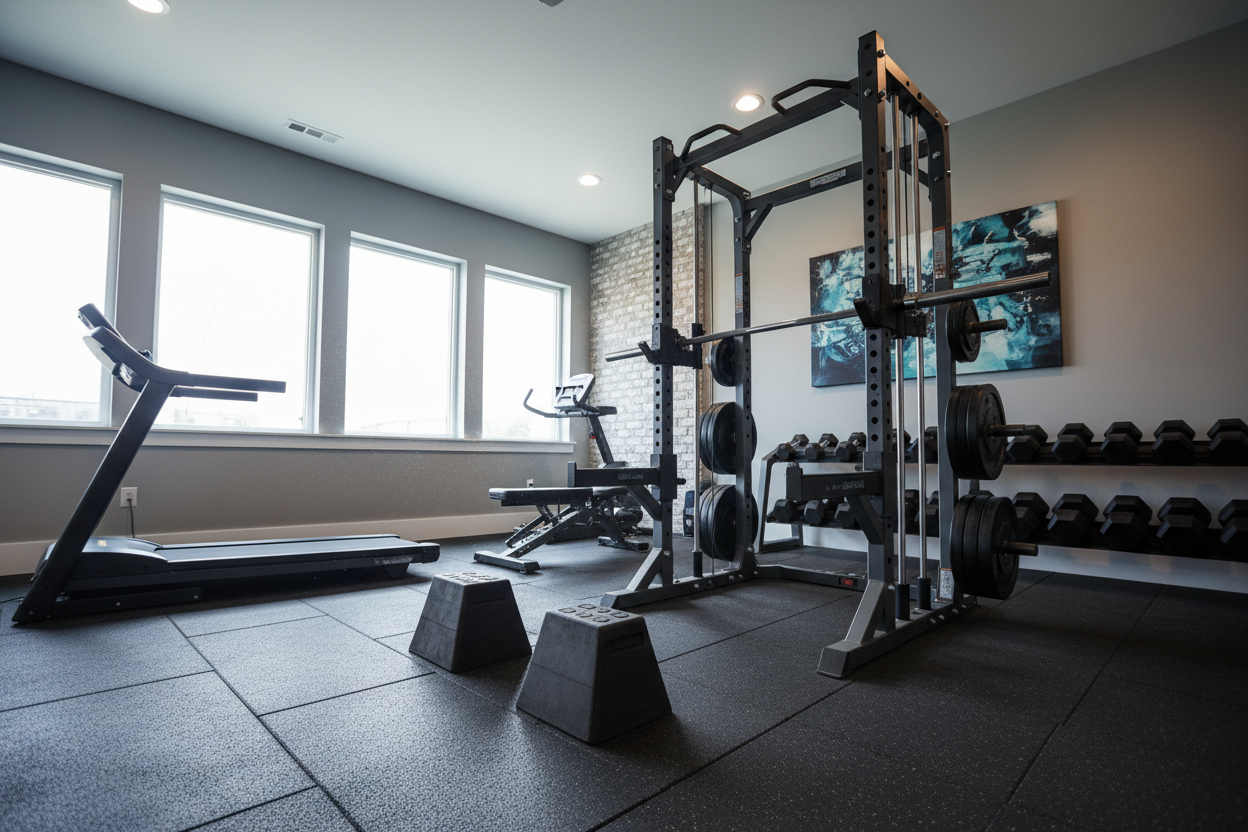
First, get a calf block or a sturdy pair of bumper plates. Place them under the bar. Step up so the balls of your feet are on the edge, with your heels hanging off. Position the bar across your traps—not your neck—and unrack it.
Lower your heels slowly. I’m talking a three-second descent. When you reach the bottom, hold that stretch for two full seconds. This kills the 'stretch reflex' and forces the muscle to do the work. Then, explode up onto your toes. This movement is a staple in my routine, and it easily earns a spot in the lineup of The Only 6 Exercises on a Smith Machine Worth Your Time.
Targeting the Soleus: The Smith Machine Seated Calf Raise
Don’t ignore the soleus, which sits underneath the larger gastrocnemius. To hit it, you need to perform calves smith machine variations with bent knees. Drag a flat bench under the bar. Sit down and place a block under your feet. Rest the bar across your lower thighs—use a barbell pad or a folded towel here, trust me—and perform your raises from a seated position. This shift in knee angle takes the gastroc out of the equation and hammers the deeper muscle, giving your lower legs that 'wide' look from the front.
Two More Calf Killers to Try on the Track
If you want to get creative, try the smith machine donkey calf raise. Hinge at the hips and rest your forearms on a bench or the frame of the machine while the bar rests across your lower back/hips. It sounds awkward, but the stretch is incredible. You can also try the calf press smith variation: lie on your back on the floor and press the bar up with your feet, similar to a leg press.
A versatile rig like the All In One Smith Machine With Cable Crossover S1 V4 is perfect for these because it has the stability and the adjustable safety stops to handle different bench heights and block setups without shaking.
Programming Your Calves for Actual Growth
Stop doing three sets of ten at the end of your workout when you're already exhausted. Your calves are used to carrying your body weight around all day; they need volume and frequency to grow. I recommend hitting smith machine calf exercises 3 to 4 times a week.
Vary your rep ranges. Do some heavy sets of 8-10 with long pauses, and some lighter sets of 20-25 where the goal is just maximum blood flow. If you aren't limping a little bit when you walk to your car, you probably didn't go hard enough.
Personal Experience: My Biggest Mistake
The biggest mistake I made for years was 'ego bouncing.' I would stack five plates on the smith machine calf raise and move the weight about two inches. I thought I was a beast. In reality, my calves didn't grow a millimeter. It wasn't until I stripped the weight back to two plates, used a full range of motion, and implemented that painful two-second pause at the bottom that I actually saw progress. It hurts way more, but it actually works.
FAQ
Is the Smith machine better than a dedicated calf machine?
Often, yes. Many seated or standing calf machines have weird leverage curves or weight stacks that top out too early. The Smith machine allows for linear loading and uses standard Olympic plates.
Can I do these barefoot?
You can, but I wouldn't recommend it with heavy loads. The edge of the block or plate can dig into your arches. A flat-soled shoe like a Chuck Taylor or a lifting shoe provides a better platform.
How high should my feet be?
You only need about 2-3 inches of elevation. As long as your heels can descend fully without touching the floor, you're getting the full benefit of the stretch.
Share:
Don't Buy Affordable Gym Equipment Without Checking These 3 Things
Are Smith Machines Effective, or Just a Crutch for Lazy Lifters?