
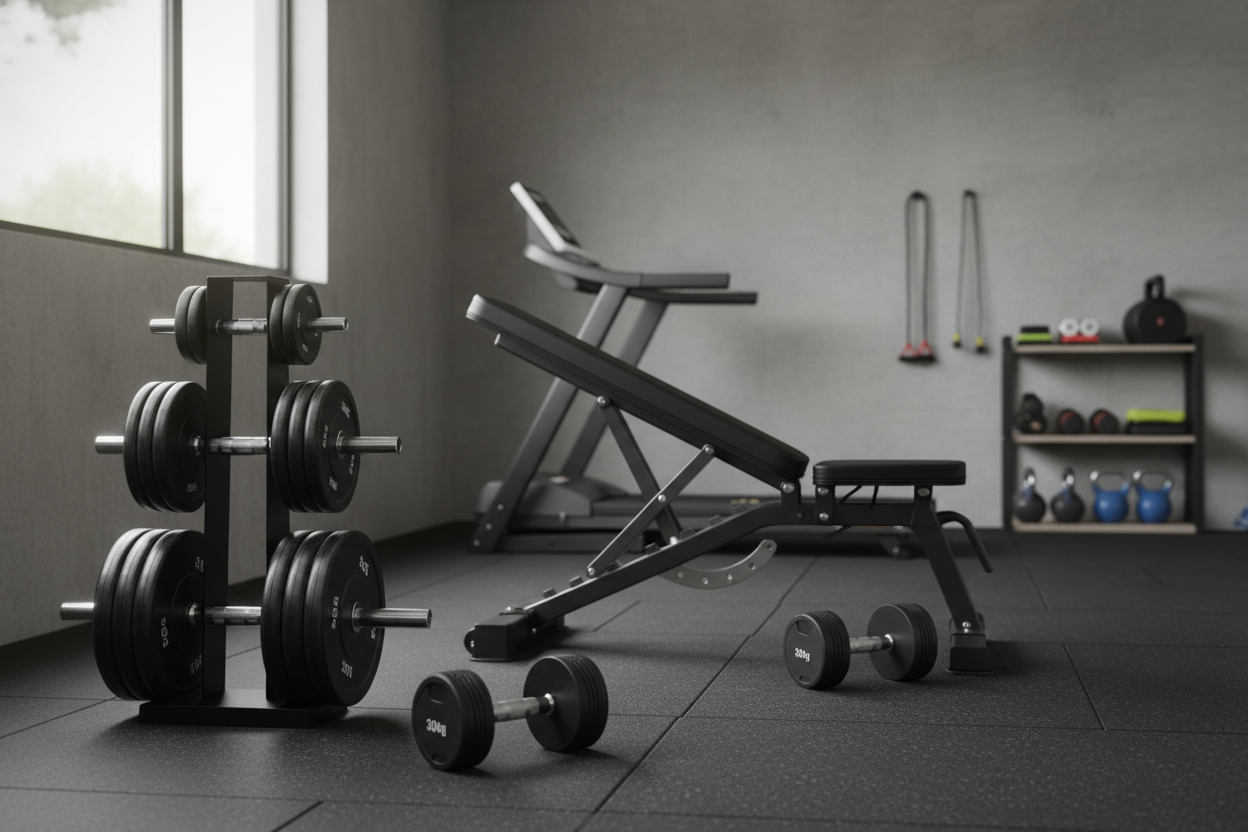
I remember standing in my garage, staring at my rack of 50-pounders, and feeling a deep sense of boredom. I was hitting 20 reps on rows and barely breaking a sweat. The local gym just hiked their prices again, and the 'convenience' of my home setup was starting to feel like a limitation. I realized I wasn't actually getting stronger; I was just getting better at high-rep endurance.
That was the day I stopped browsing and finally ordered a dumbbell 30 kg. Making the jump to a 66-pound weight isn't just about adding 16 pounds to your lift. It’s a psychological shift. It’s the moment you stop being a 'fitness enthusiast' and start training like someone who actually wants to move some serious iron.
- The Weight: 30kg is roughly 66.1 lbs, the perfect 'heavy' anchor for intermediate lifters.
- The Utility: Ideal for bridging the gap between high-volume work and true strength.
- The Build: Look for knurling that doesn't bite too hard but stays sticky when your palms sweat.
- The Footprint: A single pair takes up minimal space compared to a full rack.
The 50-Pound Plateau (And Why It Traps Home Lifters)
Most big-box starter kits and budget setups tap out at 50 pounds. It’s a standard manufacturing cutoff because shipping anything heavier gets expensive. For the first year of training, those weights are fine. But eventually, your back and legs will adapt. If you’re still doing the same 50-pound rows you were doing six months ago, you’re just maintaining, not building.
I see it all the time in home gyms. People have a nice floor, a decent bench, and a rack of light Dumbbells that they’ve outgrown. Your posterior chain is a powerhouse. It needs a stimulus that actually threatens it. Moving to a 30kg dumbbell forces your CNS to wake up. It’s the difference between a casual sweat and a session that leaves you needing a protein shake and a nap.
Why the 30kg Mark Is the Ultimate Sweet Spot for Heavy Pulls
In my testing, the 30kg dumbbell is the 'Goldilocks' weight for heavy pulls. It’s heavy enough to make Kroc rows actually effective, but not so heavy that your form breaks down into a series of ugly ego-lifts. When you're pulling 30kg, you're moving about 66 pounds per arm. For most guys, that’s where the back starts to really thicken up.
If you're tight on space, you might be tempted to stick with light weights and just do more reps. Don't. If you can't fit a full run of fixed weights, I'd suggest looking at something like the Adjustable Dumbbells Ab01. They allow you to hit that 30kg mark without needing a dedicated corner of the garage for a massive iron rack. The key is having that top-end resistance available when you're ready to push your PRs.
Goblet Squats and the Reality of Heavy Lower Body Days
I don't care how many air squats you can do. Holding weights 30kg in the goblet position against your chest changes everything. It’s a core workout disguised as a leg day. The weight wants to pull you forward, forcing your upper back and abs to scream for mercy while your quads do the heavy lifting.
For those of us without a full power rack or the ceiling height for a barbell, the 30kg goblet squat is the holy grail. It’s enough resistance to build serious leg drive without the spinal compression of a heavy back squat. I’ve found that three sets of ten with a 30kg weight provides more metabolic stress than fifty reps with a 20kg weight. It’s about intensity, not just time under tension.
Should You Buy Singles or a Full Dumbbell Set 30kg?
Here is where the math gets brutal. Buying a single pair of heavy 30kg weights is a quick win, but if you’re serious, a full dumbbell set 30kg (usually ranging from 5kg to 30kg) is the better long-term play. It’s an investment, sure. But the cost per pound usually drops when you buy the whole rack.
I’m a big fan of the Rubber Hex Dumbbell Set Ds01 for this. The rubber coating saves your floors, and the hex shape means they won't roll away while you're gasping for air between sets. I’ve spent years piecing things together, and honestly, I Finally Built A Weight And Dumbbell Set That Doesnt Suck by realizing that buying quality once is cheaper than buying 'budget' three times. If you have the floor space, go for the set. If you’re in a studio apartment, buy the heavy pair and hide them under your bed.
Safely Handling Heavy Iron Without a Spotter
When you start moving a 30kg dumbbell, the stakes get higher. You can't just toss these around like your old 10lb neoprene weights. If you're benching them, learn the 'knee-kick' technique to get them into position. Don't try to curl them up from a lying position unless you enjoy shoulder surgery.
Also, please invest in some actual flooring. A 30kg weight dropped from waist height will crack standard garage concrete. I use 3/4-inch stall mats. When you finish a set of heavy rows and your grip fails, you want to know that dropping the weight won't result in a structural repair bill. Treat the equipment with respect, and it’ll last longer than your gym membership ever did.
Is 30kg too heavy for a beginner?
Yes, usually. If you're just starting, 30kg (66 lbs) is a lot of weight for most movements. It’s an intermediate goal. Start lighter and work your way up so you don't blow out a rotator cuff trying to show off.
What is the benefit of rubber hex over cast iron?
Noise and floor protection. Cast iron clangs and chips. Rubber hex is quieter and won't dent your floor as easily if you have a slightly 'enthusiastic' finish to your set.
Can I build a big chest with just 30kg dumbbells?
Absolutely. High-volume chest presses and flyes with 30kg weights will build more mass than most people realize. You don't always need a 315lb barbell bench to get a thick chest.
Share:
Which Different Workout Machines at the Gym Actually Build Mass?
Stop Trusting Your Face to a Budget 200lb Dumbbell Set