
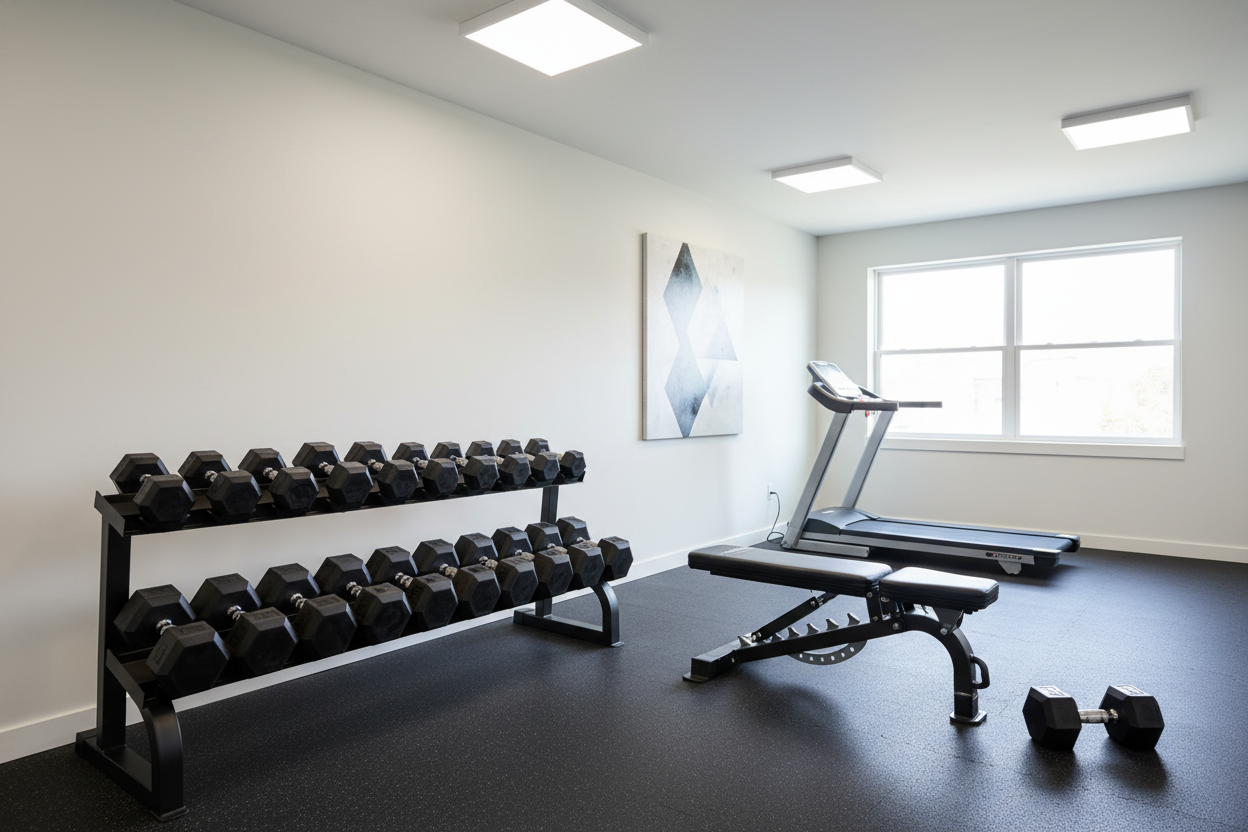
I remember the day I almost dropped a 50lb adjustable on my face because the plastic locking pin didn't quite click. It was the moment I realized my 'space-saving' solution was actually a liability. I traded the convenience of a single pair for the raw reliability of fixed weight dumbbells, and I haven't looked back since. There is a certain peace of mind that comes with equipment that has zero moving parts.
- Fixed weights handle drops better than any dial system on the market.
- Transitions between sets are instant—no more clicking or spinning dials while your muscles are screaming.
- You don't need a full 5-100lb set to see the benefits; a curated selection works wonders.
- Rubber hex designs are the gold standard for home gym stability and floor protection.
The Honeymoon Phase With Adjustables Always Ends
Adjustables are like a first car: they are great until the transmission blows. I started my garage gym journey with the Adjustable Dumbbells Ab01, and for the first few months, I was a believer. They fit in a tiny corner and let me hit basic curls without a massive investment. But as my training intensity climbed, the clunkiness became a chore. The plates rattle when you move fast, and the handles are often excessively long to accommodate the mechanism.
The real dealbreaker is the fragility. If you are pushing for a PR on a heavy chest press and need to ditch the weight, an adjustable mechanism will likely shatter on impact. You find yourself babying the equipment instead of focusing on the lift. A fixed weight dumbbell is built for the abuse of a real workout, not just a light pump in the living room. The transition to a permanent rack was about moving from a 'fitness gadget' to a 'training tool.'
Why Fixed Weight Dumbbells Actually Change How You Lift
A fixed weight dumbbell set changes your biomechanics more than you might think. Most adjustable systems maintain a fixed length regardless of whether you are lifting 10 lbs or 50 lbs. This creates a massive, awkward footprint that interferes with your range of motion on movements like overhead presses or curls. With a fixed dumbbell, the physical size of the weight scales with the load. This allows for a much more natural path of motion and better muscle recruitment.
Then there is the psychological edge of the 'drop set.' When I’m running a high-volume block, I don't want to spend 15 seconds fiddling with a dial. I want to finish my heavy set of 60s, toss them on the mat, and immediately grab the 40s. That seamless transition keeps your heart rate up and the tension on the muscle where it belongs. There is also the confidence factor. Knowing I can safely drop my weights at the point of muscular failure allows me to push harder than I ever did with my fragile adjustable sets.
Space vs. Sanity: Making Room for a Rack
The biggest objection is always the footprint. Yes, a rack takes up a 4x2 foot chunk of your floor. However, it also forces you to organize your space. I spent years tripping over loose plates and sliding adjustable bases around before I finally built a weight and dumbbell set that doesnt suck by prioritizing a two-tier rack against my back wall. If you tuck it properly, you can still park the car in the garage.
Practical layout is key. I suggest placing your rack near your bench but away from the main walkway. This creates a dedicated 'lifting zone' that keeps the rest of your garage functional. You aren't just losing space; you are gaining a professional-grade environment that actually makes you want to train.
Do You Really Need Every Single Increment?
You don't need a 5-100lb commercial rack to get results. In fact, I argue against it for most home lifters. Instead, look at the Dumbbells collection and buy what you actually use. I recommend a core set from 5 to 50 lbs in 5lb increments for your accessory work. For your heavy compound lifts, buy individual dumbbells in the specific weights you need—like a pair of 80s or 100s. This hybrid approach saves you thousands of dollars and several feet of rack space while still giving you the 'big iron' feel.
The Real Cost of the Iron Tax
A gym dumbbell is a lifetime purchase. Cast iron or rubber-coated steel doesn't have internal gears to strip or plastic pins to snap. I’ve seen guys spend $600 on high-end adjustables only to have them fail after two years of heavy use. When you buy a fixed dumbbell set, you are paying the 'iron tax' once. These things will survive three moves, a flooded garage, and a decade of being dropped. The cost per workout over ten years is pennies compared to the replacement cycle of cheaper, more complex systems.
What to Look for When Buying Your Permanent Set
When you are ready to make the switch, don't just buy the cheapest thing on the pallet. Look for fully knurled straight handles. Those 'ergonomic' curved handles you see in big-box stores feel unstable during heavy presses because they don't offer a consistent grip surface. You want the Rubber Hex Dumbbell Set Ds01 because the hexagonal heads prevent the weights from rolling across an uneven garage floor—a safety hazard many people overlook.
Check the weld quality where the handle meets the head. You want a clean, friction-welded or pinned head that won't develop a 'wiggle' after a year of use. Rubber coating is also non-negotiable for a home gym; it protects your foundation and keeps the noise levels down so you aren't waking up the neighbors during your 5 AM sessions. Invest in quality once, and you'll never have to think about buying dumbbells again.
Dumbbell FAQ
Are fixed weights better for beginners?
Yes. They are much more intuitive and safer to handle. You don't have to worry about whether the plates are locked in correctly before you lift them over your head.
Should I get round or hex dumbbells?
For a home gym, always go hex. Most garage floors have a slight slope for drainage, and round dumbbells will end up on the other side of the room the second you set them down.
How do I maintain my fixed dumbbells?
If they are rubber-coated, just wipe them down with a damp cloth occasionally. If they are raw iron, a light coat of 3-in-1 oil once a year will prevent any surface rust from forming in humid garages.
Share:
The Best Weights Home Gym Setup Doesn't Need 50 Pairs of Dumbbells
No Room for a Leg Sled? My Hack Squat on Smith Machine Setup