
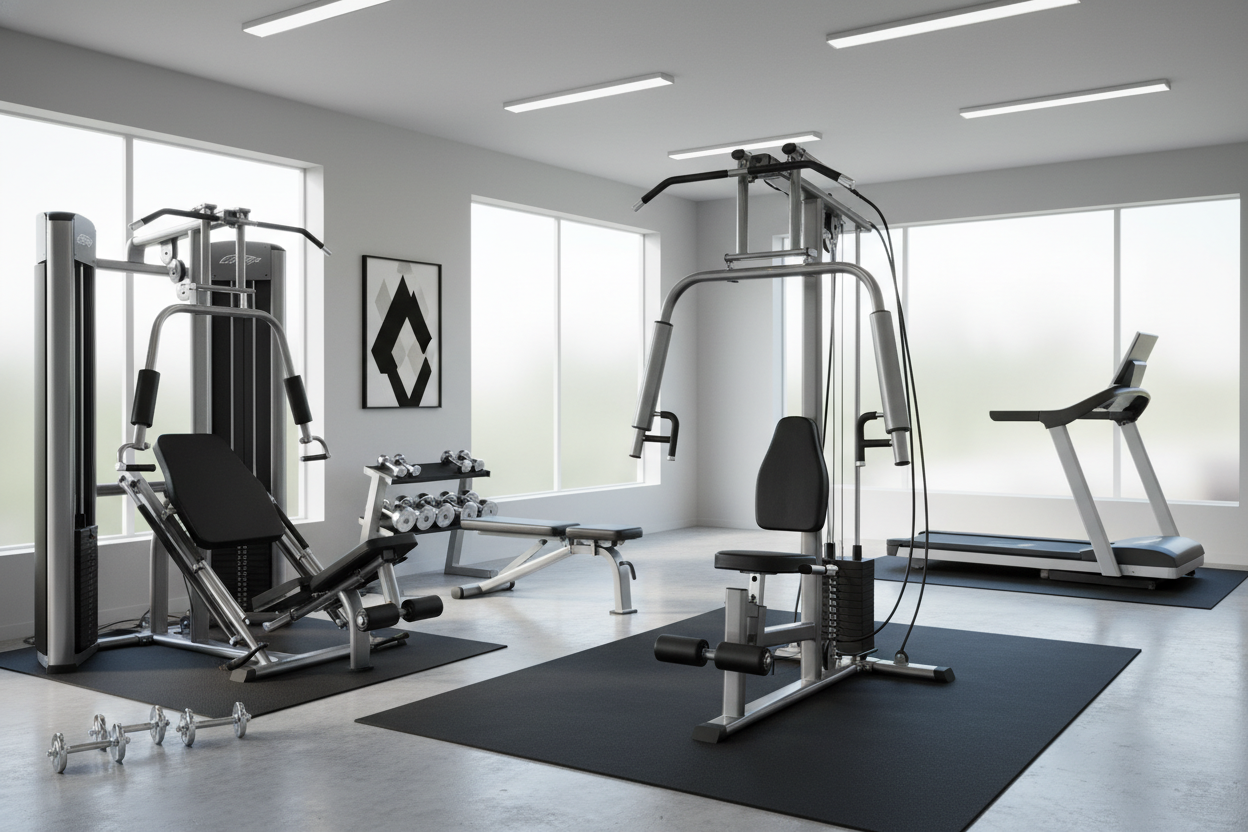
I remember the first time I walked into a high-end rehab clinic and saw a row of machines that looked like they belonged in a NASA lab rather than a gym. There were no weight stacks, no clanging plates, and no selector pins. I sat down at what I thought was a chest press, braced myself for the familiar pull of gravity, and pushed. Nothing happened—at least not at first. Then, as I pushed harder, the machine pushed back with a weird, viscous resistance that felt like I was trying to move a pole through a vat of cold honey. This was my introduction to hydraulic exercise equipment, and it was the weirdest workout of my life.
Quick Takeaways
- Resistance is speed-dependent: the faster you move, the harder it gets.
- There is zero eccentric (lowering) phase, which means less muscle soreness.
- Hydraulic fitness machines are incredibly quiet and safe for solo training.
- Great for circuit training and rehab, but a poor choice for pure hypertrophy or powerlifting.
The Day I Tried Pushing Fluid Instead of Iron
When you spend your life under a barbell, you develop a sixth sense for gravity. You know exactly how much effort it takes to unrack 225 pounds and how it feels when that weight tries to crush you on the way down. Hydraulic gym equipment throws all that out the window. When I first grabbed those handles, I expected a 'dead' spot at the start of the lift. Instead, the resistance was immediate but strange. It didn't feel heavy; it felt stubborn.
The biggest shock was the lack of a return. In a traditional gym, if you let go of a dumbbell at the top of a curl, it hits the floor. With hydraulic weight lifting equipment, if you stop pushing, the arm just stays there. It doesn't move until you move it. I spent twenty minutes trying to 'outrun' the fluid in the pistons, and by the end, my lungs were burning more than my chest. It was a total ego check. You can't 'cheat' a hydraulic machine with momentum because the faster you try to cheat, the more the machine fights you back.
How Fluid Resistance Actually Works (It's Not Like Cables)
To understand hydraulic fitness equipment, stop thinking about weight and start thinking about pistons. These machines use a cylinder filled with oil or a similar fluid. When you push or pull, you're forcing that fluid through a small valve. If you move slowly, the fluid passes through easily. If you try to explode through the rep, the fluid can't move fast enough, creating massive resistance. It's bi-directional, meaning you're often pushing in one direction and pulling in the other to return to the start.
This is a massive departure from what most of us are used to when finding the best weight equipment for a home gym. On a cable machine or a rack, the tension is constant. Gravity doesn't care how fast you move; 45 pounds is 45 pounds. Hydraulic weight lifting is variable. This makes it almost impossible to track 'Personal Bests' in the traditional sense. You can't really say you 'lifted 200 pounds' on a hydraulic resistance machine because the 'weight' changed every millisecond based on your power output. It's a different beast entirely, focusing on fluid dynamics rather than the simple pull of the earth.
The Missing Eccentric Phase: Why You Won't Get Sore
Here is the deal-breaker for the bodybuilders reading this: hydro gym equipment has no eccentric phase. The eccentric is the lowering portion of a lift—the part where you control the weight as it comes back down. Scientists and meatheads alike agree that the eccentric phase is where the most muscle damage occurs, which is what triggers hypertrophy (muscle growth). Because hydraulic gym machines require you to actively pull the handle back to the start, you never get that 'negative' load.
The upside? You almost never get DOMS (Delayed Onset Muscle Soreness). You can absolutely redline your heart rate on hydraulic workout machines and wake up the next morning feeling fresh. This makes it an incredible tool for athletes who need to train daily without the systemic fatigue that comes from heavy eccentric loading. However, if your goal is to look like a silverback gorilla, the lack of a negative is a major drawback. You're getting all the metabolic stress but very little of the structural damage needed for massive gains.
Who Actually Needs These Machines in Their Garage?
So, should you be scouring the internet for hydraulic exercise equipment for sale? If you're a powerlifter, probably not. But for certain people, these are a godsend. Hydraulic workout equipment is the gold standard for physical therapy and senior fitness. Since the resistance stops the moment you stop moving, there’s zero risk of getting pinned under a heavy bar. It’s also a space-saver for people doing high-speed circuit training where you want to jump from station to station without fumbling with plates or pins.
If you're an older trainee or someone recovering from a shoulder surgery, the smooth nature of hydraulic weight equipment is much kinder to your joints than the jerky momentum of cheap cables. But let's be real—if you're a healthy adult looking to build a thick chest, a hydraulic machine will never beat a dedicated chest press machine with independent arms. You need that independent movement and the ability to load real, tangible weight to force your nervous system to adapt. Hydraulics are a supplement, not a foundation.
The Final Verdict: Iron Defeats Fluid for Serious Gains
I can appreciate the engineering behind hydraulic fitness. It’s clever, it’s safe, and it’s quiet enough to use while a baby is sleeping in the next room. But at the end of the day, there is a reason the strongest people on earth still use iron. The predictability of a weight stack allows for progressive overload in a way that fluid resistance just can't match. You need to know that you did 5 more pounds this week than last week to stay motivated and keep growing.
If you're just starting your home gym journey, don't get distracted by the high-tech allure of used hydraulic exercise equipment for sale. Keep it simple. Buy a reliable weight bench and a set of dumbbells or a barbell. The feedback you get from moving actual mass through space is something a piston can never replicate. Hydraulics have their place in the clinic and the senior center, but for the garage gym warrior, gravity remains the ultimate training partner.
FAQ
Is hydraulic exercise equipment good for weight loss?
Yes, it’s excellent for high-intensity circuit training. Because you can move quickly between exercises without resting to change weights, you can keep your heart rate elevated, making it a solid tool for cardiovascular conditioning and calorie burning.
Can you build big muscles with hydraulic machines?
It’s much harder than with free weights. Since there is no eccentric (negative) loading, you miss out on a key driver of muscle growth. It’s great for 'toning' or muscular endurance, but not for maximal hypertrophy.
Are hydraulic gym machines loud?
No, they are among the quietest machines you can buy. There are no plates clanking together, only the soft hiss of the fluid moving through the pistons. This makes them ideal for apartment living.
Share:
I Watched 100 Smith Machine Fails. Here's Why Lifters Keep Getting Pinned
The Only 3 Pieces of Basic Exercise Equipment for Home You Need