
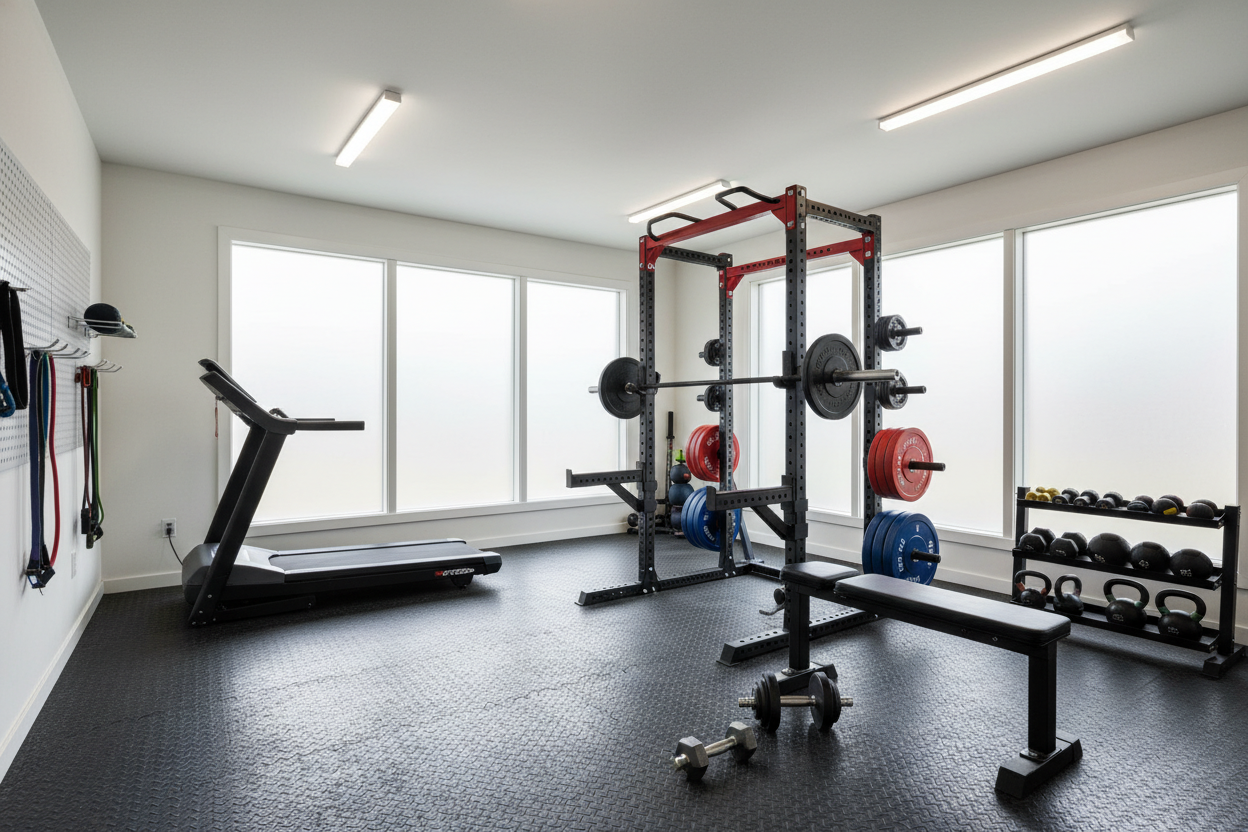
I’ve spent years scrolling through marketplace listings at midnight, looking for the one piece of gear that would finally make my garage feel like a real gym. I’ve bought the $150 'pro' benches that wobbled the second I loaded 225, and I’ve regretted almost every plastic-coated weight plate I ever touched. The truth is, most home workout equipment for men is designed to look good in a catalog, not to survive a heavy set of squats.
If you want to build a physique that actually looks like you lift, you have to stop buying toys. You need tools that can handle 500 pounds, even if you’re only lifting 135 right now. Most guys start with the wrong stuff and end up frustrated when their gear fails them.
Quick Takeaways
- Skip the single-station machines; they eat space and kill versatility.
- Invest in an 11-gauge steel power rack as your center of gravity.
- Cables are essential for hypertrophy but don't need to be fancy.
- Avoid any equipment that requires a monthly subscription to function.
Stop Trying to Recreate Your Local Commercial Gym
The biggest mistake I see guys make is trying to fit a 24-Hour Fitness into a single-car garage. You don't need a dedicated leg extension machine, a pec deck, and a seated row station. That's how 100 square feet disappears before you've even bought a barbell.
Every piece of gear in your house should serve at least three purposes. If it only does one thing, it’s a paperweight. Buying bulky, single-use machines is the fastest way to ensure your workout equipment for home ends up on marketplace by next summer. Focus on stations that allow for compound movements that actually move the needle on your strength.
The 'Big Three' Foundation You Actually Need
If you have a solid rack, a high-quality barbell, and a bench that doesn't creak under your body weight, you have 90% of what you need. When building a functional home gym, I always tell guys to look for a rack with 3x3-inch uprights. It’s overkill until it isn’t.
Don't skimp on the barbell. A cheap bar has 'mushy' knurling that slips the moment your palms get sweaty. Look for a bar with a 28.5mm diameter and at least 190,000 PSI tensile strength. It should feel like it wants to grip your skin back. Your bench needs to be rated for at least 1,000 pounds. That sounds like a lot, but when you factor in your body weight plus a heavy press, a 500-lb rated bench starts to feel real flimsy, real fast.
Why Cables Are the Missing Link for Hypertrophy
I love heavy iron, but let’s be honest: your triceps and side delts need isolation work that a barbell just can't provide effectively. You don't need a $3,000 functional trainer for this. A simple plate-loaded pulley system that attaches to your rack can do 95% of the work without hogging the floor.
The constant tension of a cable is what triggers that growth you're after. Whether it’s face pulls or high-to-low flyes, cables fill the gaps that compound lifts leave behind. Just make sure the pulleys are high-quality nylon or aluminum; plastic ones will drag and ruin the 'feel' of the lift.
The Truth About 'All-in-One' Rigs for Heavy Lifters
I used to be a purist who hated Smith machines. Then I realized that if you're training alone in a basement, having built-in safety catches is a literal lifesaver. A smith machine home gym station that combines a power rack with a guided bar can be a massive space-saver for the guy who wants to go to failure without a spotter.
The downside is the footprint and the price. These rigs are heavy—usually over 400 pounds—so make sure your flooring can handle it. If you’re a powerlifter, you’ll still want a free barbell, but for pure bodybuilding, these all-in-one stations are incredibly efficient for hitting high volume safely.
Your Accessory Gear Doesn't Need a WiFi Connection
We’ve entered an era where every dumbbell wants to talk to your phone. It’s nonsense. A heavy set of adjustable dumbbells or a few kettlebells will outlast any 'smart' gym system by three decades. don't overthink the best equipment by chasing tech specs that will be obsolete in two years.
Stick to the basics: a set of heavy resistance bands for accessory work, a solid jump rope for conditioning, and maybe a 100-lb sandbag for when you want to feel like an athlete instead of a gym rat. Simple gear doesn't break, and it doesn't need a software update to help you break a sweat.
My Biggest Gear Mistake
A few years ago, I bought a 'compact' folding rack to save space. I thought I was being smart. The first time I tried to re-rack 315 lbs, the whole thing shifted six inches. It felt like it was going to fold while I was under it. I sold it a week later at a loss and bought a full four-post rack. My mistake was prioritizing floor space over structural integrity. In a home gym, stability is safety. If it feels light, it probably is.
FAQ
How much space do I actually need?
A 10x12 foot area is the sweet spot. It gives you enough room for a full-size rack and a 7-foot barbell with enough clearance on the sides to actually load the plates without hitting the wall.
Are bumper plates worth the extra cost?
Only if you're doing Olympic lifts or dropping the bar. If you're just benching and squatting, iron plates are thinner, cheaper, and sound better. Just get some horse stall mats to protect your floor.
What is the one piece of gear I shouldn't buy used?
The barbell. People bend them, let the bearings rust, or leave them in damp garages. Buy a new, high-quality bar and treat it like a family heirloom.
Share:
Why I Tell Beginners to Buy a Real Gym Weights Barbell
Budget vs Premium Exercise Equipment: Where I Actually Spend My Money