
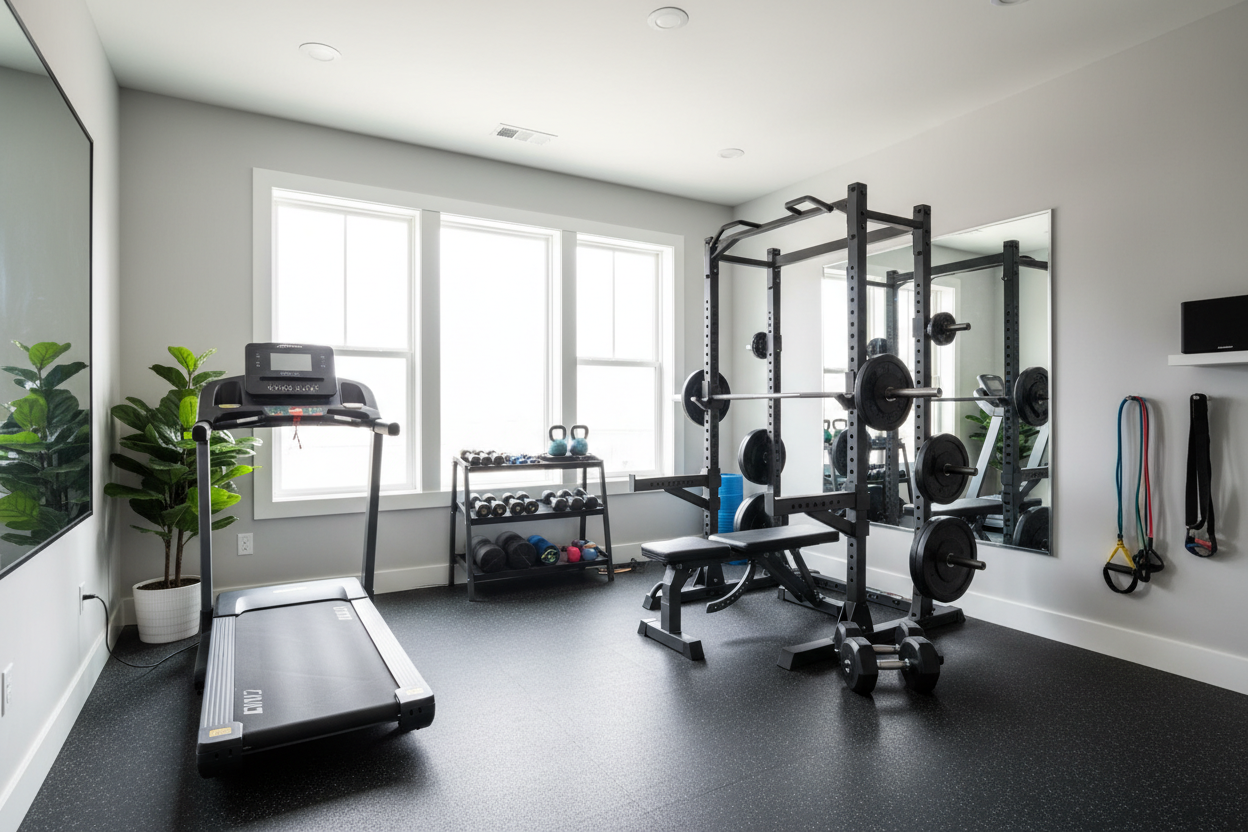
I have spent a decade scrolling through social media feeds where people show off their 'perfect' workout spaces. You know the ones: white walls, hardwood floors, and a single pair of 5-lb pastel dumbbells resting on a marble shelf. It looks great for a photo shoot, but the first time you drop a 45-lb plate or sweat through a heavy set of squats, that room is ruined. Most home fitness room ideas you see online are designed for aesthetics, not for people who actually train.
- Forget foam tiles; 3/4-inch rubber stall mats are the only real choice for floor protection.
- Prioritize vertical storage to keep your floor footprint clear for movement.
- Airflow matters more than wall color—get a high-velocity fan before you buy fancy decor.
- Multi-functional equipment beats a room full of single-use machines every time.
Stop Treating Your Gym Room in House Like a Museum
Your gym room in house shouldn't be a showroom. I have seen guys spend more time picking out LED light strips than checking the weight capacity of their bench. If you are serious about getting stronger, you need to design for utility first. That means choosing materials that can handle impact, chalk dust, and the inevitable smell of hard work.
A real fitness room at home needs to be a place where you aren't afraid to fail a rep. If you are worried about scuffing the paint or cracking a floor tile, you will never push yourself. Strip away the fluff and focus on the iron. A gritty, functional space will always yield better results than a pretty room you are too scared to actually use.
The Golden Flooring Rule for Any Exercise Room at Home
The biggest mistake I see in any exercise room at home is the use of cheap puzzle-piece foam mats. They are soft, sure, but they shift under load and offer zero protection for your foundation. If you drop a heavy dumbbell on foam-covered concrete, you are going to crack that concrete. I learned this the hard way in my first rental, and that security deposit is never coming back.
Instead, go to a farm supply store and buy 3/4-inch recycled rubber horse stall mats. They are heavy as hell and smell like a tire shop for the first two weeks, but they are indestructible. Layer them over a sheet of 3/4-inch plywood if you plan on deadlifting. This creates a solid platform that distributes the force, which is essential when building a functional home gym setup that won't destroy your house.
How to Squeeze a Heavy Setup Into a Small Gym in Room
You don't need a 2,000-square-foot basement to build a sanctuary. I have managed to fit a high-end lifting station into a 10x12 spare bedroom that most people would use for a twin bed and a desk. The secret is thinking vertically and choosing folding equipment. A wall-mounted folding rack can provide a rock-solid squat station that tucks away to just 4 inches of depth when you're done.
Vertical barbell hangers and wall-mounted plate racks are your best friends here. Keeping the floor clear makes a small gym in room feel twice as large. When you stop tripping over 25-lb plates, you can actually focus on your form. It is all about finding the ultimate compact at-home gym layout that fits your specific training style without making you feel claustrophobic.
Equipment That Actually Makes Sense for a Fitness Room at Home
Commercial gyms have the luxury of space for 50 different machines. You don't. In a gym room in house, every square inch has to earn its keep. This is why I always steer people away from those cheap 'all-in-one' home gyms with the plastic weight stacks. They feel like toys and the cables usually snap within a year of heavy use.
A much better move is a versatile Smith machine home gym station. These modern units often combine a power rack, a Smith bar, and a functional trainer into one footprint. If you have a corner to spare, adding a dedicated lat pulldown and low row station will give you more back-building versatility than almost any other piece of gear. Stick to plate-loaded equipment when possible; it is easier to move if you ever relocate and much cheaper to maintain.
Airflow and Mirrors: Surviving Your New Gym Room at Home
People forget that a gym in house is basically a small box where you generate a massive amount of heat. Residential HVAC systems aren't designed to handle a person doing HIIT for an hour in a closed room. You need a dedicated floor fan—something high-velocity that moves air, not a decorative ceiling fan that just hums. If you don't manage the humidity, your expensive barbells will start showing surface rust faster than you can believe.
As for mirrors, don't just put them up for selfies. A large mirror on the wall opposite your rack helps you check your hip depth and spinal alignment. It also bounces light around, making a dark spare room feel less like a dungeon. Just make sure they are securely mounted; the vibration from a heavy set of rows can rattle cheap adhesive right off the drywall.
Why You Don't Need a Large Home Gym to See Real Progress
You don't need a large home gym to get elite-level results. Some of the strongest people I know train in garages that barely fit a car or spare rooms that are shared with a home office. The best gym is the one you actually use at 6:00 AM when the commercial gym across town is packed. Focus on the basics: a solid floor, a versatile rack, and enough weight to keep you challenged. The rest is just noise.
My Personal Lesson in 'Budget' Gear
A few years back, I tried to save $200 by buying a generic barbell from a 'big box' sporting goods store. On the first day of heavy cleans, I noticed the bar didn't just bend—it stayed bent. The knurling was so passive it felt like holding a wet noodle. I ended up spending more money to replace it with a quality multi-purpose bar a month later. Buy once, cry once. It is a cliché because it's true.
FAQ
Do I need to reinforce my floor for a gym room at home?
For most residential spare rooms, a standard floor can handle a rack and weights if you use proper rubber matting. However, if you are planning on dropping 500-lb deadlifts from hip height, you should look into a dedicated lifting platform to spread the load across the joists.
How do I stop my gym room from smelling?
Ventilation is key. Keep a window cracked if possible, use a high-velocity fan, and wipe down your bench after every session. An air purifier with a carbon filter also helps neutralize that 'old gym' scent before it seeps into the rest of the house.
Is a Smith machine or a power rack better for a small room?
If you train alone and want maximum safety without a spotter, a high-quality Smith machine with integrated rack features is a great space-saver. If you want the most natural bar path, a folding power rack is the gold standard for home setups.
Share:
I Tried Replacing My Garage Setup With a Marcy At Home Gym
I Wasted $1,200 on a Full Weights Set (Buy These Instead)