
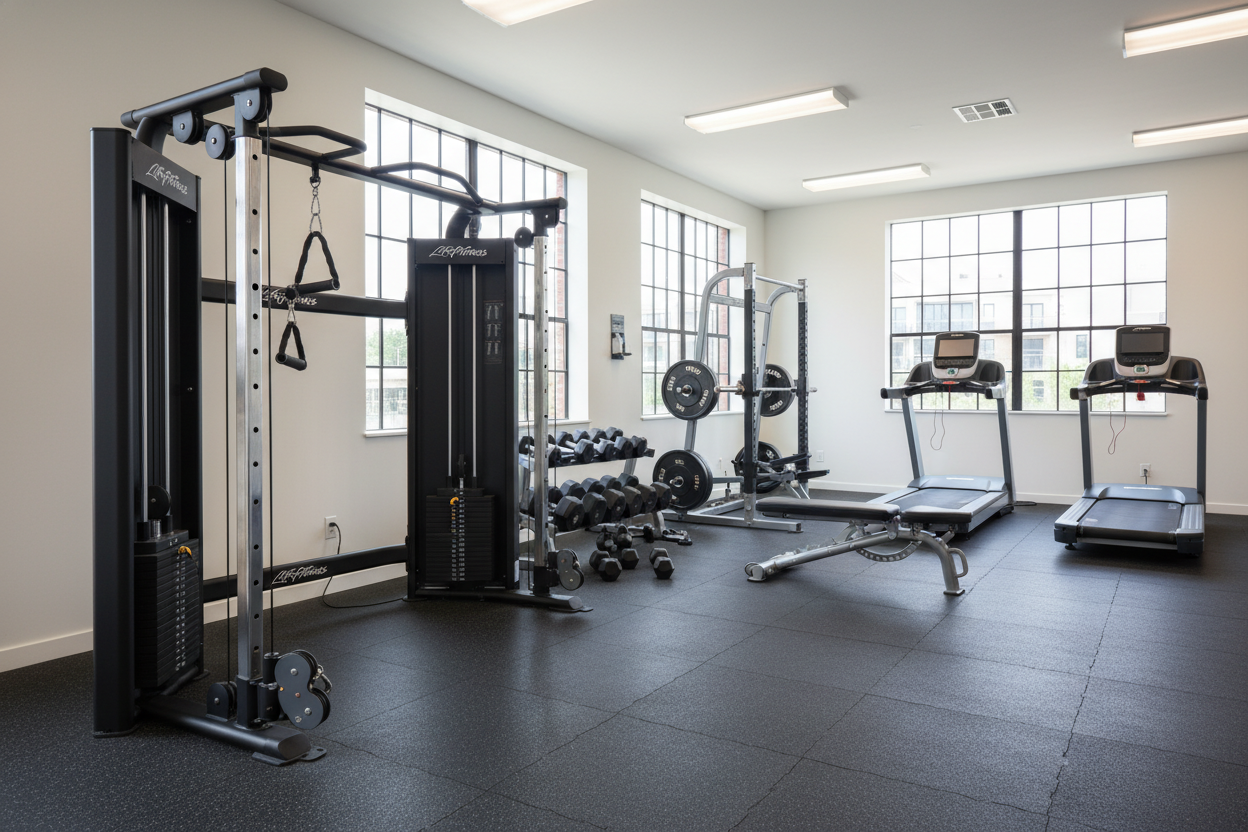
I’ve spent the better part of a decade crawling under treadmills and lugging 100-pound plates through narrow basement doors. When you walk into a high-end club, you’re almost guaranteed to see a sea of silver and black frames. You’re likely staring at the life fitness vs matrix rivalry in real-time, wondering if the extra thousands of dollars actually translate to a better pump or just a prettier logo.
Quick Takeaways
- Life Fitness dominates in heavy-duty selectorized machines and biomechanics.
- Matrix wins on console technology and smoother cable travel for functional trainers.
- Life Fitness parts are more plentiful on the used market for DIY repairs.
- Both brands overcharge massively for basic iron like dumbbells and plates.
The Illusion of Choice in Big Box Gyms
Most gym-goers think these two brands are interchangeable. They both offer massive footprints, touchscreen consoles, and price tags that could buy a decent used truck. But this is a classic commercial duopoly. Life Fitness is the old-guard king, built on the legacy of the first electronic stationary bike. Matrix is the aggressive challenger that forced everyone to care about how a treadmill looks and how its software behaves.
The spec sheets often look identical. Both will boast 4.0 HP motors and 11-gauge steel frames. But specs don't tell you how the machine feels when you're at mile six or when you're trying to hit a heavy triple on a seated row. One is built like a tank; the other is built like a high-end smartphone.
Where Life Fitness Still Holds the Crown
If you are looking for a machine that will survive a nuclear blast, you go with Life Fitness. Their Signature Series and Pro2 lines are the gold standard for a reason. The pivot points are over-engineered, and the weight stacks move on guide rods that feel like they’ve been lubricated with liquid silk. They understand biomechanics better than almost anyone in the game.
I’ve personally weighed every Life Fitness Smith machine bar in my local facility just to see if the counterweights were accurate. They were spot on. That level of precision is why purists still hunt for used LF gear. The frames are stiff, the upholstery is thick, and the machines are designed to be serviced, not replaced. If you want a leg press that doesn't flex under 800 pounds, you want the one with the LF badge.
Why Matrix Is Quietly Taking Over
Matrix realized about ten years ago that most people are bored at the gym. They poured money into their consoles. While Life Fitness was still struggling with clunky interfaces, Matrix was shipping units with crisp, responsive touchscreens and integrated virtual runs that didn't lag. If you need Netflix or Spotify integrated into your cardio, Matrix is the clear winner.
Beyond the screens, their functional trainers are surprisingly superior for home use. The pulley adjustment is usually a one-handed operation that doesn't catch or stutter. Their G7 series functional trainers have a smaller footprint than the comparable LF units, making them much more realistic for a 20x20 garage gym. The cable travel is long and fluid, which is exactly what you want for high-rep accessory work.
The Freeweight Reality Check: Don't Pay for the Logo
Here is where I get cynical. Both of these companies will try to sell you 'branded' freeweights. Unless you are a commercial gym owner who needs a uniform aesthetic for insurance purposes, do not do this. Paying a 40% premium for urethane plates just because they say 'Matrix' is a waste of your equipment budget.
I’ve seen people consider buying Life Fitness dumbbells for a home setup, and I always tell them the same thing: iron is iron. A 50-pound dumbbell doesn't get heavier because it has a famous name on the end cap. Take that extra cash and put it into a better barbell or more flooring. Your gains won't know the difference, but your bank account will.
Which Brand Survives Better on the Used Market?
If you're scouring Facebook Marketplace, Life Fitness is the safer bet. Because they have been the industry leader for so long, replacement parts are everywhere. You can find cables, pulleys, and even replacement weight stack pins at third-party retailers for a fraction of the OEM cost. They are the '90s Honda Civics of the gym world—easy to fix and they run forever.
Matrix gear is great, but their electronics can be a nightmare once the warranty expires. If a 15-inch touchscreen on a Matrix treadmill dies, you might be looking at a repair bill that exceeds the value of the machine. If you’re buying used, look for the 'base' consoles—the ones with simple LED readouts. They are less 'cool,' but they won't turn your expensive equipment into a giant paperweight.
Personal Experience: My Used Gear Regret
I once picked up a 'deal' on a Matrix T7xe treadmill from a closing hotel. The frame was pristine, but the Android-based console was stuck in a boot loop. I spent three weeks on the phone with technicians only to find out the control board was discontinued. I ended up stripping the motor and selling the steel for scrap. Now, when I buy used, I prioritize 'dumb' machines with 'smart' frames. I’d rather have a 20-year-old Life Fitness upright bike that works every time than a high-tech Matrix that needs a software update to let me pedal.
FAQ
Is Life Fitness better than Matrix for home gyms?
For functional trainers and space-saving cardio, Matrix is usually better. For strength machines and longevity, Life Fitness wins. If you have the space, a used Life Fitness selectorized machine is a better investment.
Why is Matrix equipment so expensive?
You are paying for the R&D of the console technology and the commercial-grade warranty. In a home setting, you rarely 'use' the value of that warranty, which is why the used market is a better play for individuals.
Do these machines require special power outlets?
Most commercial treadmills from both brands require a dedicated 20-amp circuit with a NEMA 5-20R outlet. Don't try to run these on a standard 15-amp household circuit or you'll be tripping breakers constantly.
Share:
Are Vertical Leg Press Machines Actually a Death Trap?
I Sold My Dumbbells: The Best Equipment for Full Body Workout