
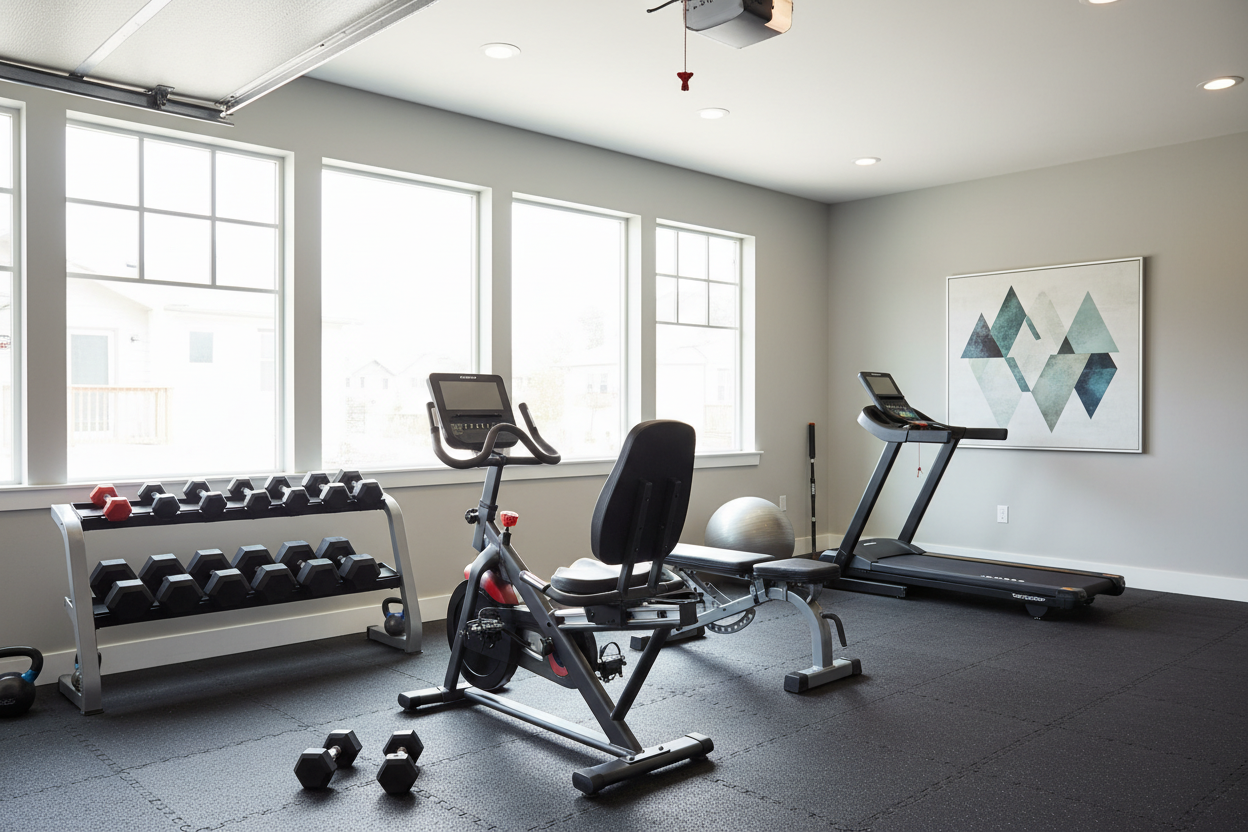
I remember the Tuesday morning I couldn't put my socks on without a grimace. Years of ego-lifting and the stubborn belief that anything other than a standing barbell movement was 'cheating' finally caught up with me. My L5-S1 was screaming, and my garage gym started looking like a torture chamber rather than a sanctuary. I realized that if I wanted to keep lifting into my 40s, I had to stop treating seated workout machines like they were reserved for the silver sneakers club.
Quick Takeaways
- Reduces axial loading on the spine during heavy training blocks.
- Allows for true mechanical failure without 'body english' or cheating.
- Provides high-intensity conditioning without the joint impact of running.
- Essential for maintaining volume when the central nervous system is fried.
The 'Hardcore' Stigma Against Sitting Down
There is a specific brand of toxicity in the garage gym community. It is the idea that if you are not standing, bracing your core until your eyes turn red, and using free weights, the workout does not count. We call it 'functional training,' but after a decade of it, my function was 'limping to the fridge.' This mindset eventually leads to severe lower back fatigue and CNS burnout that no amount of smelling salts can fix.
When you are constantly under a bar, your stabilizers never get a break. Eventually, your prime movers—the muscles you actually want to grow—stop being the limiting factor. Your lower back becomes the bottleneck. Integrating seated equipment is not about being lazy; it is about being smart enough to isolate a muscle without your spine paying the tax.
Why a Seated Cardio Machine Actually Protects Your Heavy Lifts
Axial loading is the silent killer of a long lifting career. If you spend your Monday squatting and your Tuesday doing heavy rows, your vertebrae are essentially under a hydraulic press for 48 hours. Adding a seated cardio machine to the mix allows you to push your heart rate into the red zone without adding a single pound of pressure to your discs.
I have found that a sitting cardio machine, like a high-end recumbent bike or a heavy-duty rower, is the best machine for cardio if you actually lift. It respects your recovery capacity. You can hammer out a 20-minute HIIT session and still have the structural integrity to pull a heavy deadlift the next day. Standing cardio, like running on a cheap treadmill, just adds more impact to joints that are already taking a beating from the iron.
Upper Body Isolation Without the Body English
We have all seen the guy at the gym doing 'standing' curls that look more like a full-body seizure. When you remove the need to stabilize your entire frame, you can finally push a muscle group to absolute failure. This is where seated strength equipment shines. You are locked in, your pelvis is stable, and the target muscle has nowhere to hide.
For example, using a dedicated seated dip machine is a completely different experience than standard bodyweight dips. You can focus entirely on the triceps and chest contraction without your legs swinging or your shoulders rolling forward to compensate for fatigue. It is pure, concentrated hypertrophy without the 'body english' that usually leads to a pec strain.
How to Pick a Sitting Cardio Machine That Doesn't Belong in a Garage Sale
If you are shopping for a sitting cardio machine, do not buy the flimsy plastic junk advertised on late-night TV. You need something built with 11-gauge steel and a base that doesn't rock when you hit 90 RPM. Look for a machine weight of at least 100 lbs; anything lighter will feel like a toy during a sprint. I prefer magnetic resistance for its silence or air resistance for its infinite ceiling.
When browsing heavy-duty cardio equipment, check the user weight capacity. If it is rated under 300 lbs, it is probably not going to survive a serious lifter's power output. If you are someone who hates traditional steady-state work, a rower or a high-end fan bike is often the best aerobic exercise machine because it demands total output while keeping your spine in a neutral, supported position.
The 'Save Your Spine' Weekly Programming Setup
You do not need to overhaul your entire program. If you run a standard 4-day upper/lower split, just swap one 'high-fatigue' movement for a seated version. On your second lower body day, replace your lunges with seated leg curls. On your second upper body day, trade your standing overhead press for a seated dumbbell press. These small changes drastically reduce the cumulative load on your erectors, leaving you fresher for the big lifts that actually matter.
Personal Experience: The Lesson I Learned the Hard Way
I once bought a $150 'folding' exercise bike because I wanted to save space. Within three weeks, the crank arm started clicking, and the seat felt like a brick. It was so uncomfortable that I stopped doing cardio entirely, which made my heavy squats feel like a death sentence for my lungs. I eventually bit the bullet and bought a commercial-grade rower. The footprint was larger, but the stability meant I could actually go 100% without the machine walking across the garage floor. Buy once, cry once.
FAQ
Do seated machines build as much muscle as free weights?
For isolation and hypertrophy, yes. By removing the need to balance, you can often move more weight or perform more reps with better form, which is the primary driver of muscle growth.
Will I lose core strength if I sit down?
Not if you are still doing your primary compounds like squats and deadlifts. Seated machines are accessory tools, not a total replacement for foundational movements.
Is a seated cardio machine better for fat loss?
The best machine for fat loss is the one you actually use. However, seated machines allow for longer sessions with less joint pain, which usually leads to more total calories burned over a week.
Share:
The Brutal Truth About Buying a Machine for Leg Press at Home
I Regret Buying Most of My Gym Machines at Home (Except This One)