
You're scrolling Facebook Marketplace at 11 PM, and there it is: a massive, gleaming universal gym weight machine for a price that seems too good to be true. It looks like a spaceship. It promises to replace every dumbbell, rack, and bench in your garage. Before you rent a U-Haul and call three friends to help you move 600 pounds of steel, let's talk about why these all-in-one rigs usually end up as the world's most expensive clothes racks.
Quick Takeaways
- Universal machines have a massive, unchangeable footprint that kills garage versatility.
- Cable friction and poor pulley ratios often make the weight feel 'mushy' rather than smooth.
- Fixed movement paths can lead to joint discomfort if the machine doesn't fit your frame.
- Modular equipment (racks and benches) offers better resale value and training variety.
The Nostalgia vs. The Reality of the Multi-Station Beast
We've all seen the old ads for the Universal Gym Equipment Company. There's a certain 90s basement vibe to the universal weight training machine that feels productive. You see four different stations and think you're getting a commercial gym experience in your garage. The promise of a home gym universal setup is that you'll never have to wait for a rack again.
But the reality hits the moment you try to bolt it down. These things are space vampires. Most people realize too late that a universal weight machine isn't worth the massive floor space once they realize they can no longer fit a lawnmower or a car in the same ZIP code as their workout area. You're trading 50 square feet of floor for a machine that only lets you do ten specific movements.
The Big Problem With Do-It-All Rigs
When a single piece of universal exercise equipment tries to be a leg extension, a chest press, and a lat pulldown simultaneously, it fails at being great at any of them. The engineering is a compromise. To make the cables reach every station, manufacturers use cheap plastic pulleys and long cable runs that create immense drag. If you've ever pulled a 100-lb stack that felt like 60 lbs on the way down and 140 lbs on the way up, you know exactly what I mean.
I spent years finding the best weight equipment for my own space, and the lesson was expensive: biomechanics matter. Most universal weight equipment uses fixed pivot points. If your torso is two inches longer than the 'average' person the machine was designed for, your shoulders are going to scream during every press. You can't adjust the arc of the movement; you're just a passenger on a poorly designed track.
The Brutal Math on Garage Floor Space
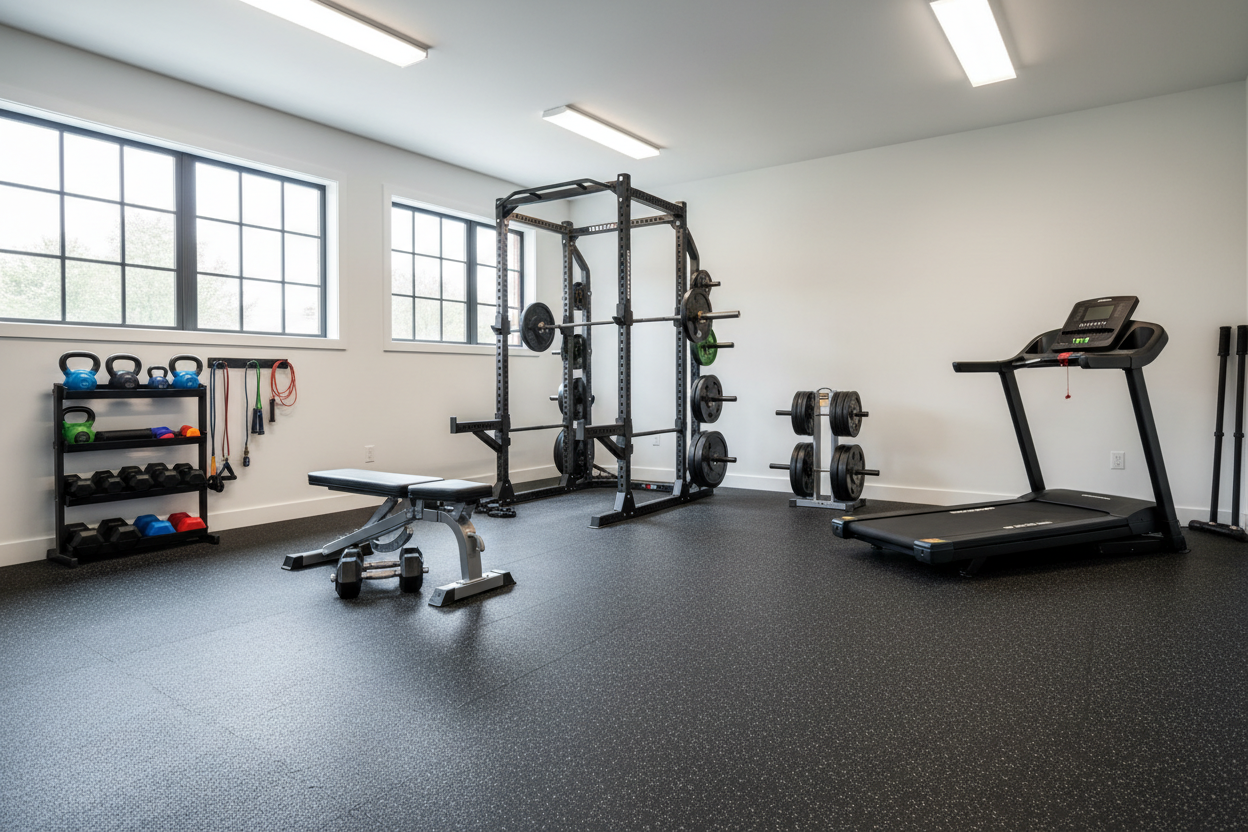
A universal machine gym is a static object. It has a 'dead zone' around it where you can't store anything else because you need room to sit or stand. In a tight garage, space is your most valuable currency. A power rack might take up a 4x4 footprint, but you can do everything inside it. When you aren't lifting, you can slide a heavy-duty adjustable weight bench out of the way and suddenly you have floor space for jump rope or mobility work.
Universal workout equipment doesn't offer that flexibility. Once it's there, it's a monument. You can't modularize it. You can't upgrade just the 'leg part' when you realize the leg developer is trash. You're stuck with the whole unit until you decide to disassemble it with a hacksaw and a prayer.
What Actually Makes Sense for a Garage Lifter Now
If you want the safety of a machine without the limitations of a 1994 multi-gym, go modular. A modern smith machine station gives you that guided safety for solo lifting but usually includes a built-in rack for free weight work. It's the best of both worlds without the awkward 4-station footprint.
For chest and shoulder work, I'm a huge fan of independent movement. A chest press with independent arms is vastly superior to the fixed-bar press on a universal fitness machine. It forces your stabilizer muscles to work and prevents your dominant side from doing all the heavy lifting. Plus, plate-loaded gear is almost always smoother than a selectorized weight stack that hasn't been lubed since the Bush administration.
The One Exception: When You Should Actually Buy One
I'm not saying they are 100% useless. If you're running a physical therapy clinic where patients need extremely low-impact, guided movements, a universal rig makes sense. They are also great for apartment complex fitness centers where you don't want residents dropping 400-lb deadlifts. Or, if you find commercial-grade universal home gyms exercise equipment for pennies on the dollar because a local gym went bust, buy it, flip it, and use the profit to buy a real rack.
Personal Experience: The Marcy Mistake
Early in my lifting days, I bought a used Marcy universal weight training machine. I thought I was a genius. Within a week, I realized the 'pec deck' felt like it was trying to dislocate my shoulders, and the weight stack maxed out at 150 lbs—which sounds like a lot until you realize the pulley system cut that resistance in half. I ended up using the frame to hang my damp gym towels. I eventually sold it for half what I paid just to get my garage floor back.
FAQ
Are universal weight sets compatible with Olympic plates?
Usually not. Most home-grade universal machines use 1-inch standard plates or proprietary weight stacks. If you want to use your 45-lb Olympic plates, stick to a plate-loaded functional trainer or a power rack.
Can I perform squats on a universal gym weight machine?
Most don't allow for a true squat. They might have a leg press attachment, but the range of motion is usually shallow and unsatisfying compared to a real barbell squat.
How do I maintain the cables on an old universal machine?
Use silicone spray on the guide rods and check the cable coating for cracks. If the steel core is visible, stop using it immediately. A snapped cable under tension is a one-way ticket to the ER.
Share:
Stop Paying for Logos: How to Judge a Gym Machine Price Like a Pro
I Trained Exclusively on the Best All-In-One Home Gym for 30 Days