
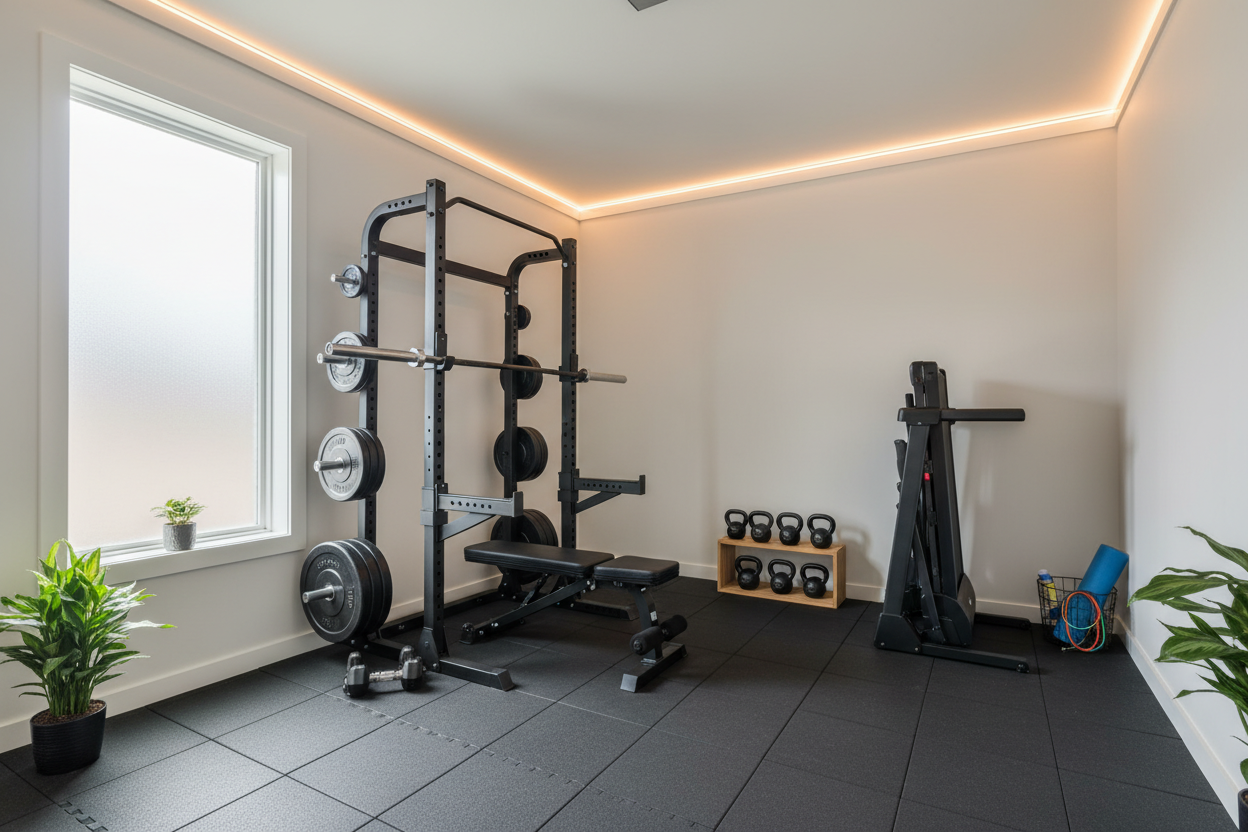
I spent years thinking I needed a 600-square-foot garage to build something respectable. I spent my mornings waiting for the only power rack at the local commercial gym, watching someone do bicep curls in the chalk bucket. It was miserable. Eventually, I realized that the best home gym setup isn't about total square footage; it's about how many multi-functional tools you can layer into a single 10x10 footprint.
You don't need a warehouse. You need a strategy. I’ve built heavy-duty setups in spare bedrooms, basements with 7-foot ceilings, and cramped one-car garages. The goal is always the same: move heavy weight without destroying your drywall or your marriage.
Quick Takeaways
- Measure for the 'barbell arc'—you need at least 9 feet of width to load plates comfortably.
- Prioritize a half-rack or folding rack to save floor space when not in use.
- Adjustable dumbbells replace 20 pairs of fixed weights, saving roughly 15 square feet.
- Vertical storage is your best friend; if it isn't on the floor, it doesn't take up space.
The Lie About Space and Strength
The fitness industry wants you to believe you need a sprawling complex to get strong. They want you to buy ten different machines for ten different body parts. That is a lie designed to sell memberships and oversized equipment. In reality, the most elite lifters I know train in dungeons.
When you try to cram commercial-grade ideas into a residential space, you fail. You don't need a dedicated leg press machine that takes up half the room. You need a rack that allows you to squat deep and safely. Spatial efficiency is the difference between a gym you actually use and a room that becomes a high-end clothes hanger.
Start With the Footprint (Not the Equipment)
Before you buy a single plate, grab a tape measure. The biggest mistake I see when building a home gym is forgetting the barbell overhang. A standard Olympic bar is 86.5 inches long. If your room is only 8 feet wide, you have about 4 inches on either side to slide 45-pound plates on. That is a recipe for smashed knuckles and holes in the wall.
You also need to check your ceiling height. If you're 6 feet tall and want to do overhead presses, an 8-foot ceiling is the bare minimum. If you have a low basement ceiling, you'll need a shorty rack and perhaps a dedicated bench for seated presses. Map out your 'safe bailout zone' too. If you have to dump a squat, you need to know you won't take out a window.
The Core Elements of the Best At Home Gym Setup
For a tight space, the foundation is non-negotiable. I always recommend a high-quality half-rack or a wall-mounted folding rack. A full 4-post power cage is great, but it’s a space hog. A half-rack with 3x3 11-gauge steel provides all the stability you need for a 500-lb squat while leaving the front area open for deadlifts or lunges.
Pair that with an adjustable bench—specifically one that can do incline, flat, and decline. Add a 20kg barbell with decent knurling (I prefer a multi-purpose bar for the whip) and a set of crumb rubber bumper plates. Bumpers are essential for home use because they're quieter and more forgiving on your subfloor than cast iron.
Why Multi-Use Stations Save Your Floor Plan
If you want to train like a bodybuilder but live in a condo, you need cables. However, a standalone cable crossover is out of the question. The secret is integrating a cable system into your rack. A dedicated lat pulldown and low row station that attaches to your rack gives you 80% of the utility of a commercial gym in 5% of the space.
For those who train solo and worry about safety, a smith machine home gym station can be a lifesaver. Modern versions often include pull-up bars and plate storage, effectively acting as a centralized hub for your entire workout. It keeps the footprint small and the safety high.
Dumbbells: Please Don't Buy the Whole Rack
A full 5-50lb set of hex dumbbells requires a rack that is at least 4 to 6 feet long. In a spare bedroom, that is a massive waste of real estate. I’ve tested almost every pair on the market, and for the best in home gym setup, adjustable dumbbells are mandatory.
You can get a pair that goes from 5 to 80 pounds in 5-pound increments, occupying the space of just two large shoes. People complain about the 'clunky' feel, but you get used to it in two workouts. Your best weights home gym setup should prioritize versatility over the aesthetics of a commercial weight room.
Stacking Your Gear: Vertical Storage is King
If your gym feels like a hoarder’s nest, you won't want to train in it. Use your walls. Wall-mounted weight horns allow you to get those 45lb plates off the floor, which makes cleaning easier and the room feel bigger. Vertical bar holders can keep your deadlift bar and your multi-grip bar tucked into a corner.
I even use pegboards for my collars, jump ropes, and resistance bands. Keeping the floor clear isn't just about aesthetics; it's about safety. You don't want to be tripping over a 10lb plate while you're re-racking a heavy set of squats.
Putting It All Together: Examples of the Best Home Gym Setups
I once helped a friend set up a 10x10 spare bedroom. We used a folding rack, a wall-mounted plate tree, and a set of adjustables. He has enough room to deadlift in the center and still close the door when he's done. Compare that to a guy with a two-car garage filled with five different single-use machines he never touches.
The perfect home gym is the one that removes the friction between you and the iron. It’s not about having the most gear; it’s about having the right gear, positioned so you never have to move a mountain of junk just to get under the bar.
Personal Experience: My Biggest Mistake
When I built my first 'real' gym in a basement, I bought an 8-foot tall power rack without measuring my pull-up clearance. I had exactly 2 inches between the pull-up bar and the ceiling joists. Every time I did a rep, I had to tilt my head like a confused dog to avoid a concussion. I eventually had to bolt the rack to the floor and cut the top off with a hacksaw. Measure twice, buy once.
FAQ
What is the best flooring for a home gym?
Skip the 'fitness' foam tiles. They're too soft for heavy lifting. Go to a farm supply store and buy 3/4-inch thick rubber horse stall mats. They are indestructible, cheap, and provide the density you need for heavy squats.
How do I manage noise in a small home gym?
Use bumper plates instead of iron, and invest in 'silencer pads' if you plan on deadlifting. Also, a layer of mass-loaded vinyl under your mats can help dampen the vibration that travels through the house.
Can I put a home gym on a second floor?
Usually, yes, but be smart. Standard residential floors can handle the weight of a rack and plates, but they aren't designed for 400-lb deadlift drops. Stick to controlled eccentrics and use extra thick matting to distribute the load.
Share:
Stop Calling It 'The Leg Thing': Real Fitness Machines Names
Stop Overpaying: The Real Gym Equipment Rate Nobody Tells You