
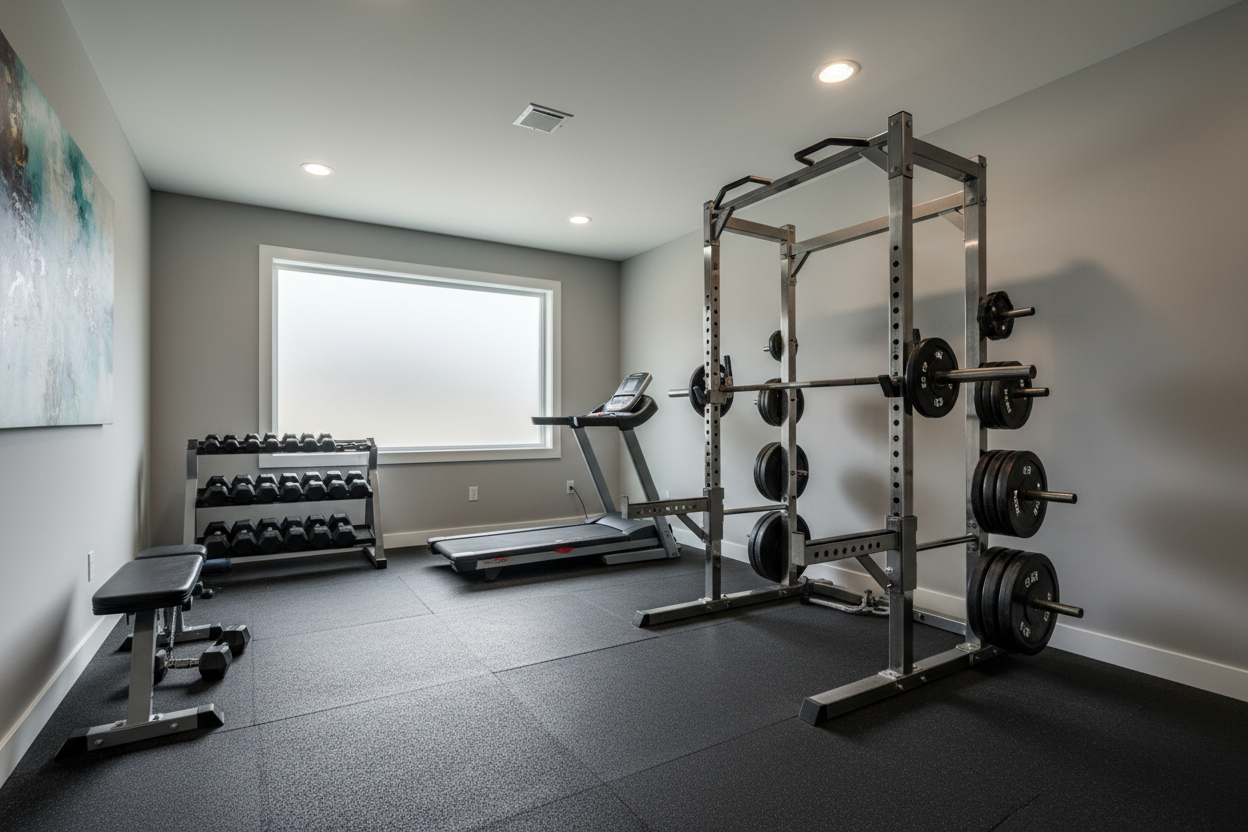
I remember the first time I tried to wedge a commercial-grade rack into my low-ceiling basement. I had measured the height of the unit, and I had measured my ceiling. On paper, I had exactly two inches of clearance. I thought I was a genius. Then the freight truck arrived, and I realized within ten minutes of unboxing that I was an idiot. I forgot that steel doesn't just manifest in a vertical position; you actually have to build it.
Understanding smith machine height is about more than just reading a spec sheet. It is about spatial reality. If you are shopping for a home setup, you are likely dealing with finished basements, garage door tracks, or low-hanging HVAC ducts. These are the enemies of your gains. Before you drop two grand on a piece of equipment that ends up becoming a very expensive horizontal storage rack, let's look at the math of clearance.
- Standard commercial Smith machines are usually 84 to 90 inches tall.
- Compact 'home' versions usually sit between 78 and 82 inches.
- You need at least 3-5 inches of 'swing' space for assembly.
- Pull-up bars require an additional 10-12 inches of head clearance to be usable.
Why the Spec Sheet Is Lying to Your Tape Measure
When a manufacturer tells you a machine is 82 inches tall, they are giving you the static height of the highest bolt. That number is useless for your actual life. It doesn't account for the fact that you need to get a wrench over the top of those bolts to tighten them. It doesn't account for the sway of the machine during a heavy set of squats. And it definitely doesn't account for your floor not being level.
I have seen guys buy a machine that fits their ceiling with a half-inch to spare, only to realize they can't actually bolt the top crossmember on because there is no room to get a socket in there. You are looking for 'working height,' not 'resting height.' If you don't have at least three inches of air above the tallest point of the machine, you are asking for a frustrating weekend of scraped knuckles and drywall repairs.
So, How Tall Is a Smith Machine, Actually?
In the wild, you'll find two main species of these machines. Commercial units, the kind you see at Gold's, are almost always 84 inches or taller. They are built for 9-foot ceilings. If you are browsing a Smith Machine collection for your home, you will see 'compact' or 'residential' models that try to duck under the 80-inch mark. These are great for 7-foot basements, but they often come with a trade-off: a shorter range of motion for tall lifters.
If you are 6'4' and you buy a 78-inch machine, you might find that the bar doesn't actually go high enough for you to fully lockout a standing overhead press. Always check the maximum bar height, not just the frame height. A machine can be tall but have a carriage that stops six inches short of the top.
The Three Hidden Clearance Traps
There are three reasons your 'perfect fit' will fail in reality. I have fallen into all of them at least once.
Trap 1: The 'Tilt-Up' Assembly Dilemma
This is basic geometry that ruins lives. Most Smith machines are built by laying the uprights on the floor and then tilting them up into a vertical position. If your upright is 84 inches tall and your ceiling is 85 inches, you cannot tilt it up. The diagonal length of that steel beam is longer than the vertical height. You'll hit the ceiling before the beam is upright. Unless you have the space to assemble it piece-by-piece in a vertical stack—which is a nightmare for your alignment—you need significant 'tilt' clearance.
Trap 2: The Pull-Up Bar Headroom Tax
Most modern units, like the Full Body Multi Training Station Smith Machine Dm01, come with integrated pull-up bars. This is a massive value-add, but it's also a height trap. If the machine is 85 inches tall and your ceiling is 86 inches, you have successfully bought a pull-up bar you can never use. Unless you enjoy smashing your forehead into a floor joist, you need 10 to 12 inches of 'headroom' above the bar. If you don't have it, that multi-grip bar is just a very expensive towel rack.
Trap 3: Floor Mats and Garage Slopes
Your floor is a liar. If you put down 3/4-inch horse stall mats—which you absolutely should—you just lost nearly an inch of ceiling height. Furthermore, most garage floors are sloped 1-2 degrees toward the door for drainage. Over the 4-foot depth of a Smith machine, that slope can mean the front of your machine is half an inch higher or lower than the back. This can lead to the top of the rack leaning closer to the ceiling than your initial measurement suggested.
How to Measure Your Space Before Pulling the Trigger
Stop guessing. Go buy a $20 laser measure or use a stiff metal tape—none of that soft tailor's tape nonsense. Measure the height at all four corners of where the machine will sit. Ceilings are rarely perfectly level, especially in older homes. Once you have your numbers, use painter's tape to mark the footprint on the floor. If you're worried about quality, check out How To Shop A Smith Machine Sale Without Buying Total Junk to make sure the internals are as solid as the dimensions.
I recommend a 'rule of five.' Take the machine's listed height and add five inches. If you have that much space, you're golden. If you have less, you need to start looking at assembly videos to see if the machine can be built 'bottom-up' rather than 'tilt-up.'
What to Do When It Finally Fits
Once you've navigated the clearance minefield and the machine is bolted down, the hard part is over. Now you just have to use it. Don't let it become a coat rack. If you're wondering where to start, How Do You Use A Smith Machine 5 Moves Actually Worth Your Time will get you moving. Just remember: measure twice, buy once, and always account for your head hitting the ceiling.
FAQ
Can I cut the uprights of a Smith machine to make it fit?
Absolutely not. You'll ruin the guide rod alignment and the safety catch spacing. If it doesn't fit, return it and buy a short-rack version.
What is the minimum ceiling height for a standard Smith machine?
For a standard 84-inch unit, you want at least 90 inches of clearance for assembly and 96 inches if you plan on using the pull-up bar.
Do Smith machines need to be bolted to the floor?
If the machine is tall and has a small footprint, yes. The higher the center of gravity, the more likely it is to tip or 'walk' during heavy use.
Share:
Can a Digital Weight Machine Actually Replace Heavy Iron?
Does a Power Cage With Smith Machine Make Sense for Your Garage?