
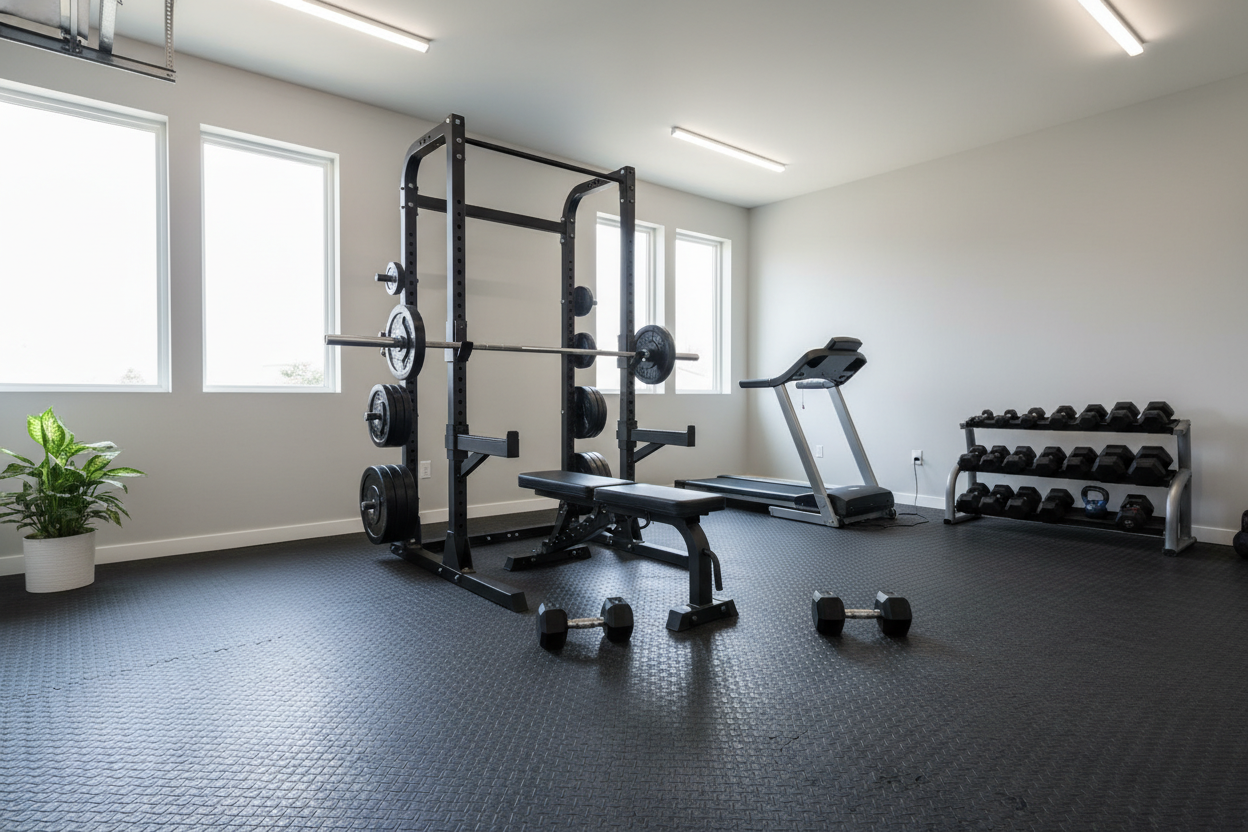
I remember standing in the aisle of a big-box sporting goods store three years ago, staring at a stack of boxes. My local gym had just hiked their rates for the third time, and I was determined to build a sanctuary in my garage. I walked out with the fitness gear flat bench because it was cheap, it was in stock, and I figured a bench is just a bench. I was wrong.
- Weight Capacity: 300 lbs (Total weight of user + barbell).
- Steel: 14-gauge steel frame.
- Pad Height: Approximately 17 inches.
- Best For: Light dumbbell work and bodyweight movements.
- Avoid If: You plan on benching 225 lbs or more.
The Allure of the $100 Big-Box Bench
The price tag is the primary hook. For about a hundred bucks, you get a piece of equipment that looks the part. It’s the gateway drug for home gym owners. When you’re just starting out, spending $400 on a competition-spec bench feels like overkill. You want something that fits in the trunk of a Honda Civic and doesn't require a master's degree in engineering to assemble.
The fitness gear fixed flat weight bench fills that void perfectly. It’s accessible. You can buy it on a whim during a Sunday errands run. For the first six months, it served me well for seated overhead presses and basic dumbbell rows. It felt sturdy enough for a novice, and the small footprint was a blessing in my cramped 10x12 utility room.
Steel Gauges and the 300-Pound Trap
Here is where the marketing gets tricky. The 300-pound weight capacity listed on the box isn't just for the iron on the bar—it includes you. If you’re a 200-pound guy, you technically only have 100 pounds of 'safe' capacity left for your barbell. That is a massive limitation that most beginners overlook until they start smelling the structural stress.
The 14-gauge steel used in the fitness gear fixed flat weight bench is thin. It’s fine for static loads, but weightlifting is dynamic. When you’re racking a heavy set and the bar slams into the uprights or you shift your weight during a grindy rep, that thin steel flexes. I’ve felt that 'sway' firsthand, and it’s a terrifying sensation when you have heavy metal hovering over your throat. If you're chasing a three-plate bench, this isn't your tool.
Pad Density: Why Your Shoulders Are Screaming
A bench is only as good as the foam between you and the steel. The pad on this unit is soft. Too soft. When you’re trying to retract your scapula and dig your shoulders into the bench for a stable base, the foam just collapses. You end up bottoming out against the plywood board underneath, which kills your leverage and puts unnecessary strain on your rotator cuffs.
If you read my Fitness Gear Pro Utility Weight Bench review, you’ll see that the adjustable version offers a slightly better experience, but the flat bench remains the budget king of 'mush.' For high-rep dumbbell flyes, it’s manageable. For max-effort pressing, it feels like trying to fire a cannon from a canoe. You need a firm surface to generate force, and this foam just doesn't provide it.
When It Makes Sense to Finally Upgrade
There comes a day when you realize your gear is holding back your gains. For me, it was the first time I tried to hit 225 lbs for reps. The bench creaked, the legs wobbled, and I spent more energy balancing the bench than moving the weight. That’s the signal. If you’ve graduated from 25-pound dumbbells to serious barbell work, it’s time to look for a heavy-duty weight bench that won't give up on you.
If you're worried about safety but still want to push heavy weight without a spotter, you might even consider moving away from the traditional barbell setup entirely. Something like the Weight Bench Chest Press Machine Independent Arms Z1 Pro offers that rock-solid stability that a budget flat bench simply cannot match. It removes the 'death trap' element of a wobbling frame and lets you focus on the squeeze.
The Final Verdict on This Garage Gym Staple
Is the fitness gear flat bench a piece of junk? No. It’s a specific tool for a specific person. If you are a casual lifter who sticks to 40-pound dumbbells and bodyweight step-ups, this bench will live in your garage for a decade. It’s light, easy to move, and gets the job done for the price of a couple of steak dinners.
But if you have any ambition of becoming truly strong, you’ll outgrow this bench in a year. I kept mine around for way too long, ignoring the slight tilt in the frame until a bolt literally sheared off during a move. Buy it to get started, but don't be afraid to ditch it the moment your strength starts to outpace the 14-gauge steel.
How hard is it to assemble?
It’ll take you about 15 minutes with a basic socket wrench set. The instructions are actually decent, and there aren't many moving parts to screw up.
Can I use this for box jumps?
I wouldn't. The center of gravity is high and the base isn't wide enough. You’re asking for a tipped bench and a trip to the ER.
Does the vinyl tear easily?
Surprisingly, the vinyl is tougher than the foam. Mine survived three years of sweat and being dragged across concrete without a single rip. Just don't let your cat near it.
Share:
How to Buy a Weights With Bench Combo You Won't Outgrow in 3 Months
I Built a Micro-Gym With Just a Weight Bench and Pull Up Bar