
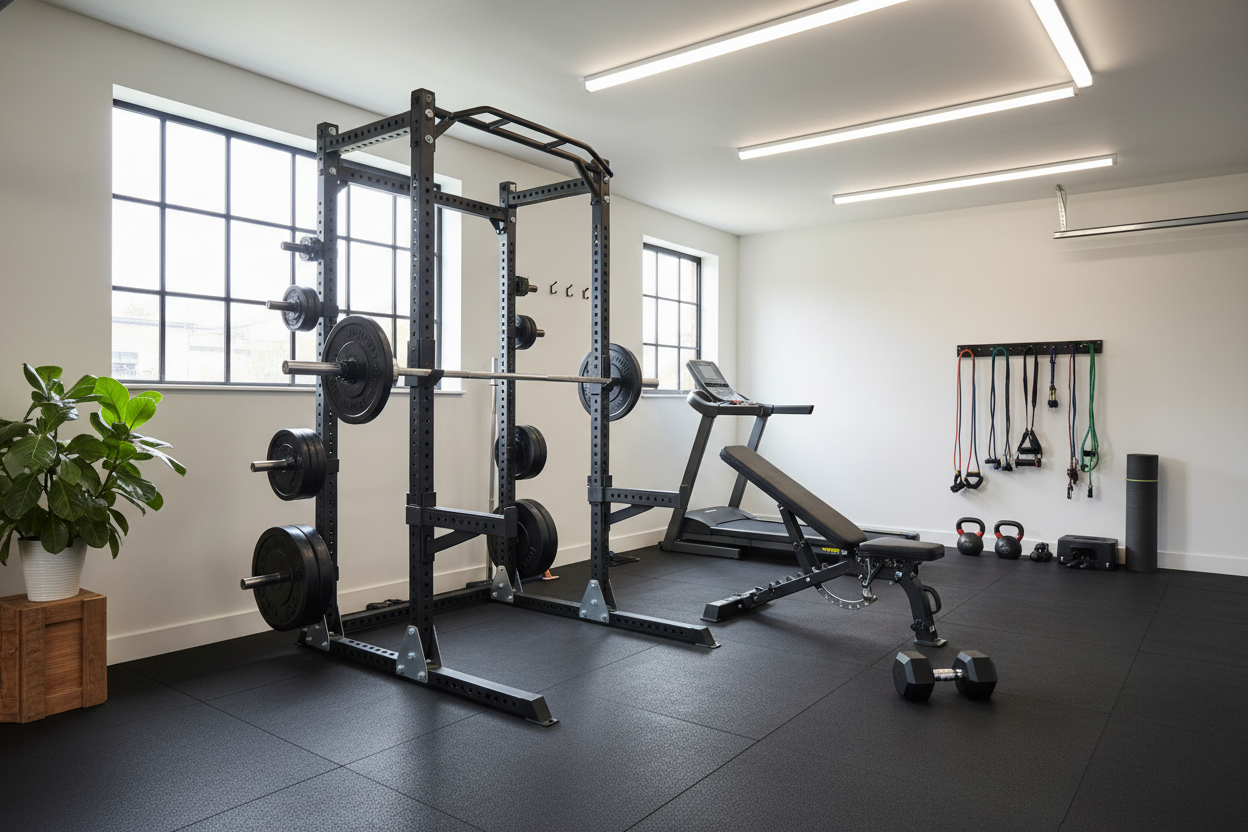
I remember the day I finally canceled my commercial gym membership. I was tired of the 5:00 PM crowds, the broken cable machines that stayed out of order for three months, and that one guy who spent twenty minutes on the only squat rack doing bicep curls. I sat in my empty garage, staring at a cold concrete floor, and asked myself: are home gyms effective for someone who actually wants to move heavy weight?
Five years later, I have my answer. My total is higher, my workouts are shorter, and I haven't waited for a rack in half a decade. But it wasn't an easy transition. You can't just throw a cheap yoga mat on the floor and expect to look like a pro bodybuilder. It takes the right steel and a massive shift in how you approach your training hour.
Quick Takeaways
- Yes, you can build elite strength at home, but only if your gear can handle the load.
- Distractions are the #1 killer of home gym progress—treat your garage like a sanctuary.
- Safety is your responsibility; spotter arms and safety pins are non-negotiable for solo lifters.
- Smart space management beats a room full of unused machines every single time.
The Elephant in the Room: Can You Actually Build Muscle at Home?
The biggest fear I had when I left my local club was that my gains would evaporate. We’ve been conditioned to believe that without a 40,000-square-foot facility and fifty different selectorized machines, muscle growth just stops. That is total nonsense. Your muscles don't know if you're in a $200-a-month luxury club or a damp basement; they only know tension, load, and volume.
In my first year of training at home, I actually put on more size than the previous three years combined. Why? Efficiency. I stopped scrolling my phone while waiting for equipment. I could superset movements that would be impossible in a public gym without getting yelled at. The effectiveness of a home setup isn't about the fluff; it's about the fact that you can maintain a higher training intensity when the only person you're competing with for floor space is yourself.
First Off, What Is a Home Gym Exactly?
When people ask what is a home gym, they usually picture a dusty treadmill and a pair of 5-lb neoprene dumbbells. That's a storage room, not a gym. A modern residential setup is a modular, high-performance environment designed to mimic the utility of a commercial weight room in a fraction of the footprint.
For most of us, this means a 3x3 or 2x3 steel power rack, an Olympic barbell with decent knurling, and a stack of iron or bumper plates. It’s about creating a 'hub' where you can perform the big four—squat, bench, deadlift, and press. If your equipment doesn't allow you to safely move 80% of your max, it's a hobby space, not a gym.
Why Most People Fail When Training in Their Garage
The failure rate for home lifters is high, and it's usually not because of the equipment. It's the 'house' creeping into the 'gym.' When your rack is five feet away from a pile of laundry or a lawnmower, it's easy to lose the aggressive mindset needed for a heavy session. You have to draw a line in the sand—or the sawdust.
Another trap is the 'more is better' gear mentality. I've seen guys cram so many machines into a 10x10 space that they can't even perform a proper lunging movement without hitting a leg press. Trust me, building the biggest home gym isn't the goal. If you can't move freely, your workout flow dies, your heart rate drops, and your results stall. Keep it lean and mean.
The Gear That Actually Drives Hypertrophy
To make home training effective, you need tools that allow for progressive overload without a spotter. You aren't going to get huge doing high-rep bodyweight squats forever. You need a reliable home gym setup that centers on a heavy-duty rack or a functional trainer that can take a beating.
If you're a solo lifter who likes to push to absolute failure on chest or leg day, a Smith machine home gym station is a massive asset. It gives you those integrated safety catches that allow you to grind out that final, ugly rep without worrying about the bar pinning you to the bench. For hypertrophy, being able to safely reach that failure point is what separates the guys who look like they lift from the guys who just 'work out.'
A Quick Warning About Clearances
Before you drop two grand on a rack, get a tape measure. I’ve seen too many lifters buy a standard 90-inch rack only to realize their garage ceiling is 88 inches. Or worse, they're 6'4" and can't finish a shoulder press without putting a hole in the drywall. Finding the best home gym for tall person is a specific challenge that requires looking for 'shorty' racks or folding setups that don't sacrifice stability for height.
The Verdict: So, Are Home Gyms Effective?
Home gyms are incredibly effective—provided you treat the space with respect. If you walk into your garage with a plan, a timer, and equipment that doesn't wobble when you rack a heavy bar, you will see results. The lack of a commute and the ability to blast your own music are just bonuses. The real win is the consistency that comes from having zero excuses to skip a session.
FAQ
Do I need a lot of space for a home gym?
Not really. I've seen guys build world-class physiques in a 6x8 foot corner. You just have to be smart. A folding rack and a set of adjustable dumbbells can cover 90% of your needs without taking up a car stall.
Is it cheaper than a gym membership?
In the long run, yes. A solid $2,000 setup pays for itself in about three years when you factor in membership fees and gas. Plus, high-quality gear holds about 70% of its resale value if you ever decide to sell.
How do I stay motivated at home?
Eliminate distractions. No TV, no phone (unless it's for music), and a dedicated 'gym only' pair of shoes. When the shoes go on, you're at work.
Share:
The Anatomy of Retail Gym Equipment That Actually Survives
The Best Places to Buy Gym Equipment When You're Tired of Wobbly Junk