
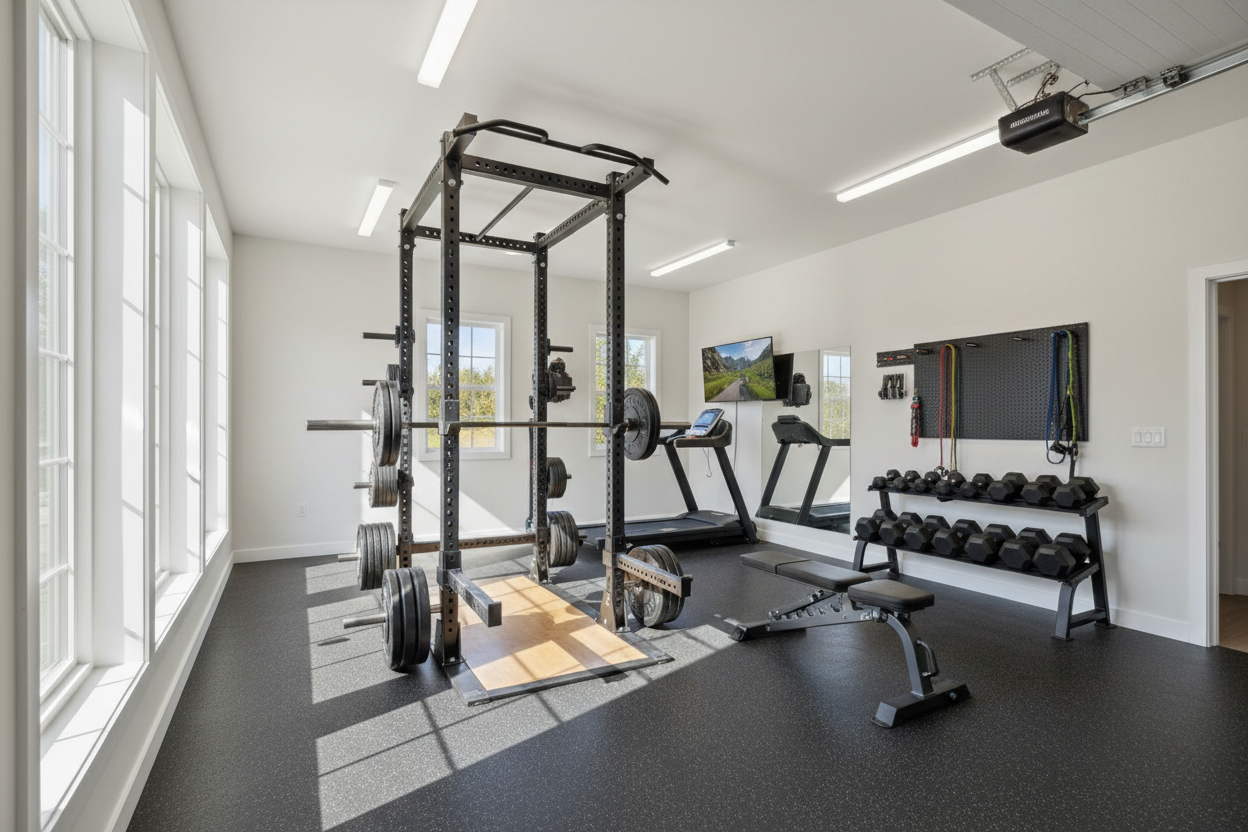
I am 6'4". In the world of fitness equipment, that makes me an outlier. I have spent years bumping my head on pull-up bars and realizing mid-set that my legs are too long for the leg extension attachment. Most gear is built for the 'average' person—someone around 5'9". If you are north of six feet, finding the best home gym for tall person feels like trying to fit into a budget airline seat. It is cramped, frustrating, and usually ends with a pulled muscle that has nothing to do with your workout.
Quick Takeaways
- Standard 72-inch racks are too short; aim for 84 inches or higher for standing overhead presses.
- Cable travel matters more than the weight stack—short cables will bottom out before you reach full extension.
- Check the 'working internal depth' of power racks to ensure your long limbs have room to move.
- Glide board systems require XL rails to prevent you from sliding off the top during squats.
The 6-Foot-Plus Curse: Why Standard Specs Lie to You
Most equipment manufacturers design for the middle of the bell curve. They want a machine that fits the most people possible, which usually means tall lifters get the short end of the stick—literally. When you start piecing together your Home Gym, you cannot just look at the footprint. You have to look at the geometry. If the seat-to-pedal distance is too short, your knees will be in your chest. If the pull-up bar is too low, you are doing 'kneeling' pull-ups. It is a compromise that kills motivation.
Building a home gym for tall person requires ignoring the 'best seller' lists and looking at the raw numbers. I have bought 'pro' level benches only to find my head hanging off the end like a discarded hoodie. You need a bench that is at least 48 inches long and a rack that does not force you to squat in a phone booth.
Cable Lengths and Travel: The Silent Killer of Tall Gains
This is where most tall lifters get burned. You buy a beautiful functional trainer, set up for a chest fly, and—clink. The weight stack hits the top before your arms are even halfway through the movement. Cable travel is the total distance the handle can move. For a tall lifter, you need at least 80 to 90 inches of travel for movements like overhead extensions or lunging cable presses.
Physics is a jerk when you have long levers. If a machine has a 2:1 ratio, it feels lighter, but it usually offers more travel. If it is 1:1, you get the full weight, but the cable is often too short for a 6'5" wingspan. Always check the max extension length before you drop two grand on a cable machine that restricts your range of motion.
Is There a Total Gym for Tall People That Actually Works?
I get asked about glide boards constantly. Can you actually find a total gym for tall person that does not feel like a toy? The standard models are often too short. When you lie down to do a press, your head is off the top; when you go to do a leg press, your butt is sliding off the bottom. It is a mess.
If you are dead set on this style, you have to look for the 'XL' versions. A total gym for tall people needs rails that are at least 90 inches long. Anything less and you are going to be limiting your eccentric phase just to stay on the board. For my money, these are great for recovery, but only if the rail length actually matches your height.
Rack Height vs. Ceiling Clearance: A Delicate Balance
The biggest mistake I see tall guys make is buying a short rack because they are scared of their ceiling height. Then they try to squat and realize they can't even stand up straight without hitting the crossmember. You want a rack that is at least 84 inches tall. If you have 8-foot ceilings, you have room, but you have to account for your flooring. Why The 4X8 Gym Mat Is The Gold Standard For Home Training is a must-read because that 3/4-inch rubber matting actually matters when you are measuring clearance for a pull-up bar.
I have spent time debating whether to get a Power Rack Or Smith Machine For Home Gym I Tried Both, and for tall guys, the power rack usually wins on 'working space.' A Smith machine has a fixed path that might not align with your longer limb geometry, whereas a rack lets you find your own natural groove. Just make sure the J-cups can go high enough so you aren't half-squatting just to unrack the bar.
My Blueprint for the Ultimate Long-Limbed Setup
If I were starting over today, I would skip the 'all-in-one' units that look like Swiss Army knives. They are usually too cramped. Instead, I would look for a Smith Machine Home Gym Station that specifically advertises a high-pulley height of 80+ inches. You need that verticality to get a full stretch on lat pulldowns without sitting on a pancake-flat bench.
My non-negotiables are: 11-gauge steel uprights (for stability when the weight is high up), a bench with a 12-inch wide pad for broader shoulders, and a pulley system that does not bottom out. Don't settle for gear that forces you to shorten your stride or truncate your reps. You're tall; your gym should reflect that.
Personal Experience: The Ceiling Fan Incident
I once set up a power tower in a spare bedroom with 7.5-foot ceilings. I'm 6'4". On my very first set of pull-ups, I got an 'explosive' pump—mostly because I put my head through a spinning ceiling fan. It was a literal headache. I also spent six months using a leg press that didn't have enough carriage travel, which basically meant I was doing half-reps and wondering why my quads weren't growing. I finally sold it at a loss and bought a commercial-spec unit. Lesson learned: measure your full extension, not just your standing height.
FAQ
What is the minimum rack height for someone over 6'2"?
Don't go lower than 84 inches. Anything shorter will make pull-ups awkward and might prevent you from racking a barbell at the proper height for squats.
Can tall people use a standard weight bench?
Technically yes, but look for a 'competition' length bench (approx. 48 inches). Shorter benches will leave your head or hips hanging off the edge, which is dangerous under heavy loads.
Why do I keep hitting the top of my cable machine?
You are bottoming out the stack because the cable travel is too short for your reach. Look for machines with a 2:1 ratio, as they typically offer double the cable length of 1:1 systems.
Share:
Your Compact Home Gym Is Lying About Its Footprint
Your Gear Snapped. Did You Actually Pick the Best Fitness Shop?