
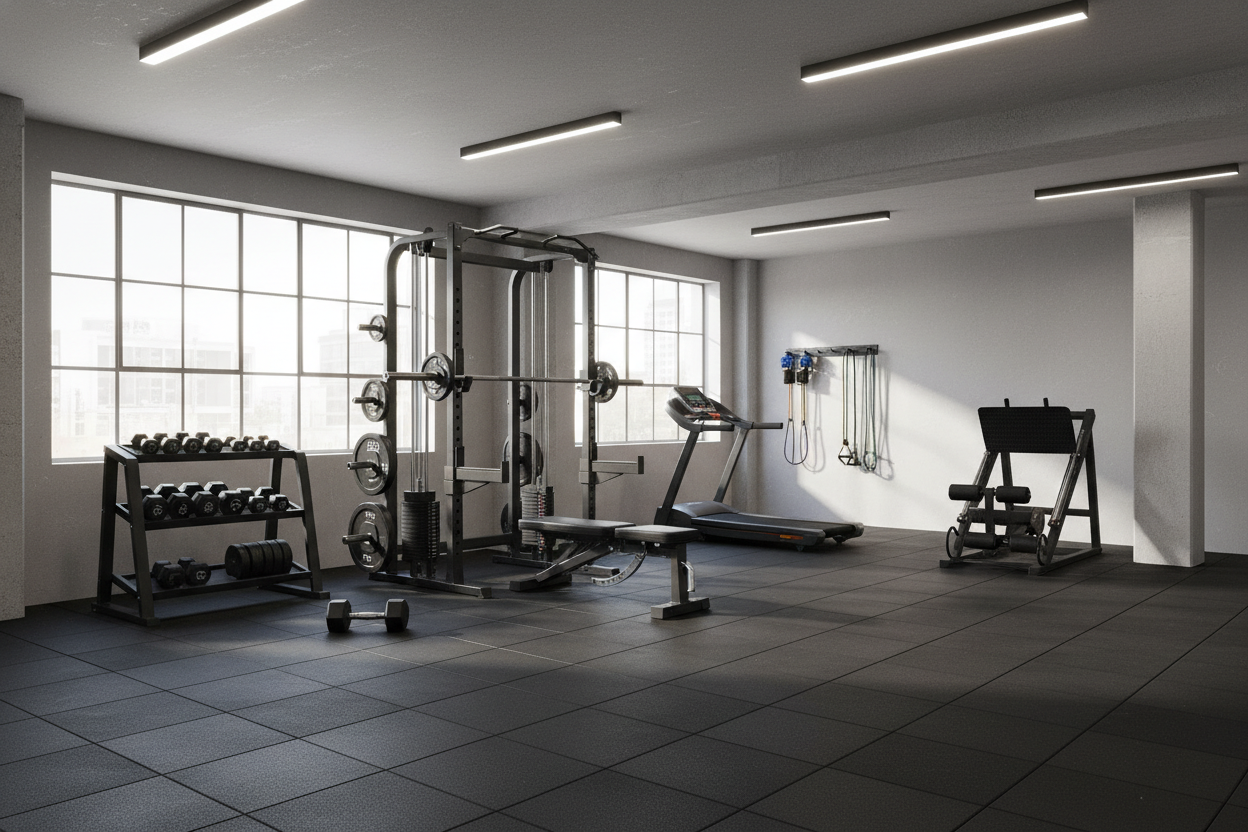
I remember the exact moment I decided to build a home gym. I was standing in a commercial 'health club' waiting for the only functional trainer while a guy used it to stretch his hamstrings for twenty minutes. I went home and started looking for muscle building machines that would fit in my 12x12 spare room. What I found was a sea of cheap, rattling plastic that looked more like a clothes hanger than actual gym equipment to build muscle.
Quick Takeaways
- Look for 11-gauge steel frames; if it weighs less than you do, it will wobble.
- Prioritize plate-loaded equipment to save thousands on shipping and weight stack costs.
- Aluminum pulleys are non-negotiable for cable longevity and smoothness.
- Lower body isolation requires specialized, compact rigs to avoid 'barbell fatigue.'
The Glaring Problem With Most 'Residential' Hypertrophy Gear
Most exercise equipment to build muscle marketed for home use is, frankly, garbage. Manufacturers know that the average person sees a shiny 150-lb weight stack and thinks it's enough. But if you're serious about hypertrophy, you know that mechanical tension is the only thing that matters. When a machine uses thin 14-gauge steel and cheap plastic bushings, the frame flexes under load. That flex steals tension from your muscles and puts it into the machine's joints.
I once bought a budget 'all-in-one' station that claimed a 200-lb capacity. The first time I tried a heavy chest press, the uprights bowed inward so much the cables jumped the track. You can't reach true failure when you're terrified the machine is going to implode. If you want equipment for muscle building that actually works, you need to look for high-tensile cables and a footprint that stays anchored to the floor without bolting, unless you're ready to drill into your slab.
Plate-Loaded vs. Selectorized: What Actually Makes Sense?
Selectorized machines—the ones with the pin and the weight stack—are the gold standard for convenience. But they are a nightmare for home logistics. A 200-lb stack adds 200 lbs to your shipping bill and is a fixed limit you'll eventually outgrow on rows or presses. Plate-loaded muscle gain equipment is the smarter play for 90% of garage gym owners. You already own the plates; why pay for more iron just because it's in a stack?
Lever-arm machines are the secret weapon here. They provide a fixed path of motion similar to commercial Hammer Strength pieces but take up half the room. By using your own Olympic plates, you can micro-load with 1.25-lb or 2.5-lb increments. Most selectorized stacks jump by 10 or 15 lbs, which is a recipe for a plateau when you're trying to build stubborn muscle groups like side delts or triceps.
The Heavy-Duty Combo Rigs That Don't Feel Like Toys
If you only have one corner of the garage, a combo rig is the only way to go. But 'combo' shouldn't mean 'compromise.' I look for units that combine a power rack with a high-end cable system. If you want a guided path for heavy pressing or squats, a Smith Machine Home Gym Station is a solid choice, provided it uses linear bearings. I've tested some that use plastic slides, and the friction makes 100 lbs feel like 150 lbs on the way up and 50 lbs on the way down. That's a hypertrophy killer.
Check the pulley ratio. A 2:1 ratio means 100 lbs on the stack feels like 50 lbs in your hand, but you get double the cable travel. This is essential for functional movements and high-volume isolation work. If the machine feels jerky, it's usually the pulleys. Swap the plastic ones for aluminum, and you'll immediately notice the difference in how your muscles 'track' the weight through the full range of motion.
Isolating the Lower Body Without Giving Up Your Parking Spot
Leg day is usually where home gyms fail. You can only do so many goblet squats before your grip gives out. To get real leg growth, you need to isolate the quads and glutes without your lower back becoming the limiting factor. Massive commercial leg presses are great, but they're the size of a Smart car. Instead, look for dedicated pieces that focus on the posterior chain.
A compact Hip Thrust Machine Glute Muscles Building Ht01 is a perfect example of a space-saving win. Setting up a 405-lb barbell hip thrust with a bench and a pad is a 10-minute chore that leaves your shins bruised. A dedicated machine provides a stable pivot point and consistent tension that hits the glutes far harder than a wobbly barbell setup ever could. When the machine is built with a heavy-gauge steel base, you can actually push to failure safely.
The Verdict: Getting Huge on a Minimalist Setup
You don't need a 5,000-square-foot facility to look like a pro. You need a few key pieces of equipment that allow for progressive overload and maximum mechanical tension. I've seen guys build world-class physiques in a single-car garage using nothing but a rack, a bench, and a high-quality cable system. Can Simple Equipment for Home Exercise Actually Build Muscle? You bet it can, as long as the gear is stable enough to let you train hard.
My biggest mistake early on was buying the 'Swiss Army Knife' of gyms—a machine that did 50 things poorly. Now, I buy three things that do one thing perfectly. Stick to heavy steel, smooth cables, and plate-loaded levers. Your joints and your gains will thank you.
FAQ
Do I need a 1:1 or 2:1 pulley ratio?
For most hypertrophy work, a 2:1 ratio is better. It offers a smoother feel and more cable length for rows and crossovers. A 1:1 ratio is better for heavy lat pulldowns where you want the full weight of the stack.
Is 14-gauge steel okay for a home gym?
It's okay for light accessories, but for a main rack or pressing station, I'd stay away. 11-gauge is the industry standard for anything you plan on loading heavy. It doesn't flex, which means the tension stays on your muscles.
How do I maintain my cable machines?
Keep the guide rods clean. Wipe them down once a month with a dry cloth and apply a tiny bit of silicone spray. Never use WD-40; it attracts dust and will turn your smooth cables into a gritty mess.
Share:
Why Pull-Ups Aren't Enough: The Back Exercise Home Equipment You Need
I Tested 5 Types of Weight Plates (And Kept Just One)