
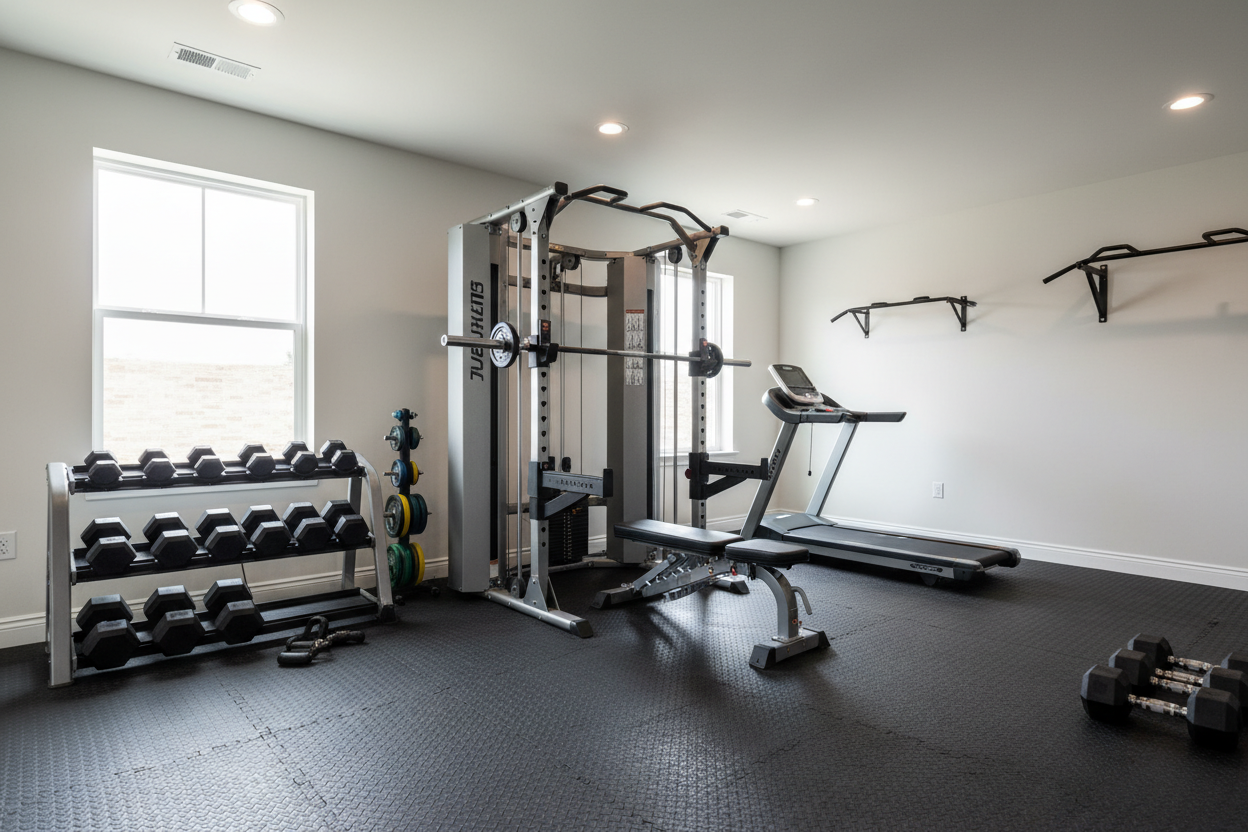
I remember staring at my garage floor last winter, tripping over a pair of stray 45-pound plates while trying to find enough clearance for a simple bench press. The local commercial gym had just hiked their monthly dues again, and the 20-minute commute was eating my soul. I wanted one complete body exercise machine that could handle heavy squats, cable crossovers, and pull-ups without turning my house into a cluttered scrap metal yard.
- Build quality matters more than the number of 'advertised' exercises.
- Commercial-grade pulleys and steel cables are non-negotiable for safety.
- Measure your ceiling height twice before clicking buy.
- Integrated weight stacks beat plate-loaded systems for sheer convenience.
The Myth of the 'Do Everything' Rig
Most 'all-in-one' machines you see on late-night TV are marketing traps. They claim to offer 50 different movements, but the reality is that the range of motion is so awkward you only end up using three of them. People get sucked into buying complete body workout equipment because it promises a shortcut to a finished gym, but most cheap stations do 20 things terribly instead of 5 things well.
If the machine feels like it’s going to tip over when you perform a pull-up, it’s not a gym replacement; it’s a hazard. True exercise machines for whole body training need mass. You want heavy-gauge steel and a footprint that stays anchored when you’re moving heavy weight. If it’s light enough for one person to carry the box inside, it’s probably not going to survive a heavy leg day.
What Separates a Good Complete Body Exercise Machine from Junk?
When you’re looking at a full body fitness machine, the first thing I check is the pulley ratio and the smoothness of the guide rods. If there is any 'catch' or friction when you pull, your muscles aren’t getting consistent tension. High-quality exercise machine full body setups use dual pulley systems that allow for unilateral work, which is vital for fixing muscle imbalances.
A prime example of a rig that actually holds up is a full body multi training station Smith machine. These units combine a functional trainer, a power rack, and a Smith system into one footprint. Because they use integrated weight stacks and 11-gauge steel, they don't walk across the floor when you're doing cable rows. That’s the level of stability you need if you’re serious about building muscle at home.
The Problem With Flimsy Multi-Gyms
I’ve wasted money on full body weight equipment that used 'proprietary resistance rods' or plastic pulleys. Within three months, the plastic started to shave off, and the 'smooth' feel turned into a grinding mess. If a whole body exercise machine relies on bungee cords or thin nylon strings, stay away. You can’t progressive overload effectively when the resistance feels 'mushy' at the top of the movement.
Why Functional Trainers and Smith Combos Survive the Test
There is a reason you see Smith machines and cable crossovers in every pro gym. They work. Many lifters ask is a Smith rig the best exercise machine for full body workout plans? For a home setup, the answer is usually yes. It provides a built-in spotter for solo heavy lifting while the cable side handles your flyes, press-downs, and curls. It’s the most versatile total body workout gym equipment you can put in a garage.
Let's Talk About Floor Space and Footprint
Buying a full body exercise machine for home use is a commitment to space. You’re looking at roughly a 6x8 foot area once you account for the bar path and your own movement. However, you have to look at the 'net' space. One total body exercise machine replaces a squat rack, a cable crossover, a pull-up station, and a dedicated bench press. When you consolidate, you actually get your floor back.
If you're tight on room, look for a Smith machine home gym station that features vertical storage for your plates and attachments. Keeping the total body fitness equipment organized is half the battle in a home gym. I’ve found that having everything in one 'hub' makes me more likely to actually finish my accessory work instead of skipping it because I didn't want to drag out more gear.
Who Should Actually Buy One?
If you’re a competitive powerlifter who needs to practice specifically with a competition barbell and a monolithic rack, a complete exercise machine might feel too restrictive. But for the 95% of us who just want to look better, get stronger, and save time, these rigs are a godsend. You can jump from a heavy chest press to a cable row in ten seconds. That efficiency is what actually keeps you consistent.
Personal Experience: My 'Cheap' Mistake
I once bought a body gym machine from a big-box store because it was $400 cheaper than the commercial-grade version. Big mistake. The first time I tried to do weighted dips on the attachment, the whole frame groaned and flexed. I ended up selling it for a loss two months later. Buy once, cry once. Get a total body workout machine that weighs more than you do.
Frequently Asked Questions
Can you really build leg mass on an all-in-one machine?
Yes, provided it has a Smith bar or a legitimate squat rack component. Cables are great for lunges and kickbacks, but you need the ability to load heavy for squats and presses to see real quad growth.
Are weight stacks better than plate-loaded machines?
Weight stacks are faster for drop sets and keep the whole body workout equipment tidier. Plate-loaded machines are usually cheaper and allow for a higher total weight capacity if you're an elite-level lifter.
How much ceiling height do I need?
Most full body home gym equipment stands between 80 and 84 inches tall. I recommend at least 90 inches of clearance so you don't smack your head on the ceiling during pull-ups.
Share:
I Bought an Aokeou Adjustable Dumbbell Expecting It to Break
The Only 3 Workout Bench Accessories Actually Worth Your Money