
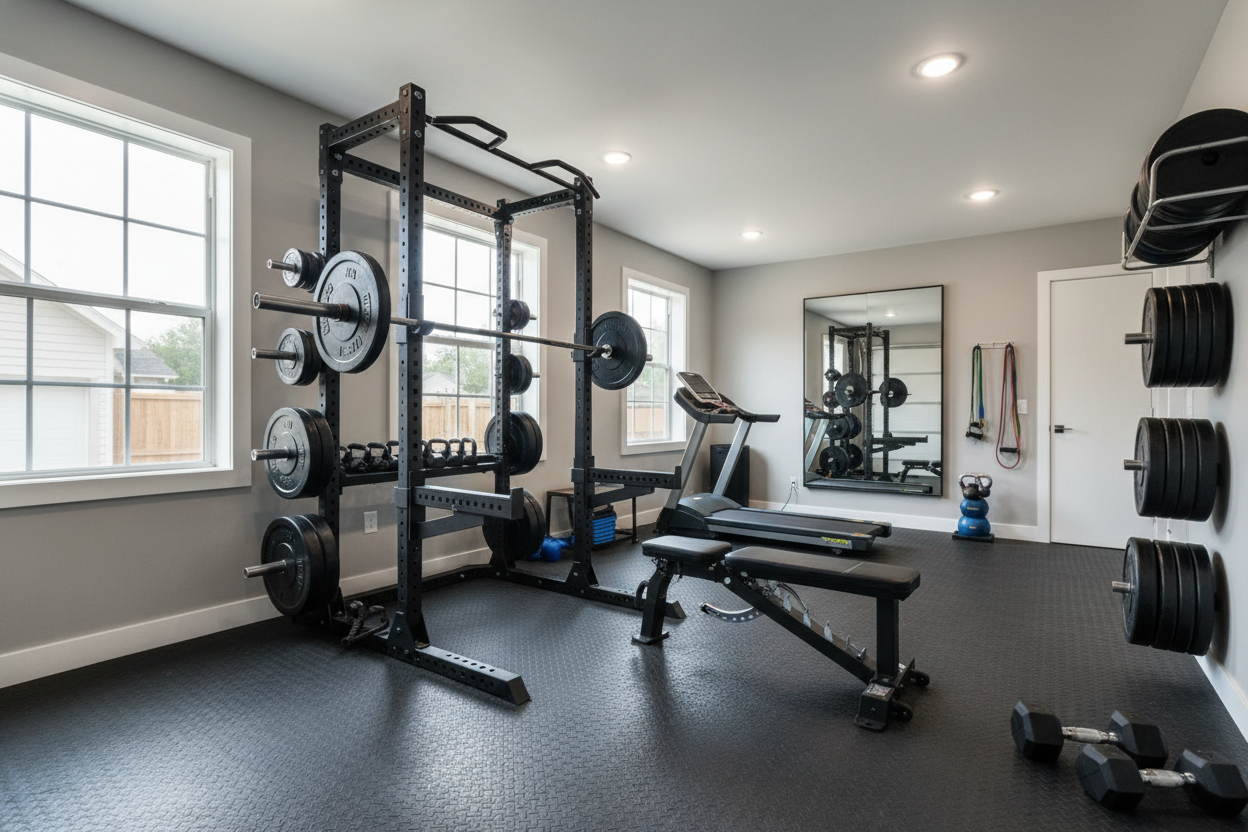
I remember the day I finally quit my commercial gym. They hiked the monthly fee to $95, and I was still waiting twenty minutes for a squat rack while some kid filmed his TikToks. I went home and immediately bought the first cheap set of adjustable dumbbells I saw online. Big mistake. They rattled like a bag of loose change and felt like they would fall apart if I breathed on them too hard. Finding decent exercise equipment for home is harder than it should be because the market is flooded with plastic junk.
Quick Takeaways
- Prioritize 11-gauge or 14-gauge steel over anything that comes in a box from a big-box retailer.
- A quality barbell and rack are the foundation; everything else is just an accessory.
- Ignore 'as seen on TV' gadgets—if it folds into a suitcase, it won't build muscle.
- Measure your ceiling height twice before buying any home gym machines.
The 'Instagram Made Me Buy It' Trap
Most home gym fitness equipment you see on social media is designed to look good in a 15-second clip, not to survive a heavy deadlift session. I have spent thousands on gym instruments for home that ended up in the landfill within six months. The biggest trap is buying 'innovative' resistance band systems that claim to replace 500 lbs of iron. They don't. They lack the progressive overload needed for real gains.
You need to know the red flags to look for in any exercise machine before you drop your hard-earned cash. If the frame is made of thin, hollow aluminum or the weight capacity is under 300 lbs, it is household gym equipment for aesthetics, not for training. Real equipments for workout should feel like they belong in a dungeon, not a toy store.
The Core Four: What Actually Builds Muscle
If you are serious about building a functional home gym, you need the 'Core Four.' This consists of a power rack, an Olympic barbell, iron or bumper plates, and an adjustable bench. This working out equipment is the bedrock of every legendary garage gym. You can do 90% of your training with just these four items. Basic home exercise equipment like a solid flat bench will always outperform a $3,000 vibrating platform.
When shopping for workout equipment, do not skimp on the barbell. A cheap bar will bend the first time you load it with more than 225 lbs. Look for a bar with at least 190,000 PSI tensile strength. Your workout tools should be an investment that lasts a decade, not a single season of New Year's resolutions.
Why Your Rack Dictates Everything
The rack is the centerpiece of your indoor workout equipment. If it’s wobbly, you’ll never feel safe squatting heavy. I prefer a 3x3-inch upright with 11-gauge steel. It’s overkill for some, but I want to know the safeties will catch the bar if I fail a rep. Also, check the hole spacing. Westside spacing (1-inch gaps through the bench zone) allows you to set the perfect height for your bench press, which is a luxury you won't find on cheap home gym supplies.
Machines That Actually Make Sense in a Spare Room
I used to be a free-weight purist, but I’ve softened on home gym exercise equipment that uses cables. A functional trainer or a lat pulldown can add much-needed variety to your home workout set. However, space is usually the enemy. People often ask if all in one exercise equipment for home is a waste of money. It depends on the pulley ratio and the smoothness of the travel.
If you are short on space but want the stability of a fixed path, a Smith machine home gym station can be a smart move. It combines a squat rack with a guided bar, making it safer for solo lifters. These are great sport equipment for home because they often include integrated cable crossovers, saving you from buying separate workout items for home.
Cardio Gear That Won't Turn Into a Clothes Hanger
We’ve all seen it: the massive treadmill in the corner of a bedroom covered in laundry. Most at home exercise machines are too bulky for the average house. If you want equipment for fitness at home that you’ll actually use, look at the footprint. I prefer a rower or a compact bike over a treadmill any day.
A foldable upright exercise bike is a great example of smart home workout gear. You can slide it into a closet when the workout is over. For home workout supplies, versatility is king. If a machine only does one thing and takes up 15 square feet, it’s probably not worth it for your personal exercise equipment collection.
The Final Verdict on Outfitting Your Space
Building a home exercise system doesn't have to happen all at once. Start with a $500 budget for a used barbell and some plates. Then, move up to a $1,500 tier where you add a solid rack. If you're going for a $3,000+ setup, that's when you start looking at specialty workout devices and premium home workout accessories. Always prioritize heavy metal over plastic. Iron doesn't lose its value; plastic gadgets do.
My Honest Mistake
Two years ago, I bought a 'smart' home workout tool that required a $40/month subscription just to see my stats. The screen broke after 14 months, and the company went out of business. Now I have a 100-lb paperweight in my garage. I learned my lesson: buy gym tools that work without a Wi-Fi connection. The best training equipment for home is the stuff that still works when the power goes out.
FAQ
What is the most essential piece of home workout stuff?
A rack and a barbell. Everything else—dumbbells, kettlebells, and cables—is secondary. If you can squat, bench, and press, you can build a world-class physique.
Is it cheaper to buy a home workout kit or individual pieces?
Usually, buying a home workout set or bundle saves you about 10-15% on shipping and unit price. Just make sure the kit doesn't include 'filler' items you'll never use.
How much space do I need for exercise equipment for home use?
A standard power rack needs about an 8x8 foot area to allow for the 7-foot Olympic bar and some walking room. If you're in a tight apartment, look for a folding rack that mounts to the wall.
Share:
The Only 3 Workout Bench Accessories Actually Worth Your Money
Searching the Wrong Leg Curl Machine Name Cost Me $400