
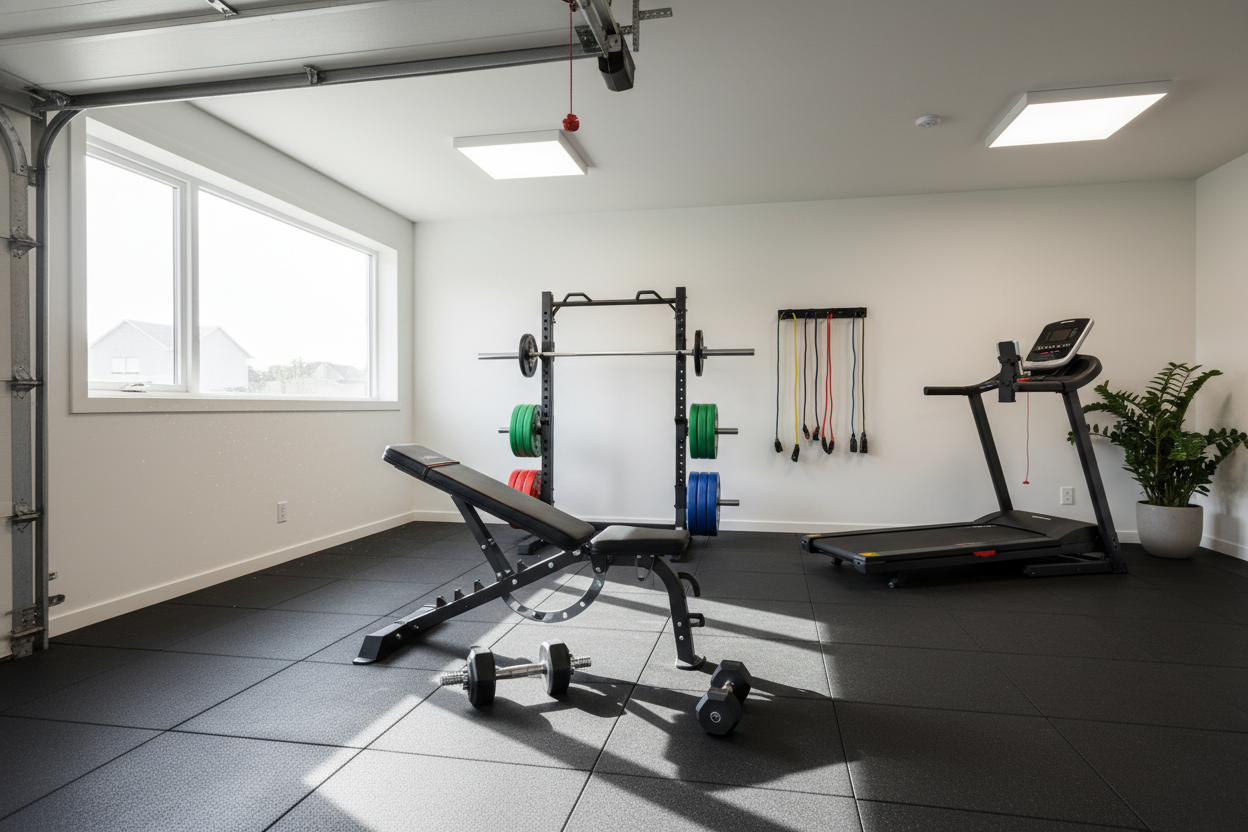
I spent three hours last night scrolling through the abyss of fitness gear, specifically looking for a foldable workout bench amazon kept serving up in my 'Recommended for You' section. Every listing looked identical. Same photoshopped guy with 22-inch arms, same 'heavy duty' claims, and same weird brand names that sound like they were generated by a broken algorithm. It's frustrating because when you're training in a 400-square-foot apartment, you actually need gear that disappears when you're done, but you also don't want to end up in the ER because a $90 hinge decided to quit.
Quick Takeaways
- Most '1,000-lb capacity' ratings are static load lies; dynamic capacity is much lower.
- Look for 14-gauge steel or better; if it feels light enough to carry with one finger, it's a toy.
- Avoid benches where the main support hinge is held by a single, thin cotter pin.
- If you are pressing more than 200 lbs total, a non-folding bench is a non-negotiable safety upgrade.
Why the Amazon Search Results Look Like a Glitch in the Matrix
If you feel like you're seeing double while searching for a folding workout bench amazon, you aren't crazy. Most of these products are 'white-labeled.' A factory in China produces one standard design, and fifty different brands buy them in bulk, slap a screen-printed logo on the vinyl, and ship them to an Amazon warehouse. This is why you'll see the exact same triangular frame, the same red-stitched padding, and the same plastic feet on five different listings with prices ranging from $85 to $140.
Don't be fooled by the price hike. Higher cost doesn't always mean better quality in this niche; it often just means that specific seller is spending more on sponsored ads to get in front of your face. I've seen 'premium' versions of these benches arrive with the exact same flimsy hardware as the budget ones. When shopping, ignore the brand name. Look at the weld points and the thickness of the steel tubes instead. If the 'brand' sounds like a collection of random Scrabble tiles, you're looking at a white-label special. These aren't necessarily all trash, but you need to know that you're buying a commodity, not a piece of engineered precision.
The '1000-lb Capacity' Lie (And How to Do the Real Math)
Marketing teams love the number 1,000. It sounds tank-like. But there is a massive difference between static load and dynamic load. Static load means they gently stacked 1,000 lbs of calibrated plates on the bench and it didn't collapse. Dynamic load is you, weighing 200 lbs, dropping onto the bench with a pair of 80-lb dumbbells. That sudden force is what snaps cheap metal. If a bench weighs less than 30 lbs itself but claims a half-ton capacity, run. Physics doesn't work that way.
Most of these cheap frames use thin-walled steel that flexes under pressure. When the padding is also sub-par, it compresses instantly, leaving you feeling like you're lying on a cheap ironing board. Your shoulder blades shouldn't be grinding against a metal frame because the foam gave up. A real, trustworthy rating for a home-use folding bench is usually around 400-500 lbs. If they claim more for under a hundred bucks, they're counting on you never actually testing that limit. I always look for high-density foam that's at least 2 inches thick. If you can pinch the pad and feel the wood or metal underneath with your thumb and forefinger, it's going to be a miserable experience once you start moving real weight.
Hardware Check: What Actually Keeps a Folding Frame Safe
The weakest point of any folding bench is the hinge. On a standard bench, the frame is welded solid. On a folding one, you're relying on a pin or a bolt to hold your entire body weight. I've spent years testing portable workout benches, and the first thing I check is the 'slop' in the joint. If the bench wobbles side-to-side before you even sit on it, it's only going to get worse once you add a load.
Look for oversized locking pins with a thick diameter. Avoid the spring-loaded 'pull-and-twist' knobs if they feel like plastic junk; those threads strip easily. You want a pin that goes all the way through both sides of the frame. Also, check the footprint. Foldable benches often have narrower legs to make them easier to store, but a narrow base is a recipe for tipping during lateral movements like dumbbell rows or step-ups. If the rear stabilizer is less than 12 inches wide, keep looking. A good folding bench should feel like a solid piece of furniture once it's locked into place. If it rattles when you move it, it’s going to scream when you bench on it.
When You Should Give Up on the Folding Gimmick
I get it. Space is a premium. But there comes a point in every lifter's progression where a folding bench becomes a liability. If you've moved past the beginner phase and you're starting to chase heavy triples on the bench press, that hinge in the middle of your seat is a ticking time bomb. The more moving parts a piece of equipment has, the more ways it can fail. The 'stowable' feature is a convenience, but it shouldn't come at the cost of your spine.
If you have a dedicated corner for your rack, do yourself a favor and invest in a reliable weight bench that stays put. You'll immediately notice the difference in 'stickiness' to the floor and the lack of terrifying creaks when you set up your arch. If you still need adjustability for incline work but want something that won't fold like a lawn chair under a 225-lb bar, look for a solid adjustable weight bench. It might not fit under your bed, but it will actually support your progress without making you wonder if today is the day a weld snaps. Once you feel the stability of a 60-lb frame versus a 20-lb folding toy, you'll never want to go back.
Personal Experience
A few years back, I bought one of those 'Amazon Choice' folding benches because I was working out in a tiny sunroom. Everything was fine until I tried to do Bulgarian split squats with a 50-lb kettlebell. As I drove up, the rear locking pin sheared slightly, and the bench shifted three inches to the left. I didn't get hurt, but I lost all trust in that piece of equipment. I ended up selling it for twenty bucks and buying a fixed flat bench. It took up more room, but my squats and my peace of mind improved instantly. Don't let a 'convenient' fold-up feature be the reason you're sidelined with a torn ligament.
FAQ
Are folding benches safe for heavy lifting?
Generally, no. Most are rated for light-to-moderate dumbbell work. If you're using a barbell and pushing heavy weight, the hinges and pins on a folding bench are significant points of failure that can't match a welded frame.
How do I know if the weight capacity is real?
Check the weight of the bench itself. A sturdy bench usually weighs at least 40-50 lbs. If the bench is feather-light but claims a 1,000-lb limit, the manufacturer is using static load numbers that don't apply to real-world training conditions.
Can I store a folding bench in a garage?
Yes, but be careful with moisture. Cheap Amazon benches often have poor powder coating, and the internal hinges can rust quickly if left in a damp garage, making the folding mechanism dangerous over time. Keep it oiled or stored indoors.
Share:
The Truth About the Best Adjustable Weight Bench Reddit Hypes Up
Why Your Weight Bench With Attachments Feels Like a Cheap Toy