
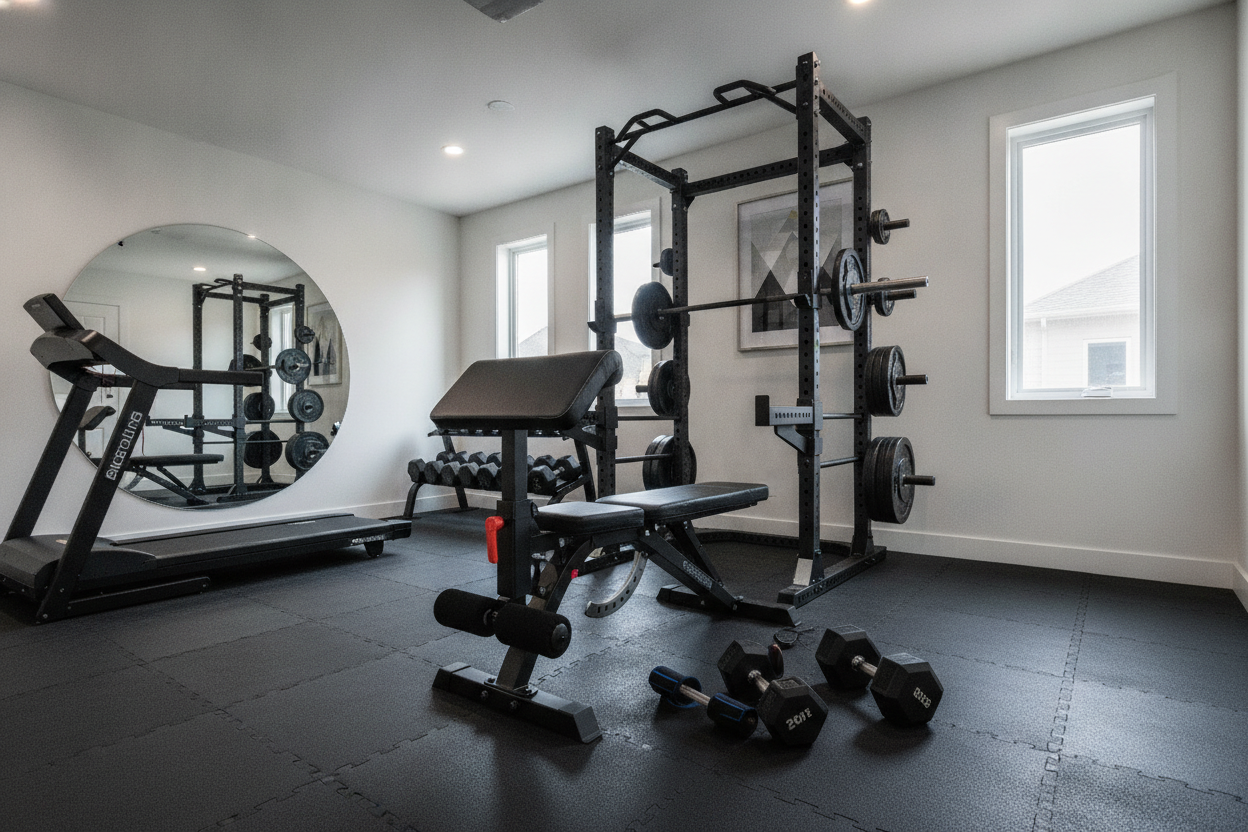
I remember the first time I tried to do heavy leg extensions on a budget modular bench. I loaded up two 45-pound plates, sat down, and the entire back of the bench lifted three inches off the floor before I even started the rep. If you are currently hunting for a weight bench with attachments, you have likely seen those $150 deals that promise to replace an entire commercial gym. Most of them are junk.
Quick Takeaways
- Steel Matters: If it is not 11 or 12-gauge steel, it will flex when you load the attachments.
- Pivot Points: Look for bearings or bushings, not just a bolt through a hole.
- Stability: A U-shaped front foot is mandatory to prevent the bench from tipping during leg work.
- Tolerance: The 'slop' or wiggle in the attachment post determines if your workout feels professional or amateur.
The Modular Gym Dream vs. The Wobbly Reality
We all want the dream: one footprint that lets you hit chest, quads, and biceps without moving an inch. It sounds efficient until you realize most manufacturers treat the bench with attachments as an afterthought. They build a decent enough bench and then tack on a flimsy weight bench leg developer that feels like it was made from recycled soda cans.
The physics are usually the first thing to fail. When you hang weight off the very front of an adjustable bench, you are creating a massive lever. Without a heavy frame or a wide front stabilizer, that lever wants to pull the back of the bench up. I have seen guys have to sandbag the back of their bench just to keep it grounded. That is not training; that is a safety hazard.
The 3 Dead Giveaways of a Gimmicky Workout Bench With Attachments
First, look at the gauge of the steel on the attachment receiver. If that square tube looks thin, it is going to 'oval' out over time. Every time you kick out for a leg extension, that post will rattle inside the frame. It’s distracting, loud, and eventually, the metal will fatigue and fail. A high-quality all-in-one weight bench combo uses thick-walled steel and tight tolerances to minimize that annoying side-to-side play.
Second, check the pivot point on the leg developer. Cheap benches use a simple bolt-and-nut setup. This creates metal-on-metal friction that feels 'crunchy' during your set. You want to see a bronze bushing or a ball bearing. If it doesn't swing smoothly when empty, it’s going to feel like a nightmare with 100 pounds on it.
Third is the lack of counter-weighting. A real adjustable bench with attachments needs to be heavy. If the whole unit weighs less than 70 pounds, it’s going to slide around your garage floor the moment you start working hard. I look for units with a total weight north of 100 pounds to ensure the thing actually stays put.
Do You Actually Need an Adjustable Bench With Attachments?
I get the space argument. My first gym was a 10x10 shed, and I fought for every square inch. But you have to ask yourself if the 'versatility' is actually helping your gains. If the preacher curl attachment is so high that your shoulders are in your ears, you aren't going to use it. If the leg developer hits your shins at a weird angle because the geometry is off, it’s just taking up space.
Sometimes, you are better off buying a rock-solid standalone adjustable weight bench and using floor-based movements or bands for your accessory work. A dedicated bench usually has better padding, higher weight capacities, and zero wiggle. If you aren't cramped for every single inch, separate machines will always outperform a multi-tool bench.
How to Spot a Bench With Attachments That Actually Works
If you are committed to the modular route, look for a U-shaped front foot. This design spreads the contact point with the floor, making it nearly impossible for the workout bench with attachments to tip forward during leg extensions. It is a simple engineering fix that most budget brands skip to save on shipping costs.
Also, pay attention to the adjustment mechanism. You want a pop-pin that threads in or locks deeply into the post. If there is a lot of 'slop' between the attachment and the bench frame, you can sometimes fix it with a bit of athletic tape around the insert, but you shouldn't have to DIY a brand-new product. When you're finally ready to stop dealing with shaky gear and start upgrading your weight bench, prioritize the weight of the unit itself. Mass moves mass, and a heavy bench is a stable bench.
My Honest Take
I once bought a 'pro' modular bench from a big-box store. Within three months, the leg attachment was bent at a 5-degree angle because the steel couldn't handle 150-pound leg curls. I ended up selling it for half what I paid and buying a dedicated leg machine. If you buy modular, buy once and buy heavy. Don't let a $200 'deal' ruin your leg day.
FAQ
Can I use Olympic plates on most leg attachments?
Most come with a standard 1-inch post, but they usually include an Olympic adapter sleeve. Just make sure the sleeve is secured with a hex bolt, or it will slide off mid-set.
What is the weight capacity for most attachments?
On budget models, it is usually around 100–150 lbs. High-end modular benches can often handle 250 lbs or more on the leg developer. Always check the manual before maxing it out.
Are preacher curl attachments worth it?
Only if they are height-adjustable. If you can't align your elbows with the pivot point of the bench, you're going to put unnecessary strain on your tendons instead of your biceps.
Share:
Can You Actually Trust a Foldable Workout Bench Amazon Recommends?
Why Your Compact Workout Bench Feels Like a Cheap Ironing Board