
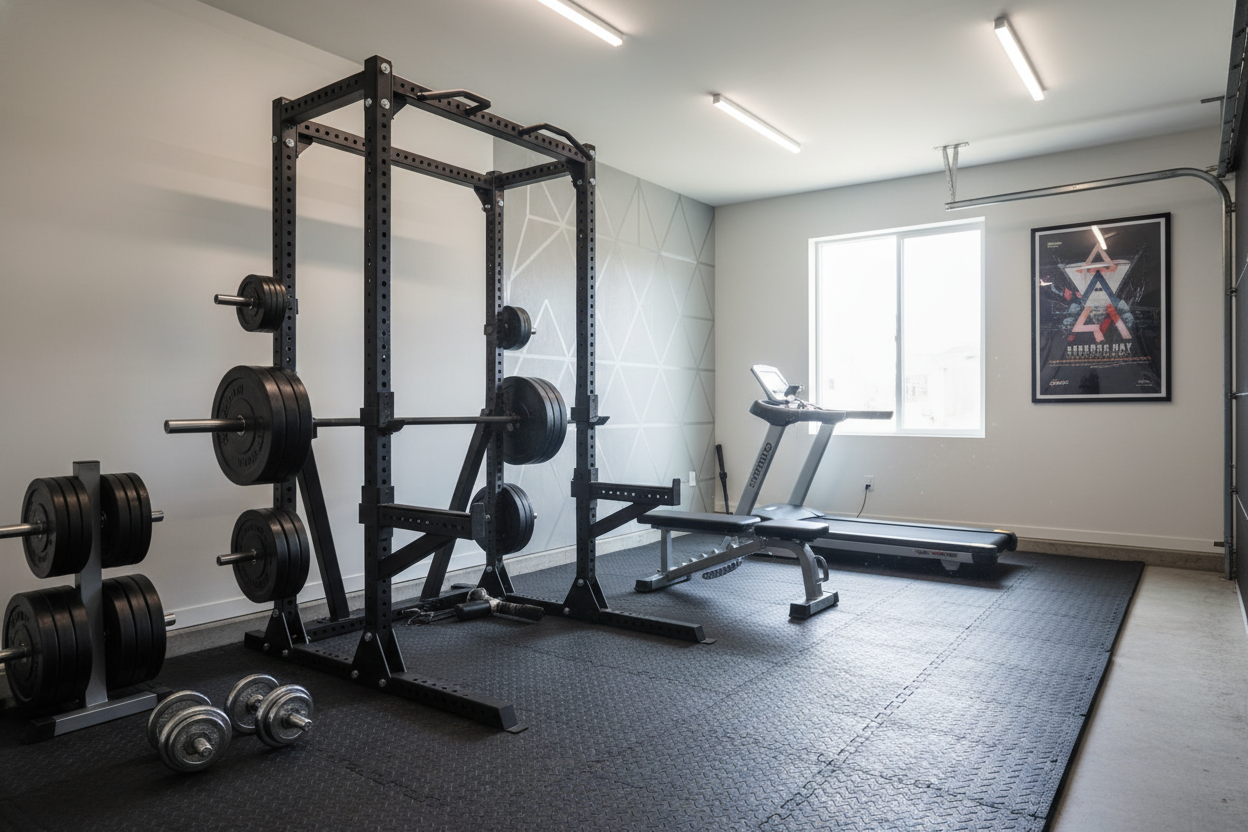
I spent three years staring at the empty corner of my garage, trying to figure out how to fit a commercial-grade pendulum squat. Then I saw the price tag—$4,500 plus shipping. I do not know about you, but I would rather buy a used Honda Civic for my kid than spend that on one leg machine. That is when I started looking into a pendulum squat attachment.
The dream is simple: get that legendary quad-loading arc without losing the ability to park your car in the driveway. But let's be real—sticking a heavy-duty lever arm onto a 3x3 steel upright sounds like a recipe for a tipped rack and a very expensive trip to the ER. I spent a month loading this thing to the brink to see if it actually works.
Quick Takeaways
- Space Saver: It takes up zero floor space when stored, which is the biggest win for small garages.
- The Arc: It mimics a true pendulum path surprisingly well, hitting the quads much harder than a standard barbell squat.
- Rack Requirements: If your rack is not bolted down, do not even think about it.
- Weight Capacity: Most top-tier versions handle 400-500 lbs easily, though your rack's stability is the real bottleneck.
The Problem with Standalone Pendulum Squats
If you have ever used a real pendulum squat at a bodybuilding gym, you know the feeling. It is a deep, nasty stretch at the bottom that targets the quads in a way a barbell simply cannot. The mechanics take the lower back out of the equation and let you bury your hamstrings into your calves.
But for home gym owners, these machines are the ultimate space-killers. They are usually six feet long and four feet wide. If you are currently stuck doing torturous Bulgarian split squats just to get some quad isolation without a machine, the idea of a rack-mounted pivot is incredibly tempting.
What Exactly Is a Rack-Mounted Setup?
A pendulum squat rack attachment is basically a massive lever arm with a footplate and shoulder pads. It mounts to your rack upright using a heavy-duty pin or a bolt-on bracket. Instead of a standalone frame, it uses your power rack as the skeleton.
You need a beast of a rig for this. I am talking 11-gauge steel and at least a 3x3 upright. If you are running a sturdy wall-mounted power rack, you better ensure your stringers are secured into every possible stud. The leverage being applied to the upright is significantly higher than a standard J-cup load because the weight is sitting several feet out from the pivot point.
Physics Check: Will It Tip Your Rack Over?
This is the part that kept me up at night. When you load four plates on a pendulum squat rack attachment, you are creating a massive amount of torque. If your rack is not bolted to the floor or weighted down with a thousand pounds of plates on storage pegs, that upright is going to want to move.
I tested this by intentionally leaving my rack unbolted for one set with two plates. The front feet of the rack lifted nearly an inch off the ground during the eccentric phase. Lesson learned: bolt it down or buy a heavy-duty stabilizer bar. Safety is not optional when you have 200 lbs of iron swinging toward your face.
The Quad Burn: Attachment vs. Commercial Machine
Does it feel the same? Not 100%, but it is close. A commercial machine has a fixed, counterweighted path that stays buttery smooth. The attachment can feel a bit 'raw' depending on the quality of the bearings at the pivot point. However, the quad stimulus is undeniably there.
The stretch at the bottom is legit. It feels way more like a true pendulum than a landmine hack squat, which usually has a weird, shallow arc. If you have a bit more room and want a more 'locked-in' feeling, you might look at a compact hack squat combo machine. But for pure space efficiency, the attachment wins every time.
The Final Verdict: Is It Worth Your Money and Space?
If you are a quad-growth junkie with a small garage, this is a no-brainer. It solves the biggest issue of home gym hypertrophy training: the lack of high-quality leg machines. Just make sure your rack is up to the task. If you find that your current setup is too light or wobbly for these heavy leverage movements, you might be better off upgrading to a multipower machine that can handle the sheer force.
My Honest Experience
I almost sheared a bolt on my first DIY attempt at a mounting bracket. I realized quickly that this is one piece of gear where you do not want to cheap out. Buying a precision-machined attachment with high-quality pillow block bearings made all the difference. It went from feeling like a shaky playground swing to a legitimate piece of gym equipment.
FAQ
Do I need special shoes for a pendulum squat attachment?
Weightlifting shoes with a raised heel help you get deeper into the movement and maximize quad recruitment, but they are not strictly necessary if the footplate has a good angle adjustment.
How much weight can these attachments actually hold?
Most are rated for 500 lbs, but the real limit is your rack. If you are loading more than three plates per side, you need to be absolutely certain your rack is bolted to concrete.
Does it take a long time to set up?
It usually takes about 60 seconds to pin it into the rack. It is no more difficult than moving a pair of heavy spotter arms, though the weight of the arm itself can be a bit awkward to handle alone.
Share:
Why Your Smith Machine Power Clean Feels Like an Awkward Mess
Stop Buying Junk Exercise Equipment for Home Amazon Recommends