
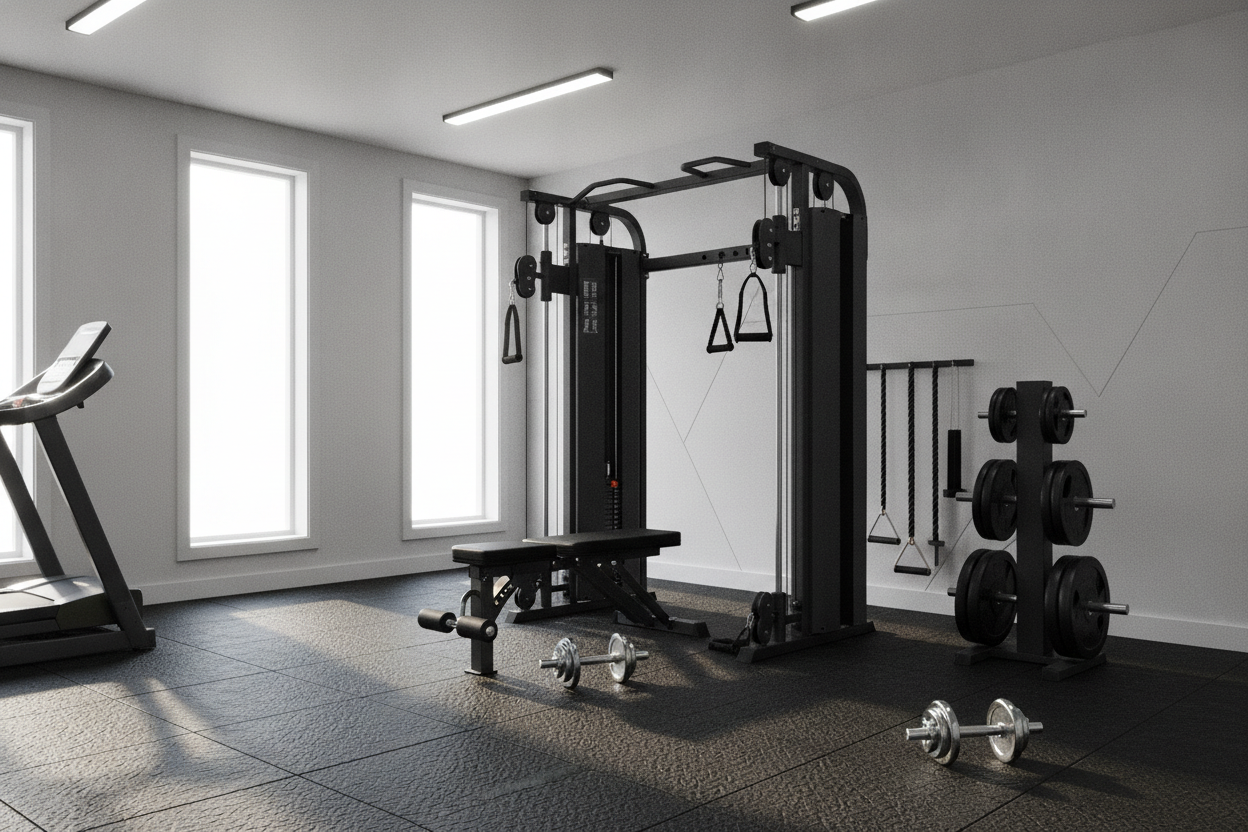
I remember staring at my garage floor, measuring tape in hand, trying to figure out how a seven-foot functional trainer was going to fit next to my power rack. It didn't. That's when I started looking at a weight bench with cables as a space-saving miracle. It looked great in the photos, but the first time I tried a cable fly, the entire unit tipped toward me like a sinking ship.
Quick Takeaways
- Most budget cable benches use cheap nylon pulleys that create massive friction and 'jerky' movements.
- A 1:1 pulley ratio on these units makes isolation exercises feel jarring on the joints.
- Stability is a major issue; many units are too light to stay grounded during heavy lat pulldowns.
- If you must buy one, prioritize sealed bearing aluminum pulleys and dual guide rods.
The All-In-One Fantasy vs. The Jerky Reality
The dream is simple: a commercial gym experience in a 4x6 footprint. You imagine hitting chest presses, then immediately spinning around for cable crossovers using a cable machine with bench. It sounds efficient until you actually load the plates. In my experience, these combo units are often built with thinner gauge steel to keep the price down, leading to a 'wobble' that ruins your mind-muscle connection.
When you're pulling 150 lbs on a lat pulldown and the front of the bench starts lifting off the ground, the 'all-in-one' dream dies pretty fast. You end up spending more time bracing the machine than actually training. It's frustrating to realize you've bought a piece of equipment that limits your intensity rather than supporting it.
Why the Friction on Combo Units Is So Terrible
Friction is the enemy of muscle growth. Cheap units use unlined guide rods and plastic pulleys that haven't seen a drop of silicone spray in their life. You pull the handle, it sticks for a microsecond, then it jumps. This 'stick-slip' phenomenon means the weight feels heavier on the way up and almost weightless on the way down because the friction is holding the plates up.
By removing the complex, poorly made attachments, manufacturers can put that money into better steel for a standalone weight bench that won't move an inch when you're pressing 90-lb dumbbells. A solid bench and a separate, dedicated pulley system will always outperform a combined unit that tries to do everything and succeeds at nothing.
The Pulley Ratio Problem Nobody Tells You About
Let's talk biomechanics. Most cable weight bench setups use a 1:1 pulley ratio. This means if you move the handle 12 inches, the weight stack moves 12 inches. It sounds efficient, but it's terrible for explosive movements or delicate isolation work like rear delt flyes. Every tiny tremor in your hand is transmitted directly to the weight stack, making the movement feel 'crunchy.'
High-end functional trainers usually use a 2:1 ratio, which cuts the felt weight in half but doubles the cable travel. This creates a smooth, fluid stroke that protects your shoulder joints. When you use a 1:1 ratio on a budget bench, the lack of momentum makes the start of every rep feel like a sudden jerk. It’s hard to focus on the squeeze when you're worried about your rotator cuff.
Smarter Alternatives for Small Garage Gyms
If your space is tight, skip the jerky cables and look at leverage. A chest press machine with independent arms gives you that same isolation feel and safety of a machine without the cable drag. It allows you to work each side of your chest independently, which is the main reason people want cables in the first place.
If you're on a strict budget, an adjustable weight bench with resistance bands offers variable tension that's actually smoother than a cheap pulley system. Bands don't have guide rods to bind up or cables to fray. You get a consistent, smooth resistance that gets harder at the peak of the contraction—exactly where you want it.
How to Spot a Cable Setup That Actually Works
If you are absolutely dead-set on a combo unit, don't buy based on price alone. Look for three non-negotiables: sealed bearing aluminum pulleys, dual guide rods, and a wide base footprint. Plastic pulleys will eventually flat-spot, and single guide rods are notorious for binding if you don't pull perfectly straight. Aluminum pulleys with actual bearings make a world of difference in how 'expensive' the movement feels.
Personal Experience: The Lesson I Learned
I once bought a $300 combo unit from a big-box store thinking I’d hacked the system. Within three months, the cable coating was peeling and the 'smooth' slide felt like dragging a brick over sandpaper. I couldn't even do a proper tricep extension because the friction was so inconsistent. I ended up selling it for $50 and buying a dedicated rack. Don't waste your money on a setup that makes you want to skip your accessory work.
FAQ
Can I do heavy lat pulldowns on a cable bench?
Usually no. Unless the bench can be bolted to the floor or has a massive footprint, heavy weights will cause the frame to tip or lift. You're better off with a dedicated lat tower.
How do I make my budget cables smoother?
Clean the guide rods with a microfiber cloth and apply a dry silicone spray. Never use WD-40, as it attracts dust and will eventually make the sticking worse.
Is a 1:1 ratio ever good?
It's fine for slow, heavy movements like rows, but for anything fast or isolation-based, it usually feels too jarring compared to a 2:1 system.
Share:
Why That Starter Set of Workout Weights Stops Working in Month Two
How to Size a Beginner Weight Set So You Actually Use It