
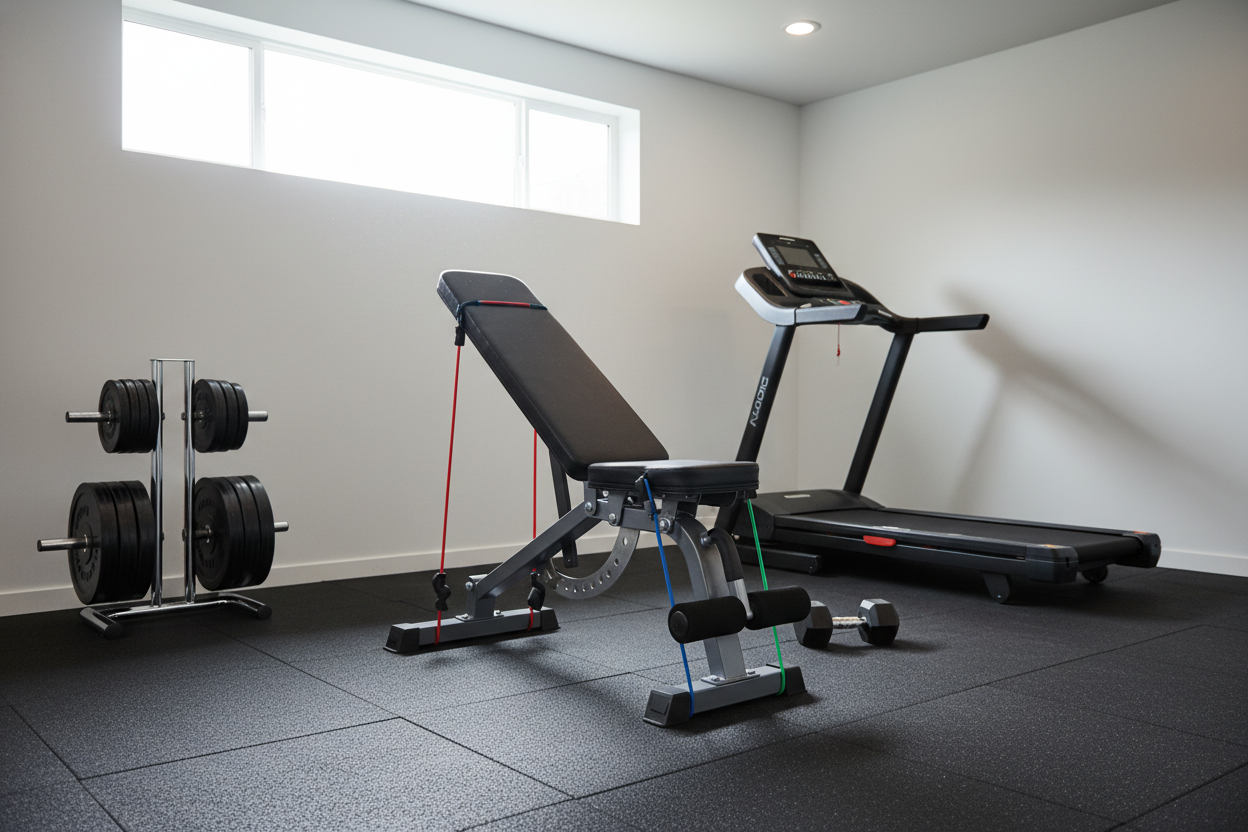
I remember scrolling through Amazon at 1 AM, comparing specs on benches that looked like they were made of recycled soda cans. I had recently traded my flat pad for an adjustable utility weight bench to get more variety, but then these hybrid units started popping up. You know the ones—the benches with little elastic cords dangling off the sides like a piece of 90s Pilates equipment.
My first thought was that it looked like a total gimmick. But after a month of training in a cramped garage where I didn't have room for a full cable crossover, I started to wonder if an adjustable weight bench with resistance bands might actually be the space-saving hack I was looking for. I spent the last few weeks loading, stretching, and occasionally getting whipped by these things to find out if they belong in your gym.
Quick Takeaways
- Best for hypertrophy (muscle growth) and high-rep finishers rather than max-effort strength.
- Requires a heavy frame to prevent the bench from tipping under band tension.
- Steel attachment points are mandatory; avoid plastic clips at all costs.
- Excellent for joint-friendly accessory work after heavy compound lifts.
The Late-Night Infomercial Stigma
Let’s address the elephant in the room. Most combo equipment looks like cheap junk sold at 2 AM by a guy with too much hair gel. When I first saw a weight bench for resistance bands, I assumed it was for people who didn't actually want to lift heavy. My personal setup has always been focused on high-quality, standalone gear because I've seen too many 'all-in-one' machines turn into expensive clothes hangers.
The skepticism is earned. Most of these benches are lightweight, weighing under 30 lbs, which is a recipe for disaster when you start adding external tension. However, if you look past the 'as seen on TV' marketing, the actual physics of adding bands to a bench makes a lot of sense for muscle growth.
Why You Should Care About Accommodating Resistance
In the lifting world, we talk about the 'strength curve.' When you do a bench press, you are weakest at the bottom (off the chest) and strongest at the top (lockout). With standard iron, the weight stays the same. With bands, the resistance increases as the band stretches. This is called accommodating resistance.
Using a workout bench resistance bands setup allows you to torch your muscles at their strongest point without overtaxing your joints at their weakest. I found that doing banded presses gave me a massive pump without the usual shoulder grit I feel after heavy triples. It’s not a replacement for the barbell, but it’s a surgical tool for targeted hypertrophy.
How to Spot the Best Bench for Resistance Bands
If you’re going to buy one, don’t buy a flimsy model. When you stretch a heavy resistance band, you are applying horizontal and vertical force that wants to flip the bench over. If the bench doesn't have a wide enough footprint, you're going to end up on the floor.
You need a frame with some actual mass. For example, the adjustable weight bench OWB01 provides the kind of stable base that doesn't shudder when you're pulling 50 lbs of band tension. A high-quality weight bench should feel anchored to the ground. If you can pick the bench up with one finger, it’s not heavy enough to handle serious band work.
Carabiners vs. Pegs: The Attachment Point Debate
Hardware is where these benches live or die. I’ve tested cheap versions where the bands attach via plastic carabiners. One hard row and those clips snap, sending a piece of high-velocity plastic toward your face. That’s a hard pass from me.
The best bench for resistance bands will use welded steel pegs or heavy-duty D-rings bolted directly into the frame. Steel doesn't fatigue like plastic does. If the attachment points look like something off a backpack, don't trust them with your workout.
My 3 Go-To Exercises for a Banded Setup
I don't use the bands for everything, but for these three moves, the setup is actually superior to dumbbells:
- Banded Incline Press: The tension peaks right as you squeeze your pecs at the top. It’s a completely different feel than standard weights.
- Seated Banded Rows: By looping the bands around the front feet of the bench, you can get a horizontal pull that mimics a low-row cable machine.
- Constant-Tension Flyes: Unlike dumbbell flyes, where the tension disappears at the top of the movement, the bands keep pulling your arms apart the whole time.
Final Verdict: Gimmick or Legitimate Tool?
Is it a gimmick? If you buy a $60 bench from a big-box store, yes. It will break, and you will hate it. But if you get a solid frame with real steel attachment points, it becomes a legitimate cable-machine alternative for small spaces. I abused the Vibespark adjustable weight bench recently and found that for accessory work and rehab, the added elastics are actually a smart addition.
If you're a powerlifter only concerned with your 1RM, skip the bands and buy more plates. But if you’re training in a spare bedroom and want the benefits of a cable crossover without the $1,000 price tag, an adjustable weight bench with resistance bands is a win.
FAQ
Can I use my own resistance bands on these benches?
Usually, yes. As long as the bench has standard pegs or D-rings, you can swap out the cheap included bands for higher-quality loop bands or tube bands with carabiners.
Are the bands strong enough for a real workout?
The bands that come 'in the box' are often light. I recommend upgrading to a set of heavy-duty bands if you want to actually challenge your muscles beyond a basic warm-up.
Does the bench wobble more because of the bands?
Only if the bench is too light. Look for a total unit weight of at least 40-50 lbs to ensure it stays planted while you're stretching the bands to their limit.
Share:
The 3-Step Home Gym Blueprint for Awkward Floor Plans
Stop Overpaying for Iron: Building the Best Home Gym Weight Setup