
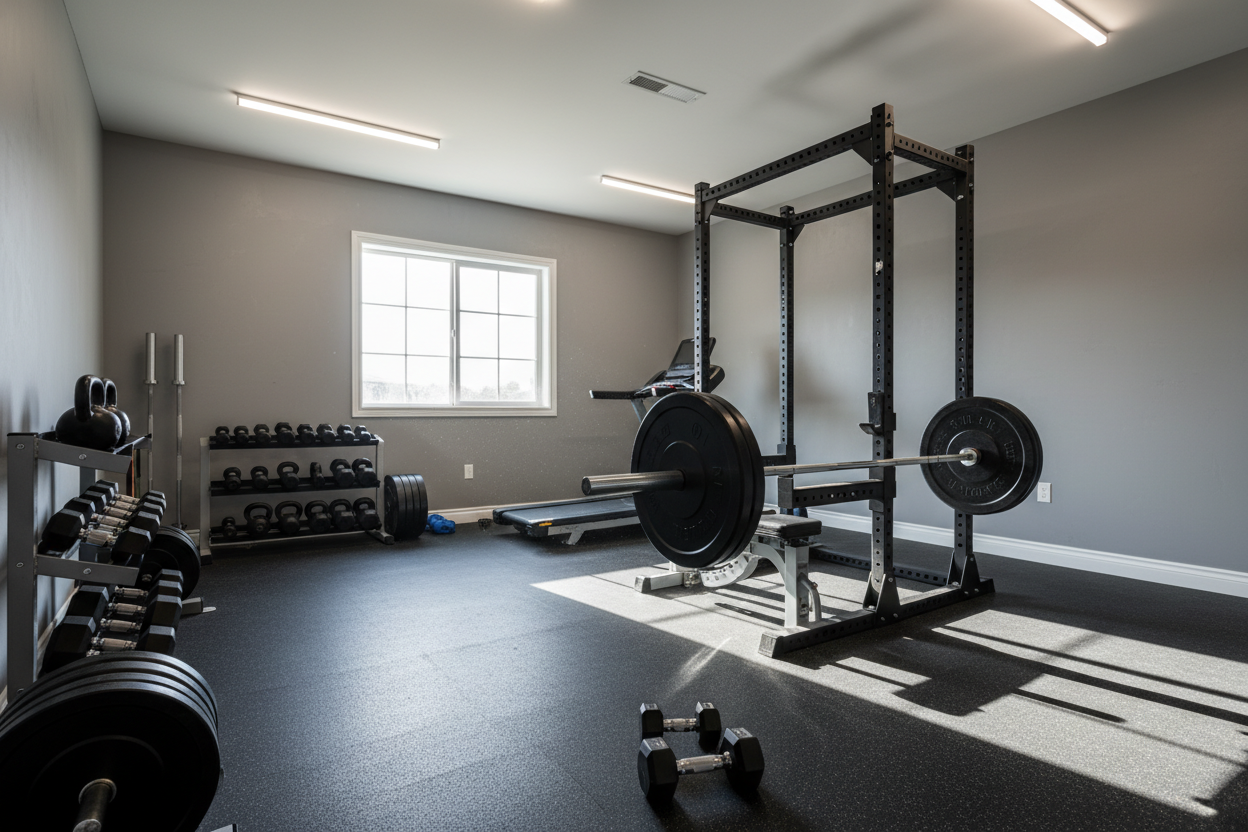
I remember my first ‘deal’ on home gym equipment. It was a 110-lb weight set from a local big-box store. It looked great in the box, but three months later, I was stuck with a pile of iron that wouldn't fit anything else I wanted to buy. Finding the right barbell for weights isn't just about the price tag; it's about making sure your gear grows with you instead of ending up on Facebook Marketplace for pennies on the dollar.
Quick Takeaways
- Standard 1-inch bars are a dead end for anyone planning to lift more than 200 lbs.
- Olympic 2-inch sleeves are the industry standard for a reason: durability and plate compatibility.
- Rotating sleeves save your wrists and elbows from nasty torque during heavy lifts.
- A quality bar costs between $200 and $350—anything cheaper is likely to bend.
The Trap of the 1-Inch Standard Bar
Walk into any mass-market sporting goods store and you will see a cheap weight lifting straight bar. These are ‘standard’ bars, meaning the ends are one inch in diameter. They are cheap, often coming in a box with a few plastic-coated weights. Here is the problem: once you get strong enough to need more weight, you are stuck buying more 1-inch plates that won't fit any professional-grade equipment.
These lifting bars usually have a weight capacity of about 250 lbs. That sounds like a lot when you are starting out, but a year of consistent deadlifting will have you blowing past that limit. Most people end up throwing these bars away because they eventually bend into a permanent ‘U’ shape. If you are looking for a weight training bar that lasts, skip the 1-inch aisle entirely.
Olympic vs. Standard: Why the Sleeves Actually Matter
The biggest difference in a gym weight bar is the sleeve—the part where the weights actually sit. On a proper Olympic Barbell, these sleeves are two inches wide and, more importantly, they rotate. They use either bushings or bearings to spin independently of the shaft.
Why does this matter? When you are doing a clean or a heavy overhead press, the plates want to spin. If you are using cheap fitness barbells with fixed sleeves, that rotational energy is transferred directly into your wrists. I have seen more than one lifter develop chronic tendonitis because they were using a weighted straight bar that didn't spin. It’s a small mechanical detail that makes a massive difference in how the bar feels under load.
Wait, How Much Does a Good Lifting Bar Cost?
I get asked ‘how much is a lifting bar?’ at least once a week. You can find a bar for weight lifting for $50, but I wouldn't trust it with my toes, let only my PRs. For a solid, entry-level Olympic bar that can handle 500+ lbs without permanent deformation, you are looking at the $200 to $300 range. It seems like a lot until you realize you only have to buy it once.
Also, keep in mind that ‘gym math’ can get tricky. People often ask ‘how much is a gym bar?’ assuming they are all 45 lbs. However, Your Gym Math Is Wrong The Real Matrix Bench Press Bar Weight is a real phenomenon where cheaper bars or commercial machine bars vary wildly in weight. A real lifting bar weights exactly 20kg (44.1 lbs) or 45 lbs, giving you a consistent baseline for your training.
Specialty Bars: Do You Actually Need a W Barbell?
Once you start looking for weightlifting bar for sale, you’ll see some weird shapes. The w barbell, or w bar gym attachment (commonly called an EZ curl bar), is great for isolation work. It puts your wrists at a more natural angle for bicep curls and tricep extensions. There is also the 3 ft barbell, which is basically a toy for very small spaces.
My advice? Don't get distracted by the niche stuff yet. A long bar gym setup—a standard 7-foot Olympic bar—can do 99% of what you need. You can squat, bench, deadlift, and even curl with a straight bar. Save the specialty fitness bars for when you have a solid foundation and a bigger budget. Also, be careful with machine-specific bars; for instance, Is The Tag Smith Machine Bar Weight Actually 45 Pounds? Usually not. Stick to free-weight barbells for the most accurate tracking.
The Only Setup You Actually Need to Start
If you want to stop overthinking and just start training, buy a high-tensile steel 20kg bar. Specifically, something like the 20Kg Olympic Barbell Pb01 is the gold standard for a home gym. It has the right knurling (the grippy texture) to stay in your hands without tearing them to pieces, and the sleeves are built to take a beating.
Pair that with a set of iron or bumper plates and you have a weight training barbell setup that will outlast your house. Buy once, cry once. It is much better to spend the money upfront than to be the guy trying to sell a bent, rusty standard bar for $10 on Craigslist six months from now.
Personal Experience: The 'Smiling' Bar
Early in my lifting days, I bought a ‘bargain’ weight lifting bar from a garage sale for $30. It looked fine, but the first time I loaded 315 lbs for a set of rack pulls, I heard a faint metallic groan. When I put the bar back, it had a permanent 2-degree bend in the middle. Every time I tried to bench with it after that, the bar would rotate in my hands to the 'heavy' side, making the lift feel unstable and dangerous. I ended up spending $250 on a real bar a week later. I basically paid a $30 'stupid tax' for trying to cheap out on the most important piece of my gym.
FAQ
How much is a standard weight bar?
A 1-inch standard bar usually costs between $40 and $80. However, they have low weight capacities and aren't compatible with Olympic plates, making them a poor long-term investment.
What is the best bar for weight lifting at home?
A 7-foot Olympic barbell with a 28mm to 29mm diameter is the most versatile choice. It fits all standard power racks and works for every major compound lift.
How much is a weight lifting bar supposed to weigh?
A standard Olympic bar weighs 20kg (about 44 lbs) or 45 lbs. Women's Olympic bars are typically 15kg (33 lbs) and have a slightly thinner shaft for smaller hands.
Share:
Stop Doing Jumping Jacks: How to Build Home Workouts That Work
Stop Squatting on Wobbly Steel: You Need a Real Powerlifting Barbell