
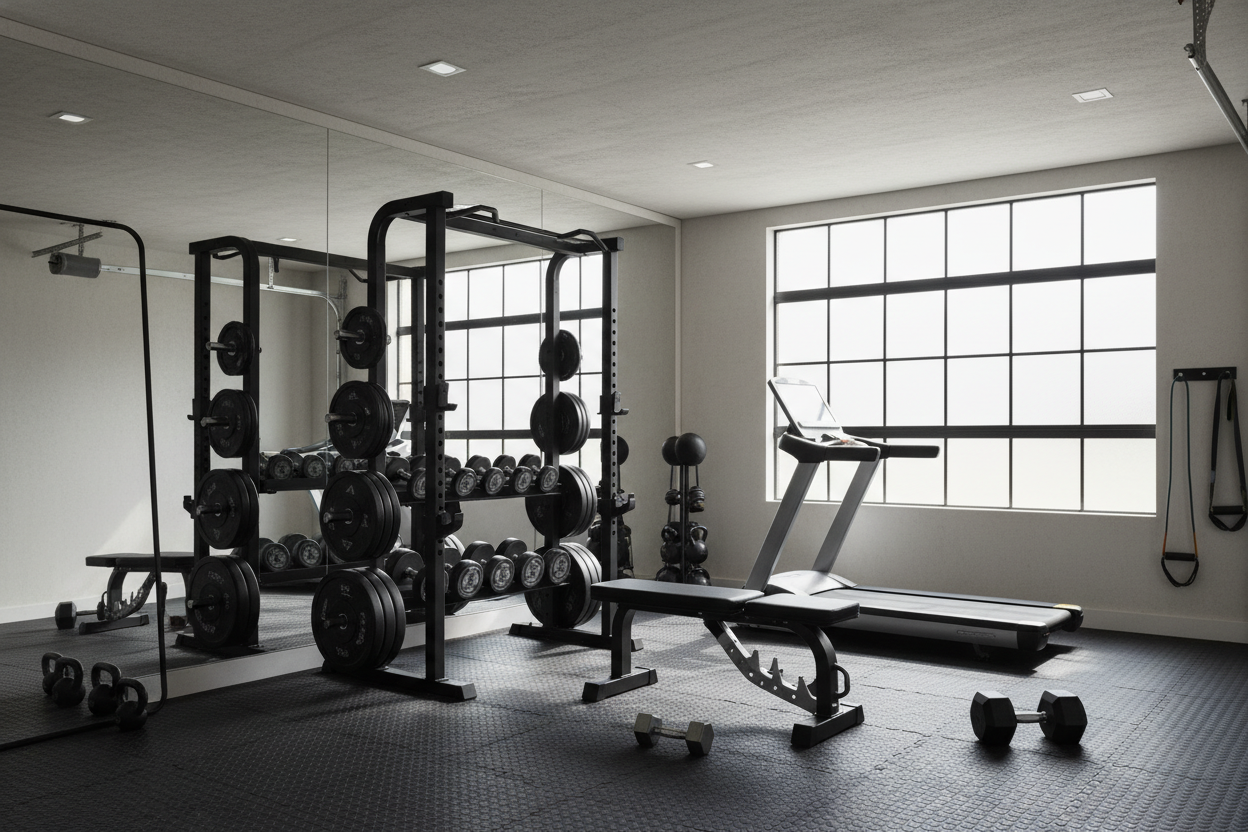
I remember the specific Tuesday I quit my commercial gym. I spent twenty minutes looking for a parking spot and another fifteen waiting for a squat rack, only to find the knurling was smoothed over by years of neglect. That night, I cleared out a 10x10 corner of my garage and committed to building the best at home total body workout I could manage without the commute or the crowds.
The secret isn't having forty different machines. It’s about density and frequency. When you train at home, you don't have the luxury of spending two hours on 'chest and tris.' You need a routine that hits every major engine in your body, gets your heart rate up, and lets you get back to your life in under an hour.
Quick Takeaways
- Full-body frequency allows you to hit muscle groups 3x per week instead of once.
- Focus on the 'Big Six' movement patterns to maximize efficiency.
- Invest in multi-functional gear to save floor space and money.
- Progressive overload can be achieved through tempo and pauses, not just adding plates.
Why I Stopped Splitting Muscle Groups
I used to be a 'bro-split' devotee. Monday was chest, Tuesday was back, and by Friday, I was usually too burnt out to hit legs with any real intensity. For the home lifter, this approach is a trap. If life happens and you miss a Wednesday workout, you’ve just gone two full weeks without hitting your shoulders. That’s a recipe for stagnation.
Switching to a routine that ignores muscle splits changed everything for my recovery. By hitting the whole body every session, you never totally annihilate one muscle group to the point of a week-long soreness. You stay fresh, you practice the movements more often, and frankly, you burn way more calories per session. It turns your garage into a high-efficiency strength lab.
The Blueprint for the Best Full-Body Home Workout
To build the best full-body home workout, you have to stop thinking about muscles and start thinking about movements. Every session I program for myself includes a horizontal push (bench press), a vertical push (overhead press), a horizontal pull (rows), a vertical pull (pull-ups), a squat, and a hinge (deadlifts or RDLs).
When you're setting up your home gym, these six pillars should dictate every purchase. If a piece of gear doesn't help you perform at least three of those movements, it’s probably taking up too much space. I focus on a 'daily minimum' of one exercise from each category. It’s simple, but after 45 minutes of heavy compound work, you won't feel like you missed out on anything.
The Trap of Hoarding Single-Use Machines
I see it all the time in Facebook Marketplace groups: guys selling leg extension machines or pec decks because they realized they can't fit their car in the garage anymore. Stop buying single machines that only do one thing. Unless you're a competitive bodybuilder, you don't need a dedicated seated calf raise machine.
Your floor space is your most valuable asset. A single-purpose machine is a monument to inefficiency. I’d rather have a high-quality adjustable bench and a set of rings hanging from the rafters than a room full of cables that only target my triceps. If you can't move it easily or use it for three different exercises, don't buy it.
Gear That Actually Supports Heavy Compound Lifts
If you want to train heavy at home without a spotter, you need gear that won't fail when you're grinding out a final rep. I’ve tested racks that wobbled with 225 lbs on the bar—that’s not where you want to be. You want 11-gauge steel and a footprint that stays anchored. For those tight on space, the Full Body Multifunctional Training Station M1 is a solid choice because it combines a rack, pull-up bar, and cable system in one unit.
If you’re worried about safety while training to failure alone, a Smith machine home gym station is a legitimate alternative to a traditional power rack. Modern Smith machines have integrated pulleys and much smoother bearings than the clunky ones from the 90s. They allow you to push your limits on squats or presses with an integrated safety catch, which is vital when there's no one around to help you if you get pinned.
My Exact 45-Minute Routine
This is my 'Go-To' session. Perform these as 3 sets of 8-12 reps with 90 seconds of rest. If you're moving fast, you'll be done in 40 minutes, leaving 5 minutes for a quick cool down.
- Squat Variation: Goblet squats or Back squats. Focus on depth over weight.
- Hinge: Romanian Deadlifts (RDLs). Keep the bar close to your shins.
- Horizontal Push: Flat or Incline Bench Press.
- Vertical Pull: Pull-ups (weighted if possible) or Lat Pulldowns.
- Vertical Push: Standing Overhead Press. Engage your glutes to protect your back.
- Horizontal Pull: Barbell or Dumbbell Rows. No 'cheating' with the hips.
I rotate the order of these every session. If I started with squats on Monday, I’ll start with overhead presses on Wednesday. This ensures no movement pattern gets neglected because of fatigue at the end of the workout.
How to Progress When You Run Out of Weight
Eventually, you might max out your plate collection. Instead of dropping $500 on more iron, change the stimulus. I’m a huge fan of tempo work. Try a 4-second eccentric (lowering phase) on your squats. I guarantee 225 lbs will feel like 315 lbs real fast. You can also use paused reps—hold the bottom of your bench press for two seconds before exploding up. This builds massive starting strength and saves your floor from the weight of extra plates.
Personal Experience: My 'Buy Once, Cry Once' Moment
When I first started, I bought a cheap, thin-walled rack because it saved me $300. Every time I racked the bar, the whole thing shifted six inches. It felt dangerous, and I ended up dreading my workouts. I eventually sold it for half what I paid and bought a heavy-duty rack. My mistake cost me time and money. If you're serious about the best full-body home workout, buy the heavy-duty gear first. The peace of mind when you're under a heavy bar is worth every penny.
FAQ
Do I need a power rack for a full-body workout?
Not strictly, but it’s the safest way to go heavy. If you’re limited on space, a good set of adjustable dumbbells and a sturdy bench can get you 80% of the way there, but you’ll eventually want a rack for squats and pull-ups.
Is 45 minutes really enough time?
Yes, if you stay off your phone. Most people waste 40 minutes of a 90-minute session. If you keep your rest periods to 60-90 seconds and focus on compound lifts, 45 minutes is more than enough to trigger growth.
Can I do this workout every day?
I wouldn't. Your muscles grow while you rest. Aim for 3 to 4 days a week with at least one day of rest between sessions. On off days, go for a walk or do some light mobility work.
Share:
Are Work Out Machines for Home Actually Worth the Floor Space?
Does Planet Fitness Have Weight Lifting Equipment You Can Use?