
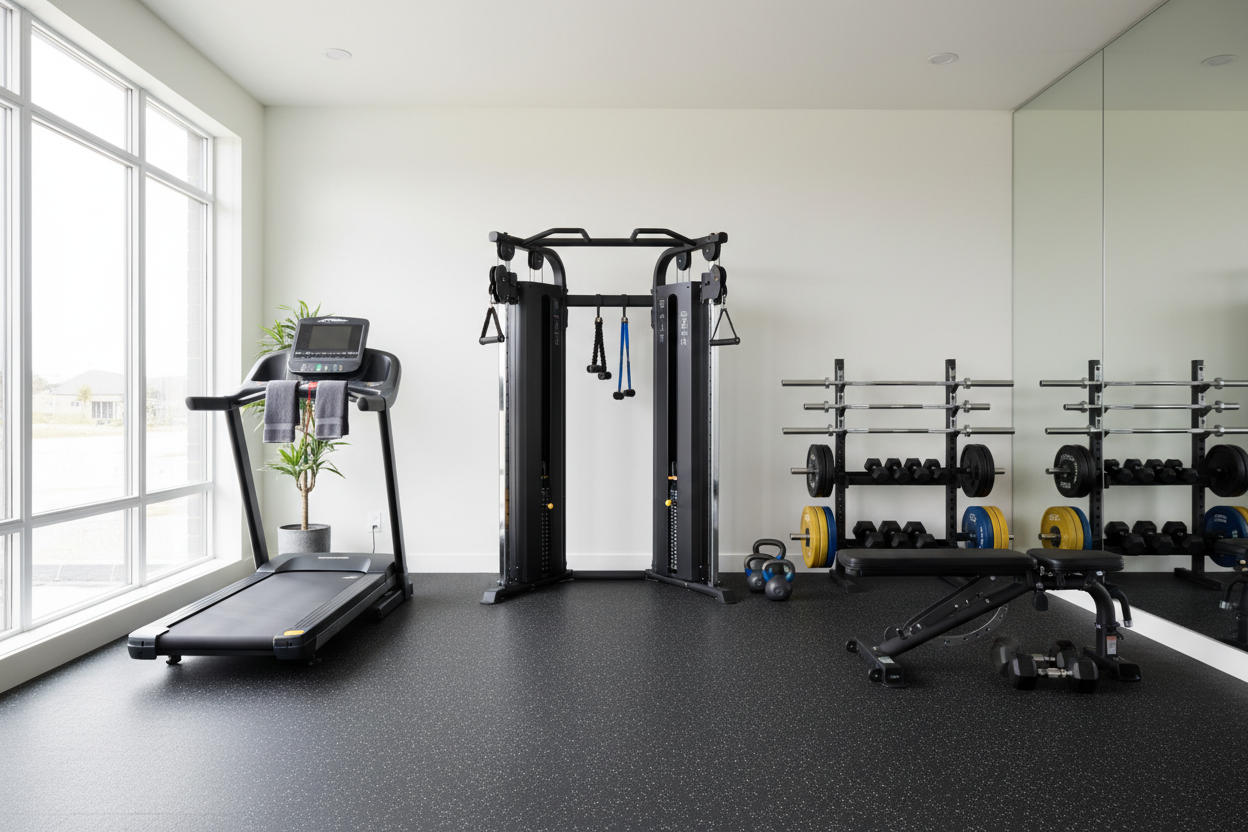
I remember staring at a barbell I bought for $150 on a midnight whim. It arrived with rust in the sleeves and knurling so dull it felt like holding a wet pool noodle. That bar didn't last six months before the bearings seized. I’ve spent the last decade testing, breaking, and eventually keeping the best equipment for home exercise, and the biggest lesson I learned is that most people buy for a person they won't be in two years.
- Modular gear beats specialized machines every single time.
- If it doesn't fit in a 4x6 foot footprint, you’ll probably regret it.
- Prioritize 11-gauge steel over shiny digital screens.
- Buy the weight you'll need next year, not just what you can lift today.
Stop Buying Gear for the Lifter You Are Today
Most home gym owners go through a 'phase' cycle. You might be obsessed with powerlifting today, but three years from now, your knees might demand low-impact metabolic conditioning. If you buy a massive, dedicated squat stand that can't accept a pull-up bar or dip handles, you’ve painted yourself into a corner. The best workout equipments are those that survive a total shift in your training philosophy.
I’ve seen guys drop $3,000 on a competition-spec power bar and calibrated plates, only to realize they actually prefer functional fitness and high-rep kettlebell work. Suddenly, they have a garage full of expensive metal they can't drop. When you evaluate gear, ask: 'Can I still use this if I decide to train like a bodybuilder, an endurance athlete, or someone just trying to stay mobile?'
Why the Best Piece of Gym Equipment for Home Is an Anchor
Your gym needs a centerpiece. Think of it like a kitchen island—it’s where the heavy lifting happens and where everything else connects. For most of us, the best piece of gym equipment for home isn't a single-use machine; it's a modular rack or a functional trainer. You want a system that grows with you, allowing you to add cable pulleys, jammer arms, or a landmine attachment later on.
If you have limited space but want the safety of a guided path for heavy presses, a Smith machine home gym station is a massive win. It provides that stable 'anchor' while often integrating plate storage and cable systems into one footprint. It’s about maximizing the utility per square foot. I’d rather have one overbuilt rack than four flimsy pieces of cardio equipment taking up the same area.
Curating the Best Exercise Set Without Hoarding Metal
You don't need a full commercial rack of dumbbells from 5 to 100 pounds. That’s a great way to lose your garage and your budget. To build a complete home gym, you need a smart, condensed best exercise set. For me, that’s a pair of high-quality adjustable dumbbells—look for ones that go up to at least 50 lbs per hand—and a versatile set of bumper plates.
Bumper plates are non-negotiable if you’re lifting on concrete. Even with mats, iron plates are loud and unforgiving. A basic 160-lb set of bumpers and a 20kg multipurpose bar will handle 90% of the movements you’ll ever do. If you’re tight on space, a single 16kg and 24kg kettlebell can replace an entire row of machines for conditioning and core work.
Cardio Tools That Survive Your Shifting Fitness Phases
We’ve all seen the 'treadmill clothes hanger.' People buy massive, 300-pound treadmills thinking they’ll run five miles a day, but the footprint eventually becomes a burden. When your goals shift toward recovery or low-impact work, you want something that doesn't dominate the room. A foldable upright exercise bike is my go-to recommendation for this. It’s there when you need a 20-minute flush or some steady-state cardio, but it tucks away when you need the floor space for deadlifts.
Conditioning gear should be the most 'movable' part of your gym. Unless you are a competitive triathlete, your cardio equipment should be an accessory, not the main event. Low-impact options like bikes or rowers are much easier on the joints as you age, making them a better long-term investment than a budget treadmill that shakes when you hit 6.0 mph.
How to Pick That One Specialty Machine You Actually Need
Once you have your rack, your weights, and your cardio, you’re allowed one 'luxury' item. This is the best piece of home exercise equipment for your specific body. For me, it was a high-quality cable crossover because my shoulders hate heavy bench pressing. For you, it might be a GHD or a leg press. The rule is: it must solve a problem your free weights can't.
I spent years testing the best at-home exercise equipment and realized that the stuff I kept was the stuff I could use for at least five different exercises. If a machine only does one thing, it better do that one thing perfectly. Don't buy a leg extension machine if you can just do sissy squats or Bulgarian split squats with your dumbbells.
Is a Smith machine better than a power rack for a home gym?
It depends on your goals. A power rack is the gold standard for versatility and free-weight movement. However, a Smith machine is often better for solo lifters who want built-in safety without a spotter, or for those focusing on hypertrophy where stability is key.
How much floor space do I actually need?
A 10x10 foot area is the 'sweet spot.' It’s enough for a standard 7-foot Olympic bar to clear the walls and for you to have a bench and a small rack of weights. Anything smaller and you’ll need to look at short bars or folding racks.
Are adjustable dumbbells worth the high price?
Yes, absolutely. A full set of fixed dumbbells from 5 to 50 lbs takes up about 6 to 8 feet of wall space and costs significantly more than a single pair of adjustables. Just make sure you buy a pair with a metal adjustment mechanism rather than plastic.
Share:
The Brutal Truth About Bowflex Home Gym Models for Lifting
Your Compact Home Gym Is Lying About Its Footprint