
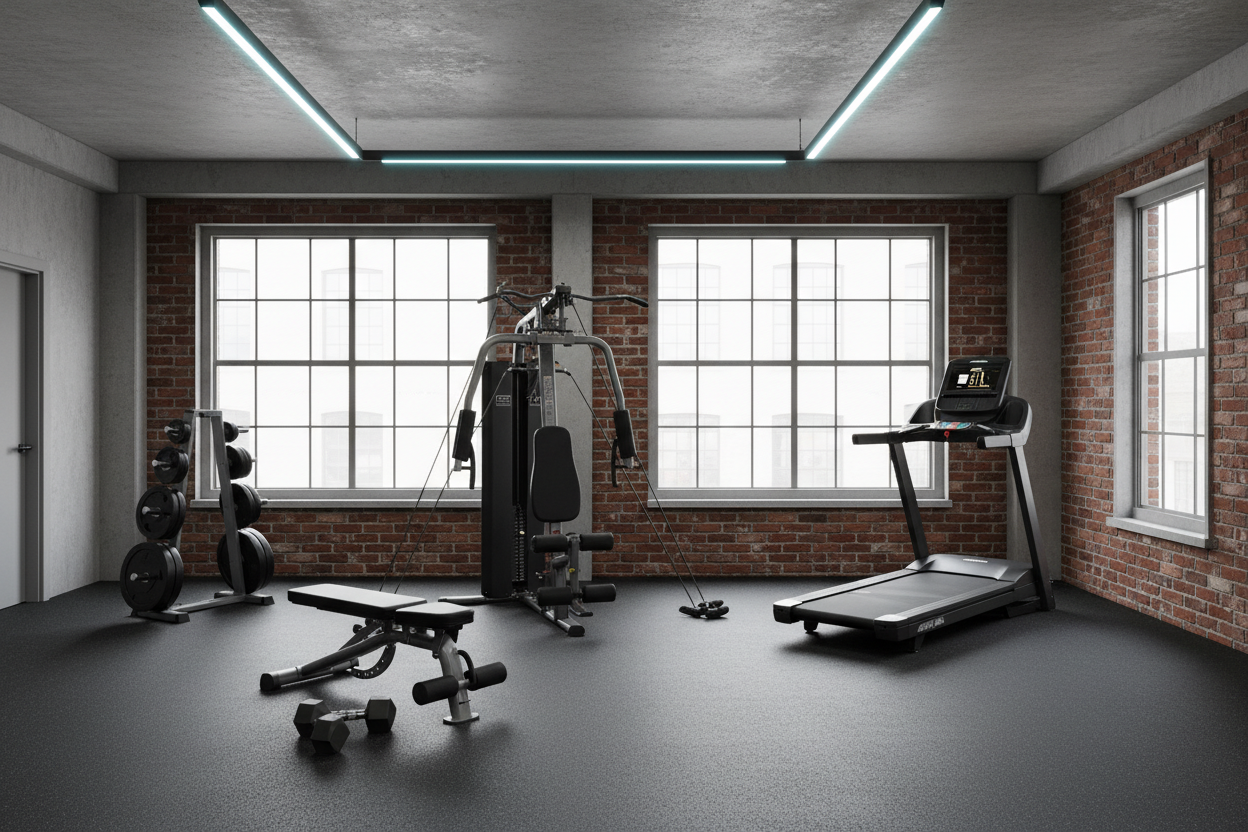
I remember sitting on my couch at 2 AM, watching a guy with 18-inch biceps swear that his physique was built entirely on flexible polymer rods. It’s the ultimate fitness siren song: no heavy plates to drop, no clanking noise, just smooth resistance. But when you start looking seriously at bowflex home gym models, you have to separate the marketing magic from the mechanical reality of how these things actually move.
Quick Takeaways
- Power Rods provide 'progressive resistance,' meaning the weight gets heavier as you reach the end of the movement.
- They are significantly quieter and lighter than a traditional iron-based home gym.
- The resistance 'weight' numbers are not comparable to free weights—a 200-lb rod feels much lighter than a 200-lb barbell.
- Great for high-volume hypertrophy and joint health; frustrating for low-rep powerlifting.
The Nostalgia vs. Reality of Power Rod Resistance
We all grew up with the infomercials, but the feel of bowflex type machines is a polarizing experience. Unlike a dumbbell, where gravity provides a constant downward force, a power rod is essentially a high-tech bow and arrow. The resistance is lightest at the beginning of the rep and heaviest at the peak contraction. If you are just starting the process of building a home gym, this variable resistance can be a shock to the system.
In a squat, for example, the 'weight' is easiest at the bottom where you are weakest and hardest at the top where you are strongest. On paper, that sounds efficient. In practice, it means you lose out on that deep, loaded stretch that triggers serious muscle growth. It’s a different stimulus entirely, one that favors 'the pump' over raw, explosive power.
Breaking Down the Current Bowflex Models
The lineup has shifted over the years, but a few staples remain. The PR1000 is the entry-level gatekeeper. It’s compact, but you’re capped at 210 lbs of rod resistance with no way to upgrade. If you’re even moderately strong, you’ll outgrow the bench press on this thing in six months. The Xtreme 2 SE is the real workhorse of the bowflex models. It uses a clever pulley system that lets you move from lats to legs without changing cables, which is a massive time-saver during supersets.
One thing Bowflex gets right is the footprint. Most of these machines are designed to fit comfortably on a standard 4x8 gym mat. For anyone trying to squeeze a full-body workout into a spare bedroom or a cramped corner of the garage, that vertical design is a lifesaver compared to a sprawling functional trainer or a bulky power cage.
The Good: Where These Machines Actually Shine
I’m not here to just bash the rods. There is a legitimate reason these machines have stayed on the market for decades. The tension is incredibly 'smooth.' Because there’s no inertia—no heavy iron plates swinging around—the stress on your connective tissue is minimal. If you are coming back from a shoulder injury or you’re a lifter in your 50s looking to maintain mass without the joint aches, these machines are fantastic.
They also excel at drop sets. You can unhook a rod and jump back into a set in about three seconds. For hypertrophy-focused training where you want to chase a burn and keep the heart rate up, the efficiency of the cable routing is hard to beat. You aren't hunting for clips or lugging 45-lb plates across the room.
The Bad: Why Serious Lifters Usually Outgrow Them
The 'mushy' start is the biggest dealbreaker. In a heavy chest press, you want the most tension when the bar is at your chest. With power rods, that’s where the tension is at its lowest. Over time, this leads to a strength curve that doesn't translate well to the real world. If you can 'bench' 310 lbs on a Bowflex, don't expect to walk into a commercial gym and put three plates on a barbell. You'll likely struggle with 225.
Eventually, the rods themselves lose their 'snap.' If you leave them hooked up for weeks, they develop a permanent bend, reducing the resistance. Most people who get serious about strength eventually realize they need a power rack or smith machine to keep progressing. Once you can no longer add resistance, your gains will plateau, and the Bowflex becomes an expensive clothes rack.
Final Verdict: Are They Worth the Garage Space?
If you want to be a powerlifter, stay away. If you want to move 500 lbs, buy a rack and iron. But if you’re a busy professional who wants a 30-minute circuit that won't wake up the kids or wreck your knees, a Bowflex is a solid tool. It’s about choosing the right tool for your specific job. For many, the convenience of having 30+ exercises in one small footprint outweighs the lack of 'real' weight feel.
Personal Experience: The 'Ego' Reality Check
I owned an older Blaze model for a year. I felt like a god because I was 'maxing out' the lat pulldown station every morning. Then I went to a local gym and tried to do a pull-up. I barely got two. The rods were doing a lot of the stabilizing work for me, and I had developed some lazy habits. Now, I use cables and free weights, but I still miss how fast I could blow through a full-body workout on that machine. It’s all about trade-offs.
FAQ
Do Bowflex power rods actually wear out?
Yes. They are made of a polymer that eventually loses its elasticity. To make them last, you have to unhook them when you aren't training. If you leave them bent, they’ll lose about 10-15% of their tension over a few years.
Can you actually build muscle with a Bowflex?
Absolutely. Muscle grows from mechanical tension and metabolic stress. Your lats don't know if the resistance comes from a plate or a rod. However, it is much harder to track 'progressive overload' accurately compared to iron.
Are the weight ratings accurate?
Not in the traditional sense. A 50-lb rod only feels like 50 lbs at the very end of the movement. For most of the rep, it’s significantly lighter. Always assume you need more rod resistance than you think.
Share:
Is a Universal Gym Weight Machine Actually Worth the Space?
How to Buy the Best Equipment for Home Exercise Only Once