
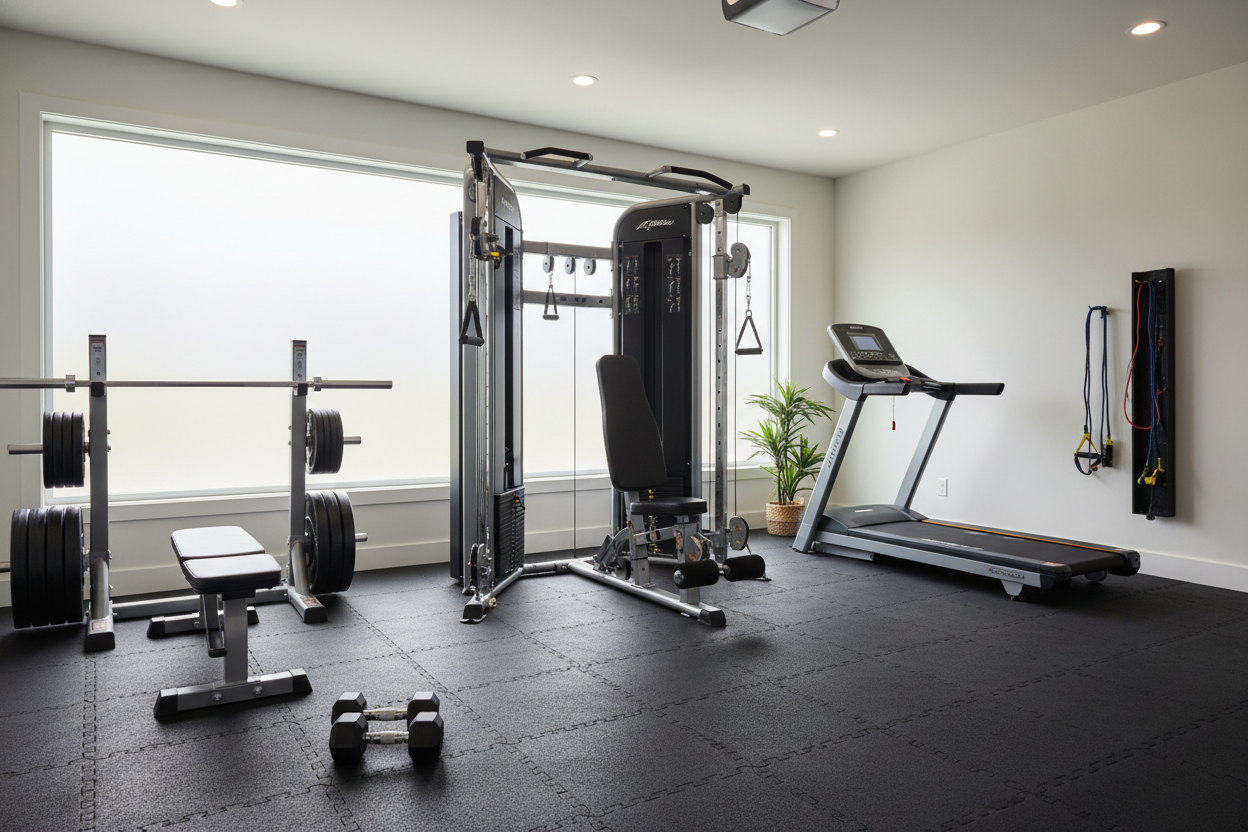
I remember walking into a massive commercial gym for the first time and just standing there like a deer in headlights. It wasn't a lack of motivation; it was the sheer volume of steel, pulleys, and padded seats that made zero sense to my brain. Identifying the right types of workout machines shouldn't feel like you're trying to decode an engineering manual just to get a decent pump.
Quick Takeaways
- Plate-loaded machines are the gold standard for home gyms because they use the iron you already own.
- Selectorized (pin-loaded) stacks are convenient but usually too heavy and expensive for a garage floor.
- Cable systems offer the best 'versatility per square foot' ratio.
- Digital resistance is sleek, but the subscription fees can outlast the machine's actual usefulness.
The Problem With Staring at a Crowded Gym Floor
Most equipment catalogs are written by people who have never actually finished a heavy set of squats. They use every weight machine name they can find to make a piece of gear sound revolutionary when it’s really just a basic lever with a fancy paint job. It's easy to get paralyzed by the options.
The truth is, manufacturers love to use confusing jargon to justify a $4,000 price tag. You don't need a 'biomechanical unilateral convergence station.' You need a way to move weight from point A to point B without it falling on your face. Understanding what are weight machines called and how they actually function is the first step to not getting ripped off.
Selectorized Stacks: The Commercial Gym Staple
These are the classic types of weight machines you see in big-box gyms where you move a little yellow pin to pick your weight. They are the king of convenience. If you are doing drop sets where you need to change the weight in three seconds, nothing beats a selectorized stack.
However, for a home gym, they have massive downsides. They are incredibly heavy—often 500+ lbs—and once you buy a 200-lb stack, you're stuck with it. If you get stronger than the machine, it becomes a very expensive coat rack. Plus, the shipping costs on a literal tower of lead are enough to make any budget-conscious lifter weep.
Plate-Loaded Leverage: The Garage Gym Sweet Spot
This is where the magic happens for most of us. These types of weight training machines don't have built-in weights; they have pegs where you slide on your own Olympic plates. It’s the rawest feel you can get outside of a barbell.
The mechanical advantage here is safety. A plate-loaded chest press machine allows you to push to absolute failure without needing a spotter to save your life when your triceps give out. You get the fixed-path benefits of a machine with the heavy-duty feel of iron. It’s simpler, harder to break, and significantly cheaper to ship.
Cables and Pulleys: The Ultimate Space Savers
If I could only keep one category of weight machine types besides a power rack, it’s cables. A functional trainer or a simple wall-mounted pulley system allows for hundreds of exercises in a footprint smaller than a loveseat. From face pulls to cable crossovers, the versatility is unmatched.
The physics are different here, too. Understanding how leverage compares to cables is vital for your gains. While a lever arm has a specific 'strength curve' where the weight feels lighter or heavier at different points, a cable provides constant tension. Your muscles don't get a break at the top or bottom of the movement.
Digital Resistance: Are Motors Better Than Iron?
I’ve spent time on the modern 'smart' weight lifting machine types that use magnets and motors. They are undeniably cool. You can change the weight with a touchscreen, and some even track your reps automatically. For a high-end apartment or a small spare room, they make sense.
But I’m a skeptic at heart. I always warn people about the hidden costs of smart machines. Most of these require a monthly subscription that costs as much as a gym membership. If the company goes bust or your WiFi drops, you’re left with a very expensive wall mirror that doesn't provide any resistance.
Building Your Setup Without Wasting Money
Don't go out and buy a different weight machines for every single body part. Your garage isn't a commercial facility. Start with the foundation. Before you even look at complex isolation rigs, you need a high-quality weight bench. It is the literal base for your dumbbell work, your rack work, and your cable movements.
Once you have the basics, pick one 'big' machine that targets your weakest area. If you hate squats because of back pain, get a leg press. If you want a bigger chest but train alone, get a leverage press. Buy for the training you actually do, not the training you think you might do six months from now.
My Honest Take
I once spent $800 on a used Smith machine because I thought it would be the centerpiece of my gym. It was a nightmare. It took up 25 square feet, the bearings were scratchy, and I ended up using it maybe once a week for calf raises. I eventually sold it for $400 just to get the floor space back for a functional trainer. The lesson? Versatility beats specialized gear every single time in a home environment.
Frequently Asked Questions
What is the best weight machine for beginners?
A cable tower or functional trainer. It’s intuitive, the risk of injury is low, and it allows you to learn the movement patterns of almost every major lift without the stability demands of a barbell.
Are plate-loaded machines better than pin-loaded?
For home gyms, yes. They are cheaper, easier to move, and you can increase the weight as much as your plate collection allows. Pin-loaded machines are better for high-traffic commercial gyms where speed of use is the priority.
Do I really need machines if I have dumbbells?
Need? No. But machines provide 'mechanical drop sets' and isolation that dumbbells can't always replicate. They allow you to exhaust a muscle completely without your grip or balance being the limiting factor.
Share:
The Best All In One Exercise Machine Isn't an Infomercial Toy
I Swore I'd Never Spend $600 on a Rogue Bench (Then I Did)