
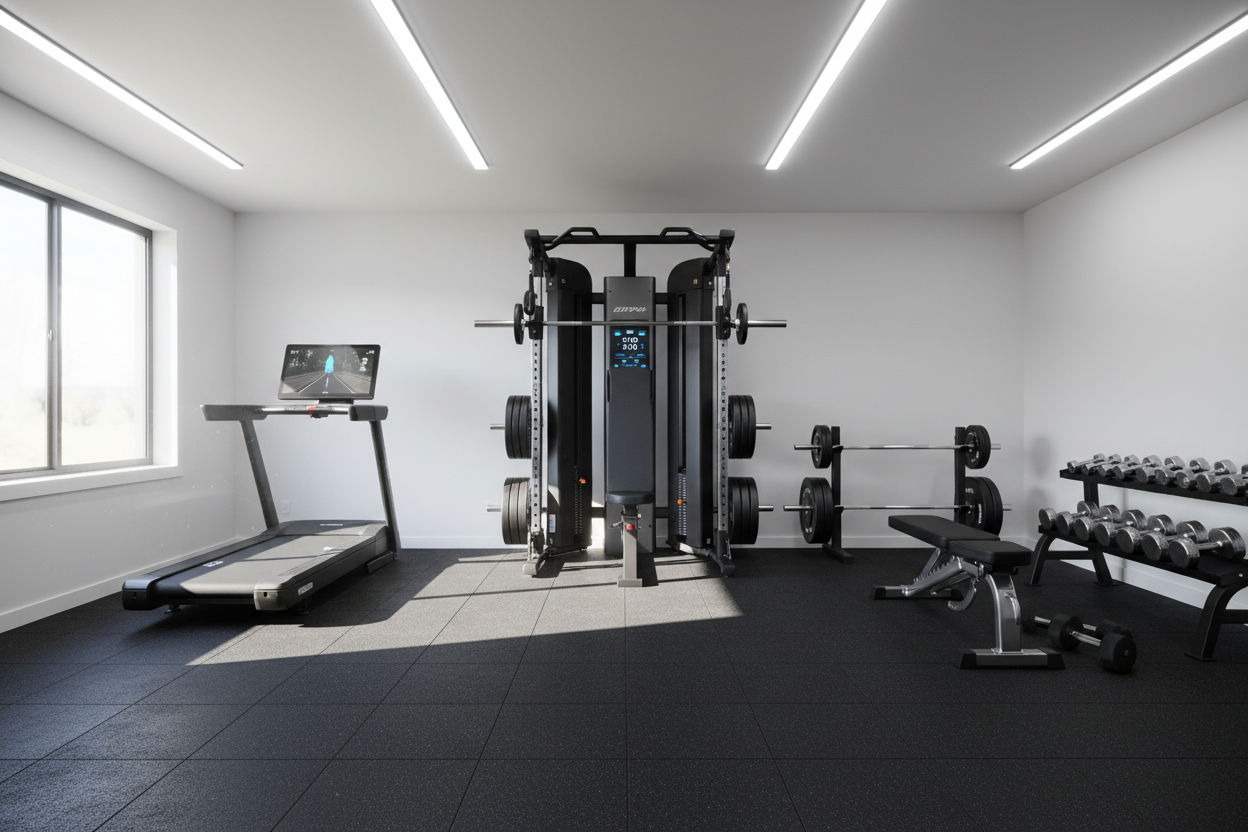
I remember the exact moment my garage gym went from a sanctuary to a storage unit. I was shimmying sideways between a rusty power rack and a stack of bumper plates just to reach my protein shaker. It’s the classic lifter’s dilemma: you want the gains, but you also want to park your truck inside when it snows. That’s usually when the late-night scrolling begins, and you start eyeing a smart weight lifting machine as the ultimate space-saving savior.
The pitch is seductive. No more clanging metal, no more spotters, and a footprint that barely sticks out six inches from the wall. But before you drop three grand on a glorified iPad with cables, you need to know what you’re actually signing up for. Digital resistance isn't just 'weights on a screen'—it’s a completely different animal that changes how your muscles fire and how your bank account drains.
Quick Takeaways
- Digital weight feels roughly 20-30% heavier than iron because there is zero momentum or 'cheat' factor.
- Mandatory subscriptions can add $500 to $600 to your annual overhead indefinitely.
- The footprint is unbeatable for apartment dwellers or cramped garages.
- Hardware longevity is tied to the company’s software support—if they go bust, your machine is a paperweight.
Why Everyone is Suddenly Buying 'Digital Iron'
The shift toward a home gym electronic setup isn't just about the tech; it’s about real estate. Most of us aren't working with a 2,000-square-foot warehouse. We have a corner of a bedroom or a sliver of a garage. A traditional setup requires a rack, a barbell, and at least 300 pounds of plates just to get started. That’s a massive amount of physical mass that never moves.
Digital systems replace those iron stacks with electromagnetic motors. Instead of gravity pulling a plate down, a computer controls the torque on a spool. This allows for features iron can't touch, like 'spotter mode' that automatically drops the weight when you struggle, or eccentric loading that makes the weight heavier on the way down. It’s a compelling package for anyone who wants a high-tech home gym digital experience without the clutter of a commercial weight room.
The Gravity Problem: Why Electromagnetic Resistance Will Humble You
If you think your 225-pound bench press is going to translate directly to a digital machine, prepare for a bruise to your ego. When you lift a physical barbell, momentum helps you. You explode off the chest, and the bar carries some of that energy through the midpoint. A digital motor doesn't care about your physics. It applies constant, unrelenting tension through every millimeter of the rep.
This is why a home lifting weights machine feels awkward when it relies on cheap pulleys and friction; the resistance is inconsistent. Smart machines solve the friction problem, but they replace it with 'perfect' resistance. There is no 'easy' part of the lift. I’ve seen guys who squat four plates get humbled by 150 pounds of digital resistance because the machine refused to let them use a bounce at the bottom. It’s a smoother pull than any cable machine you’ve ever used, but it’s also exhausting in a way iron isn't.
The Monthly Subscription Trap (And What Happens If You Cancel)
Here is the part the glossy ads hide in the fine print: you don't really own the 'smart' part of the machine. Most of these units require a monthly subscription ranging from $39 to $50. Over five years, that’s another $3,000 on top of the initial purchase price. You’re paying for the AI coaching, the data tracking, and the library of classes.
The real danger is the 'brick' factor. If you stop paying that monthly fee, many of these machines lose 90% of their functionality. You might be left with a basic manual mode, or in some cases, the resistance won't even engage. You are essentially leasing the brain of your gym. If the company goes bankrupt or stops supporting your specific model, you’re left with a very expensive wall decoration. Unlike a cast-iron dumbbell that lasts 100 years, these are consumer electronics with a shelf life.
Traditional Iron vs. The Smart Setup: What Gives You Better Results?
If your goal is to step on a powerlifting platform or compete in Strongman, a smart machine is a supplement, not a replacement. Most digital units max out around 200 to 300 pounds of total resistance. While that feels heavier than iron, it’s still a hard ceiling for advanced trainees. If you are building a traditional home gym with a solid rack and iron, your ceiling is effectively infinite.
However, for 95% of people looking to get lean and build muscle, the smart machine is more than enough. The ability to switch from a 10-pound lateral raise to a 150-pound row with a tap on a screen saves a massive amount of time. You can get a high-volume workout done in 30 minutes that would take an hour with plate changes. For the general fitness enthusiast, the consistency of digital resistance often leads to better hypertrophy because you can't cheat the movements.
The Verdict: Is the Tech Actually Worth the Price Tag?
I’ll be honest: I still love the clank of real plates. There is a psychological edge to iron that a motor can't replicate. But I also know that most people quit working out because the friction of going to a gym—or even setting up a barbell—is too high. If a screen on your wall gets you to actually train four days a week, it’s worth every penny.
If you have the space and you’re on a budget, stick to the lifting weight equipment you actually need like a decent bench and some adjustable dumbbells. But if you’re short on time and want a 'frictionless' experience, the smart machine is a legitimate tool. Just go into it with your eyes open regarding the subscription costs. You’re buying convenience, not just a workout.
Personal Experience: My Digital Reality Check
I spent three months training exclusively on a digital cable system last year. I loved the data—seeing my power output in watts was addicting. But I hit a wall when I went back to a real barbell. My stabilizer muscles felt weak. The machine had been 'balancing' the load for me in a way I didn't realize. Now, I use the smart tech for accessory work (arms, shoulders, rows) but I still go to the rack for my heavy compounds. It’s not an all-or-nothing choice.
FAQ
Can I use a smart lifting machine without the internet?
Usually, no. Most require a stable WiFi connection to even log in and engage the motors. If your garage has spotty signal, you’ll need a range extender before you can even start your warm-up.
How loud are these machines compared to iron?
They are significantly quieter. You won’t hear plates clanking, but you will hear a high-pitched whirring sound from the electromagnetic motors and the friction of the cables. It’s perfect for late-night sessions while the kids are sleeping.
Do the cables wear out?
Yes, they are wear items. Most manufacturers use high-strength synthetic ropes or nylon-coated steel. Depending on how often you use it, you’ll likely need a cable replacement every 2-3 years, which usually requires a service technician.
Share:
Why Buying a Dedicated Arm Weight Set Is a Waste of Space
How to Build a Weight Loss Machine Workout That Doesn't Suck