
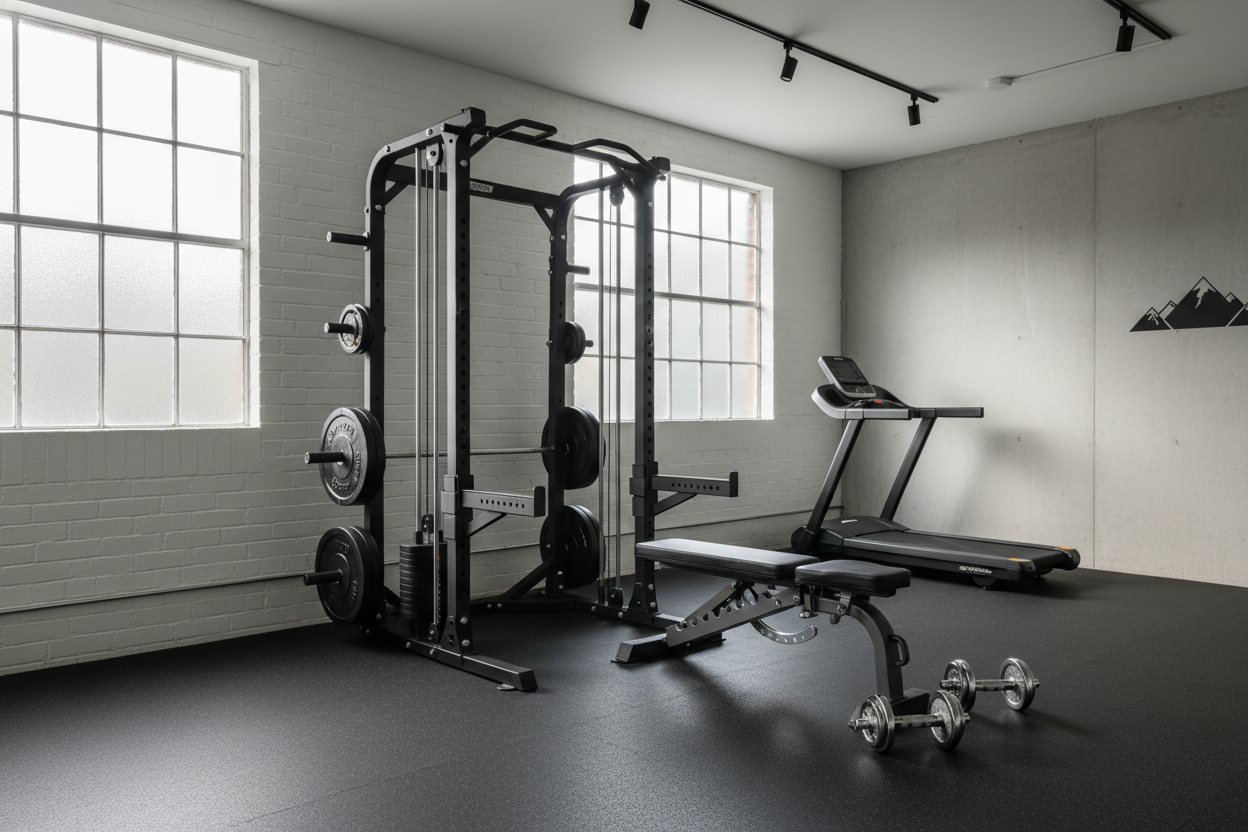
I remember the exact moment I decided to stop paying my local commercial gym's membership. I was waiting fifteen minutes for a squat rack while some guy filmed TikToks. I went home, cleared out the mountain of cardboard and lawn tools in my garage, and started hunting for the best smith machine I could find. I didn't want a flimsy piece of junk that would rattle every time I re-racked 225 lbs, but I also didn't want to spend five figures on a commercial rig meant for a pro sports team.
Quick Takeaways
- Steel Matters: Look for at least 11-gauge or 12-gauge steel. If the frame is thin, it will wobble during heavy presses.
- Bearings over Bushings: Linear bearings provide the smooth glide you expect; nylon bushings often feel 'sticky' or jerky.
- Cable Ratios: A 2:1 ratio is ideal for functional movements, providing more cable travel and a smoother feel than a 1:1 ratio.
- Safety First: Ensure the safety catches are easy to engage with a simple flick of the wrist.
The Big Problem with Cheap Racks (and How to Spot Them)
The market is flooded with 'budget' options that look great in photos but feel like a stack of soda cans once you actually load them up. When you're looking for the best budget smith machine, the first thing you need to check is the shipping weight. If the entire unit weighs less than 300 lbs, it's going to move when you use it. I've built rigs where the uprights were so thin I was afraid to tighten the bolts for fear of crushing the steel.
A common question is whether a massive piece of equipment is worth the floor space in your garage. If you buy a cheap, wobbly model, the answer is usually no. You'll end up hating the vibration and the noise. High-quality frames use 2x3 inch or 3x3 inch steel tubing. This provides the structural integrity needed to handle heavy loads without the rack walking across your floor during a set of incline presses.
Linear Bearings vs. Nylon Bushings: The Ultimate Dealbreaker
This is where most people mess up. A smith machine bar moves along guide rods. Cheap machines use nylon bushings—basically plastic sleeves—that slide against the metal. They’re loud, they require constant greasing, and they catch. If you want a commercial-grade feel, you need linear bearings. These use actual ball bearings to roll along the rods, resulting in a frictionless glide.
The all-in-one Smith machine with cable crossover is a prime example of a rig that doesn't compromise here. When you're doing slow, controlled eccentrics on a bench press, you don't want to feel the bar stuttering. Linear bearings ensure that the only resistance you're fighting is the iron on the bar, not the friction of the machine itself. It’s the difference between a smooth ride and a bumpy road.
Cable Ratios and Weight Stacks (Because Versatility Matters)
If you're building a home gym, you probably don't have room for five different machines. That’s why the best all-in-one smith machine usually includes a functional trainer component. I look for dual weight stacks and a 2:1 cable ratio. A 2:1 ratio means if you have 100 lbs on the stack, it feels like 50 lbs of resistance, but you get twice the cable length. This is essential for movements like cable crossovers or lunges where you need a lot of travel.
I personally prefer a full body multi training station because it integrates the smith bar with independent pulleys. This allows you to jump from a heavy compound movement like a smith squat directly into cable flyes or lat pulldowns without moving to a different part of the room. Look for weight stacks that go up to at least 160 lbs per side; anything less and you'll outgrow the machine for movements like low rows or pulldowns within a year.
Counterbalanced vs. Standard Bars: What You Actually Need
A standard smith machine bar usually weighs between 15 and 25 lbs. However, some high-end models are counterbalanced, meaning a system of weights and pulleys makes the bar feel weightless when empty. This is often the best smith machine for home use if you share the gym with family members who might be just starting out or working on rehab exercises.
Using a counterbalanced bar makes it much easier to follow a complete Smith machine workout guide, especially for isolation moves like calf raises or shrugs where a heavy starting weight might be cumbersome. It also adds a layer of safety for overhead presses, as you aren't fighting the dead weight of a heavy steel bar just to get into the starting position. It makes the machine much more approachable for everyone in the house.
Footprint and Assembly: A Reality Check for Garage Gyms
Before you hit 'buy' on that smith machine amazon listing, grab a tape measure. You need to account for more than just the width of the rack. You need space to actually load the plates on the sides. If your garage is 8 feet wide and your bar is 7 feet wide, you're going to have a miserable time sliding plates on and off. I always recommend at least 2 feet of clearance on either side of the bar.
Assembly is the other beast. When a 700-lb crate shows up, don't try to move it alone. Upgrading to a complete Smith machine home gym station is a massive space-saver compared to buying a separate power rack and functional trainer, but the assembly can take 4 to 8 hours. Take your time, use your own socket wrench instead of the cheap ones they provide, and make sure everything is level before you tighten the final bolts. A level machine is a quiet machine.
Personal Experience: The 'Wobble' Lesson
I once bought a budget smith machine because the price was too good to pass up. On paper, it had everything. In reality, the guide rods weren't perfectly parallel. Every time I reached the top of a squat, the bar would bind and stick. I spent more time fighting the machine than I did training. I eventually sold it for half what I paid and invested in a unit with a heavier gauge frame and linear bearings. It was a 400-dollar mistake that taught me you can't cheat physics—if the frame isn't heavy and the bearings aren't quality, the lift will suck.
FAQ
Is a Smith machine better than a power rack?
It’s not necessarily better, just different. A Smith machine offers more stability and built-in safety for solo lifting, while a power rack requires more stabilizer muscle engagement. For many home gym owners, the Smith machine's ability to act as a self-spotter is the deciding factor.
How do I maintain my Smith machine?
Keep the guide rods clean. Wipe them down once a month with a microfiber cloth and apply a thin layer of silicone-based lubricant. Avoid WD-40, as it can actually attract dust and gunk up the bearings over time.
Can I do pull-ups on a Smith machine?
Most modern all-in-one units come with a multi-grip pull-up bar at the top. Just make sure the unit is either bolted to the floor or heavy enough to stay put while you're hanging from it. If it moves when you jump up, you need to add weight pegs to the base for stability.
Share:
Can You Trust an Affordable Leg Press Machine With 500 Lbs?
Is the CAP Barbell 100 lb Vinyl Weight Set With Bar Trash?