
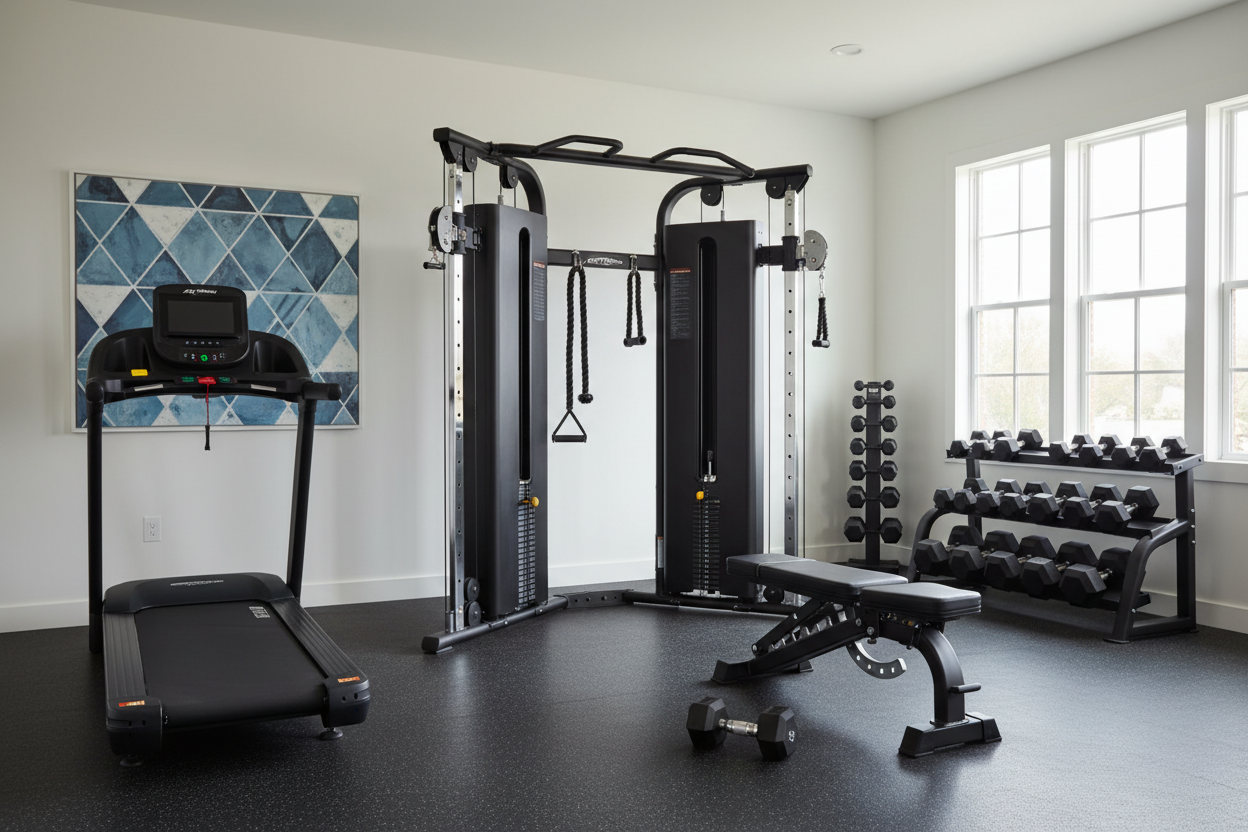
I remember scrolling through Amazon at 2 AM, looking at those weird plastic rollers and vibrating belts that promise a six-pack in six minutes. We’ve all been there. Most of that stuff ends up as a clothes rack or in a landfill because it lacks one thing: actual tension. If you want a thick, powerful core that actually shows through a t-shirt, you need the best weight machine for abs—not a piece of Tupperware with wheels.
Quick Takeaways
- Most 'as seen on TV' gadgets are flimsy trash that won't build muscle.
- Real core hypertrophy requires progressive overload, just like your bench press.
- Cable-based machines offer the most consistent tension throughout the movement.
- A strong core requires balancing anterior flexion with posterior chain strength.
- You don't always need a dedicated machine if you have a solid cable stack or heavy dumbbells.
Why 90% of Core Equipment is Complete Junk
I’ve seen it all in my years building out garage gyms. The fitness industry loves to sell the 'magic bullet' for abs because everyone wants them. But here is the cold truth: if a machine is made of thin plastic and folds up to fit under your bed, it’s probably useless for building muscle. These gadgets usually have a fixed range of motion that doesn't fit anyone over 5'5' or they use 'resistance bands' that lose their tension after three weeks.
A real hypertrophy tool needs to be heavy. It needs to be made of 11-gauge or 14-gauge steel. Most importantly, it needs to allow you to add weight over time. If you can’t track your progress by adding five pounds to the stack, you aren't training; you're just moving. Stop buying toys and start looking at equipment that actually provides a challenge to your rectus abdominis.
What Workout Machines Are Good for Abs, Actually?
When people ask me what workout machines are good for abs, I tell them to look at the biomechanics. Your abs aren't just there to look good; they are responsible for spinal flexion—pulling your ribcage toward your pelvis. If a machine doesn't facilitate that specific movement against a load, it's a waste of floor space. Static holds like planks are fine for stability, but they aren't the primary way to build 'blocky' ab muscles.
The best machines allow for a full stretch at the top and a hard contraction at the bottom. This is why cable-based systems are so effective. They provide constant tension, unlike a leverage machine where the weight might get 'easier' at the peak of the crunch. You also have to consider the balance of your trunk. I always recommend checking out a dedicated core back collection to ensure you aren't neglecting your spinal erectors while chasing a six-pack. A strong front with a weak back is a recipe for a herniated disc.
Finding a Real Resistance Machine for Abs
If you are hunting for a resistance machine for abs, you have two real choices: plate-loaded or selectorized. Plate-loaded machines are great for home gyms because they are usually cheaper and let you use the Olympic plates you already own. However, the resistance curve can be a bit wonky depending on the pivot point. If the machine feels 'empty' at the start of the rep, it’s a bad design.
Selectorized machines (the ones with the weight stacks and pins) are the gold standard for a reason. They are fast to set up, which is crucial for high-volume ab work. I prefer a seated crunch machine that has an adjustable seat height. If you can't align your hips with the machine's pivot point, you'll end up using your hip flexors more than your abs, which is the most common mistake I see in commercial gyms.
The GHD and Nordic Bench Loophole
Sometimes the best 'ab machine' isn't labeled as one. The GHD (Glute Ham Developer) is famous for destroying hamstrings, but a GHD sit-up is arguably the most brutal core exercise in existence. It forces you into a massive range of motion that most machines can't replicate. It’s not for beginners, but it’s incredibly effective for building that deep core strength.
Similarly, a core back hamstring master trainer can be a versatile powerhouse. While it's built for Nordics and back extensions, the stability it provides for weighted sit-ups and rotational work is top-tier. I love gear that serves multiple purposes, especially when space is at a premium in a garage. If you can hit your hamstrings, lower back, and abs on one footprint, that's a win.
The Best Machines to Use at the Gym for Abs
If you’re at a big box commercial gym, you have options. The best machines to use at the gym for abs usually start with the kneeling cable crunch station. It’s the one with the rope attachment on a high pulley. It’s simple, effective, and allows for infinite scaling. Just make sure you aren't just sitting on your heels; keep your hips high and crunch your elbows toward your knees.
The rotary torso machine is another one worth your time, provided you don't go too heavy and snap your spine. It targets the obliques in a way that crunches just can't. Finally, look for the 'Captain's Chair'—the one with the armrests for leg raises. While technically a bodyweight station, you can easily add a dumbbell between your feet to turn it into a true weighted resistance machine.
Wait, Do You Even Need One at Home?
Here is the reality check: I love equipment, but I also hate clutter. If you have a small 10x10 gym, a dedicated seated crunch machine is a massive luxury. You have to ask yourself if that 4-foot by 3-foot footprint is worth it. Most people can get 95% of the results using a cable tower or even just a heavy set of dumbbells on a bench.
I often tell my readers that you don't need an ab machine with weights if you already have a versatile rack setup. You can do hanging leg raises from your pull-up bar or weighted decline sit-ups on your adjustable bench. If you're tight on cash or space, skip the single-use machine and invest in a better set of plates or a high-quality cable pulley system.
My Personal Experience
Years ago, I bought a 'Power Ab' machine from a garage sale for $50. It was one of those rocking things where you pull on a bar while you crunch. I thought it was a steal. After two weeks, the foam padding started disintegrating, and the 'resistance' felt like moving a wet noodle. It didn't provide enough load to actually stimulate growth. I ended up giving it away for free and went back to cable crunches. It taught me that if the machine doesn't feel like a tank, it won't train you like one.
FAQ
Can I get abs just by using machines?
Machines build the muscle, but your diet reveals them. You can have the strongest abs in the world, but if they are covered by a layer of fat, you won't see them. Use machines for thickness and strength; use the kitchen for definition.
Is the cable crunch better than a seated machine?
Usually, yes. Cables allow for a more natural path of motion and keep tension on the muscle throughout the entire rep. Fixed-path machines can sometimes feel awkward if your torso length doesn't match the machine's dimensions.
How often should I train abs with weights?
Treat them like any other muscle. Two to three times a week is plenty. Give them 48 hours of rest between sessions so they can actually recover and grow larger.
Share:
I Built the Best Home Gym Setup Under 1000 (Without Buying Junk)
Can a Portable Fit Home Gym Actually Build Real Muscle?