
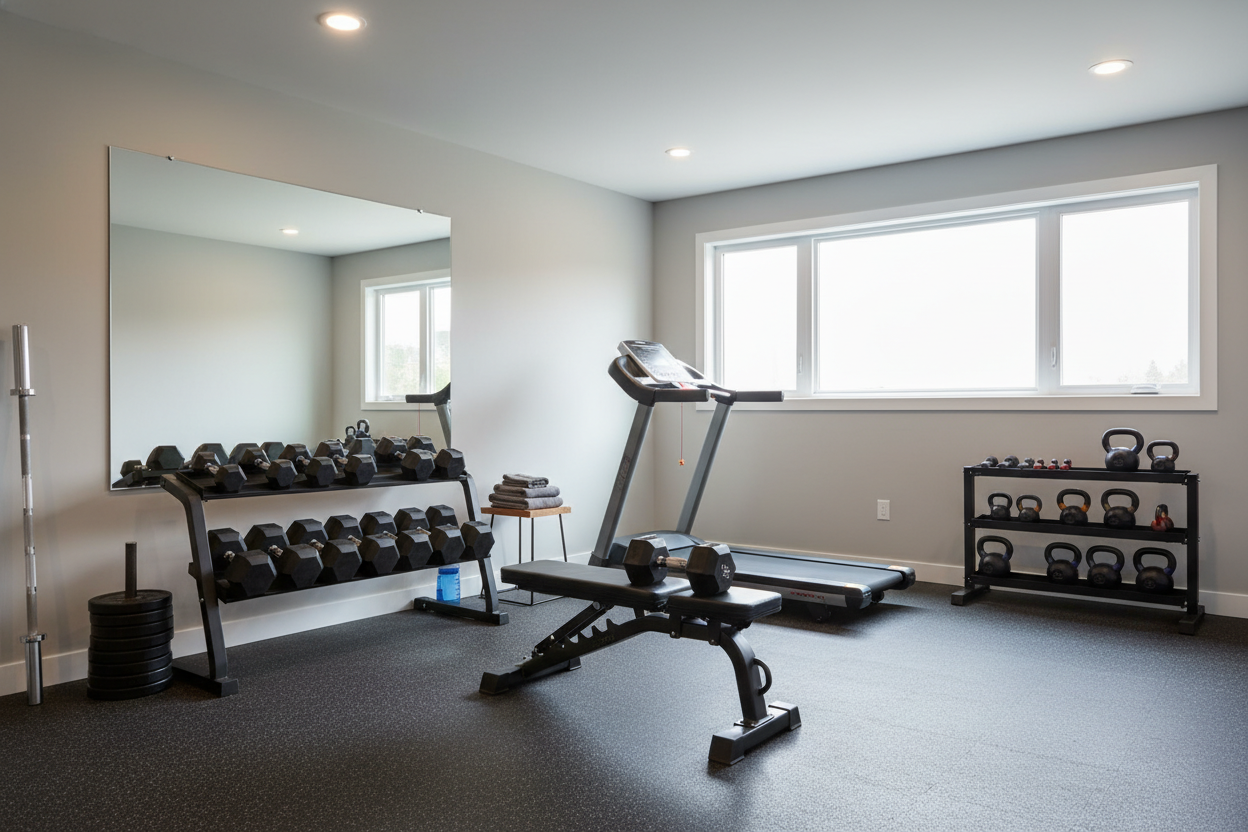
I remember looking at my garage three years ago, tripping over a bulky cable crossover machine that I used maybe twice a month. It took up 25 square feet of prime real estate and cost more than my first car. I sold it on Marketplace for half what I paid and realized I could do 90% of those movements using weights on bench setups. It turns out, you don't need a 12-station jungle to get big; you need a solid piece of steel and some heavy iron.
Quick Takeaways
- Space efficiency: A bench and dumbbells replace roughly five machines.
- Versatility: Incline and decline angles change the muscle recruitment entirely.
- Safety: Free weights on a bench allow for a more natural range of motion than fixed paths.
- Cost: You can build a pro-level setup for less than a year's membership at a boutique gym.
The Trap of the One-Dimensional Garage Gym
The biggest mistake I see beginners make is treating their bench like a specialized chest press station. They buy a flat bench, a pair of 25s, and then wonder why their back and legs look like they belong to a different person. It’s the ‘Chest Day’ trap. You think you need a dedicated row machine or a leg extension unit to round things out, but that just leads to a cluttered garage and a drained bank account.
Maximizing minimal equipment is a skill. When you realize that a reliable weight bench is actually a platform for your entire body, the training possibilities explode. I’ve used my bench for everything from box squats to seal rows. The key is shifting your mindset from ‘what machine does this?’ to ‘how can I stabilize my body on this bench to hit that muscle?’
Upper Body: Pushing Past the Standard Press
Stop just lying flat and pushing. To build a complete upper body with bench weights workout routines, you need to use the bench for stability. My absolute favorite is the chest-supported row. By lying face-down on an incline, you eliminate the momentum and ‘cheating’ that usually happens with bent-over rows. It forces your lats and rhomboids to do 100% of the work.
For shoulders, I’m a huge fan of the seated overhead press. Using the Adjustable Weight Bench OWB01 at a high 85-degree incline gives your back enough support to move heavy loads without the spinal compression you get from standing presses. Don't forget dumbbell pullovers either—lying across the bench (perpendicular) is a classic old-school move that hits the lats and serratus in a way no cable machine can replicate.
Lower Body: Yes, You Can Build Legs on a Bench
If you think you can’t get a brutal leg day using only exercises with a weight bench, you’ve never done a high-rep set of Bulgarian split squats. Prop your rear foot on the pad, hold a heavy dumbbell in each hand, and descend until your back knee almost kisses the floor. It is pure misery in the best way possible. It targets the quads and glutes with surgical precision.
I also use the bench for weighted step-ups and ‘bench-assisted’ hamstring curls. For the curls, you lie face down, grip the head of the bench, and squeeze a dumbbell between your feet. It’s awkward for the first two reps, but once you find the rhythm, the pump in your hamstrings is intense. You’re getting a full-body workout for bench utility without needing a dedicated leg curl station.
Core Destruction Without the Crunches
Crunches on the floor are boring and mostly useless. Instead, I use the bench to add a vertical component to my core training. Bench leg raises—where you lie flat and grip the bench behind your head—allow for a much greater range of motion and let you control the eccentric (lowering) phase far better than lying on a mat.
If your bench has a decline setting, weighted decline sit-ups are a staple for building that thick, ‘armored’ midsection. Even if you stay flat, you can perform off-center dumbbell holds. Sit on the edge of the bench, hold a heavy weight in only one hand, and keep your torso perfectly upright. Your obliques will scream trying to fight that lateral pull. It’s functional strength that actually carries over to your heavy lifts.
My Go-To 4-Day Bench Weights Workout Split
This is the exact routine I ran when I was stripping my gym down to the essentials. It’s an Upper/Lower split that hits every major group twice a week. Before you load up, ask yourself: Do You Actually Need a Commercial Weight Bench for Your Garage? If you’re pushing 100-lb dumbbells, you need a frame that won't wobble. Stability is the difference between a PR and a trip to the ER.
- Day 1: Upper (Push Focus) - Incline DB Press, Flat DB Flyes, Seated Overhead Press, Bench Dips.
- Day 2: Lower (Quad Focus) - Bulgarian Split Squats, Weighted Step-ups, Goblet Squats (using bench as depth marker).
- Day 3: Upper (Pull Focus) - Chest-Supported Rows, Dumbbell Pullovers, Incline Rear Delt Flyes, Concentration Curls.
- Day 4: Lower (Posterior Focus) - Dumbbell Hamstring Curls, Single-Leg Hip Thrusts (back on bench), Weighted Back Extensions (using bench for support).
One honest mistake I made early on was buying a cheap, bolt-together bench from a big-box store. The first time I tried heavy rows, the thing creaked like a sinking ship. I eventually upgraded to a welded frame with a 1,000-lb capacity. If you're serious about training with heavy weights on bench, don't skimp on the foundation. A shaky bench kills your confidence and your gains.
FAQ
Can I really build muscle with just a bench and dumbbells?
Absolutely. Muscle doesn't know if the resistance comes from a $5,000 machine or a $50 dumbbell. As long as you are applying progressive overload and hitting the right angles, you can build a pro-level physique in a corner of your garage.
What is the most important feature in a bench?
Stability and the gap. You want a bench that doesn't rock when you're doing step-ups, and you want a minimal gap between the seat and the backrest so it doesn't dig into your spine during flat presses.
Is a flat bench enough, or do I need an adjustable one?
A flat bench is fine for the basics, but an adjustable one opens up 50% more exercises. Incline rows and seated presses are game-changers for shoulder health and upper chest development.
Share:
I Found the Best All Around Exercise Machine (And It Weighs 400 Lbs)
I Finally Found the Best Exercise Machine for Home (And It's Heavy)