
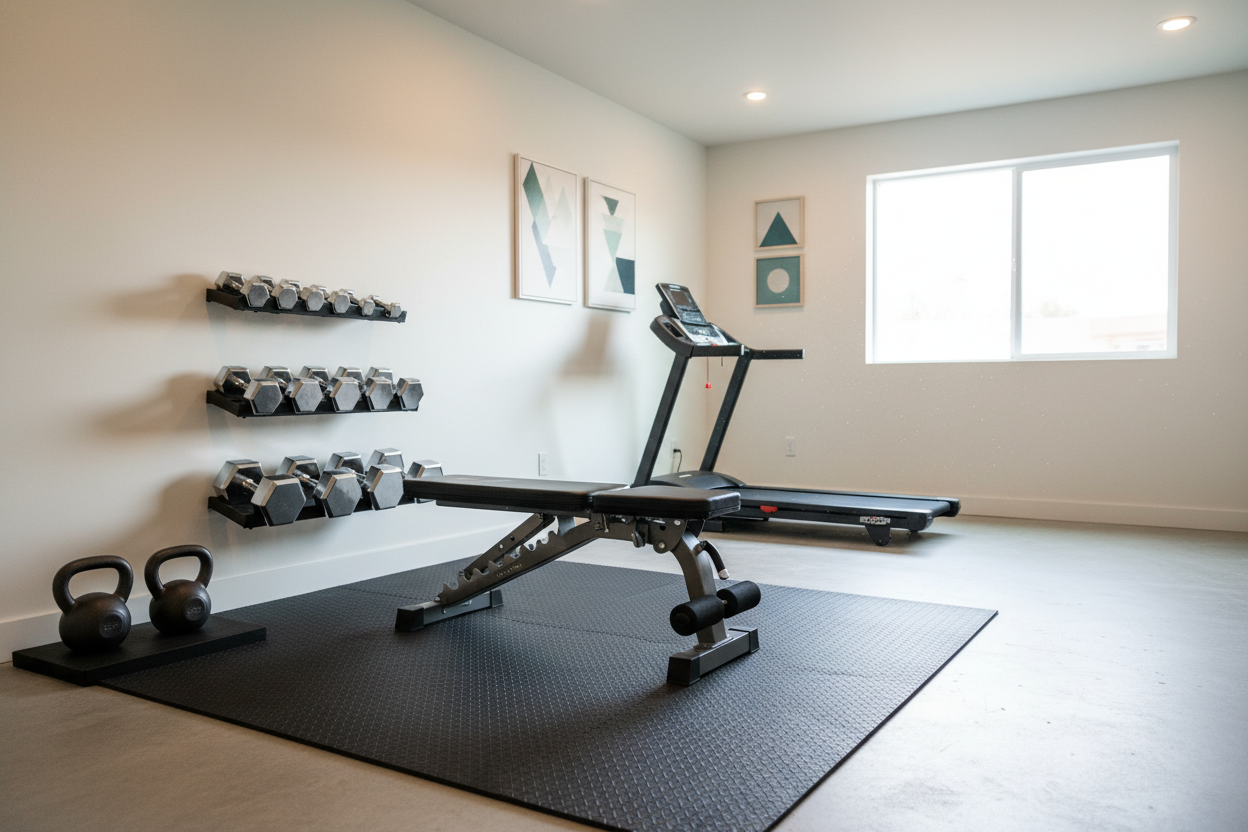
I remember trying to bench 225 lbs on a ninety-dollar Amazon special that felt like it was made of recycled soda cans. My gym was a ten-by-ten bedroom, and every time I set up for a press, the frame groaned like a haunted house floorboard. Finding a workout bench easy storage solution isn't just about saving floor space; it is about not ending up in the ER because your equipment decided to fold while you were mid-set.
Quick Takeaways
- Avoid single-pin hinges; they are the primary source of lateral wobble.
- Look for 11 or 12-gauge steel frames for meaningful stability.
- Check the folded height—anything over 8 inches will not fit under most standard bed frames.
- Ladder-style adjustments are almost always more stable than pull-pin sliders.
The Brutal Reality of Hiding Your Gym Equipment
Living in a city apartment means my living room is my gym, my office, and my kitchen. I have tried the permanent setup where the bench basically becomes a padded coffee table. It sucks. You want something you can tuck away in thirty seconds, but the market is flooded with gear built for people who lift ten-pound dumbbells, not anyone moving real iron.
The search for an easy storage weight bench usually ends in a wobbly disappointment. You buy it because the photos show it tucked neatly behind a door, but the first time you lay on it, you realize the frame has more flex than a yoga instructor. If you are serious about strength, you cannot compromise on the frame's rigidity just to save a few square feet.
Why Your Current Folding Bench Feels Like an Ironing Board
Most cheap folding benches use a single bolt or a flimsy pin at the main pivot point. When you are pressing, that pin becomes a fulcrum for side-to-side movement. Combine that with two-inch high-density foam that bottoms out the second your shoulder blades touch it, and you are basically lifting on a trampoline. This lateral instability is dangerous when you are holding heavy weight over your face.
I often get asked, Is A Leg Press Weight Bench Actually Worth The Space? Usually, the answer is no—those bulky, multi-attachment monstrosities are the opposite of the streamlined, rigid setup you actually need for a small home gym. They add more pivot points, which just adds more places for the bench to shake and rattle.
3 Rules for Buying an Easy Storage Weight Bench
First, check the steel gauge. If the listing does not mention 11 or 12-gauge steel, it is probably 14-gauge or thinner, which belongs in a scrap yard, not under your back. Thicker steel provides the mass needed to keep the bench planted on the floor during explosive movements.
Second, look for a locking ladder mechanism. Instead of a single pin holding the backrest up, a ladder rack distributes the force across a wider surface area. This eliminates the see-saw effect common in cheap folding designs. Third, measure the folded thickness. A truly weight bench foldable compact enough for apartment living should lay flat enough to slide under a couch or stand vertically in a closet without tipping over.
Wall-Mounted vs. Under-Bed: Where Is This Thing Going?
If you have a garage with exposed studs, a wall-mounted rack is the king of stability. But for the rest of us, the choice is usually between a bench that folds flat or one that stands on its end. I prefer the stand-up models. They usually have a wider footprint when in use, which provides better stability during heavy dumbbell rows.
When browsing a standard Weight Bench collection, you will notice that the sturdiest models usually have a tripod or a wide H-shaped base. If your folding bench has narrow feet, it does not matter how thick the steel is—it is going to tip. I always look for a base that is at least 16 inches wide to ensure I am not rocking back and forth during my work sets.
When to Abandon the Folding Dream
There is a point of diminishing returns with folding equipment. Once you are pressing 100-lb dumbbells or chasing a 315-lb bench press, those hinges become a liability. No matter how well-engineered a folding joint is, it will never be as stiff as a solid, welded piece of steel. Safety has to come before convenience eventually.
If you have hit a plateau and feel like the bench is the limiting factor, it is time to upgrade. A heavy-duty, non-folding Adjustable Weight Bench Owb01 offers a level of rock-solid confidence that a hinge just cannot replicate. It might take up a permanent corner of your room, but the peace of mind during a heavy set is worth the loss of floor space.
My Personal Take
I once bought a bench that claimed a 600-lb capacity. The first time I tried to do step-ups on it, the leg lock sheared off. I learned the hard way that easy storage often translates to thin metal and cheap hardware. Now, I look for oversized bolts and welded joints, even on my compact gear. If it feels light enough to carry with one finger, it is probably too light to support your max effort.
FAQ
Does a folding bench always wobble?
Not always, but most do. To minimize it, look for benches with threaded tightening knobs instead of just slide-in pins. The tighter the connection at the hinge, the less it will shake.
Can I do incline work on a compact bench?
Yes, most high-quality folding benches offer at least three or four angles. Just ensure the adjustment arm locks securely into the frame so it cannot slip out mid-set.
What is the best way to store a bench in a small apartment?
Vertical storage is the winner. Look for a bench with a built-in handle and wheels that can stand upright in a corner or behind a piece of furniture. It keeps the footprint minimal when you are not training.
Share:
The Truth About That Cheap IGS Smith Machine on Facebook Marketplace
Is a Vintage Cybex Exercise Machine Actually Worth the Space?