
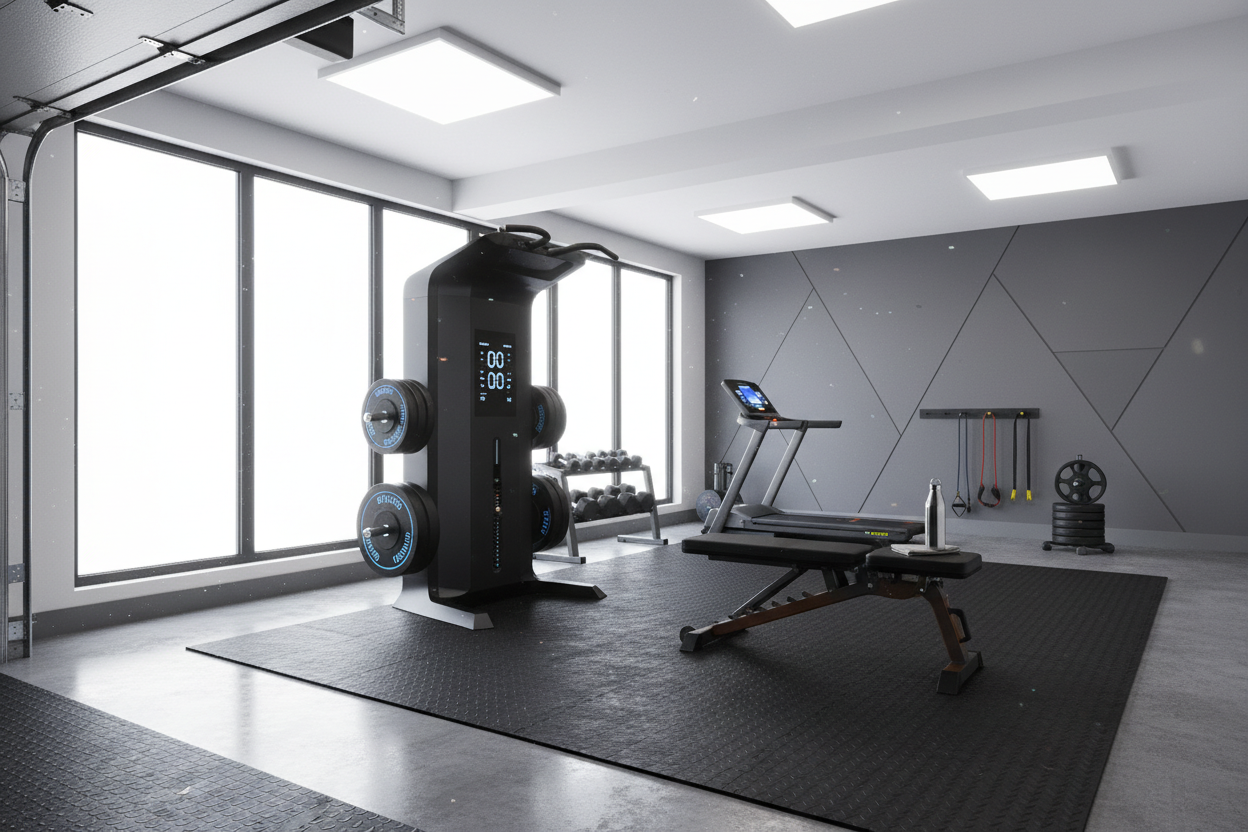
My garage gym is a shrine to cast iron, rust, and the smell of stall mats. I've spent a decade chasing the perfect knurl on a barbell and arguing with anyone who would listen about why deep-dish plates are superior. When I first saw ads for digital weight machines, I laughed. To me, they looked like oversized tablets for people who were afraid of chalk and calluses.
Quick Takeaways
- Resistance is constant; there is zero momentum or 'cheating' on the way up.
- The footprint is unbeatable for apartment dwellers or tight garage corners.
- Dynamic eccentric loading is a legitimate way to trigger hypertrophy.
- You lose the visceral 'clank' of iron, which might matter more than you think.
Confession: I Was a Smart Gym Hater
I’m the guy who thinks a power rack and a pile of plates is all anyone needs to get strong. I’ve always viewed electronic weights as expensive gadgets designed to fix a problem that didn't exist. My skepticism wasn't just about the tech; it was about the physics. I didn't believe a motor and some magnets could replicate the feeling of a heavy squat or a grinding deadlift.
For years, I told people that if it didn't have gravity involved, it wasn't real training. I expected these machines to feel like those cheap, friction-heavy home gyms from the 90s. I assumed the software would be buggy and the resistance would feel 'mushy.' I finally decided to put my money where my mouth is and spent a month training exclusively on a magnetic resistance weight machine to see if I was wrong.
How Does a Magnetic Resistance Weight Machine Actually Feel?
The first thing you notice about digital weights is the lack of inertia. When you lift a physical barbell, you use momentum to get the weight moving. There’s a 'dead spot' at the top of many movements where the weight feels lighter because of that speed. With a magnetic system, the resistance is generated by an electric motor that doesn't care about physics the same way a plate does. It pulls back with the exact same force at every inch of the rep.
It’s a humbling experience. If you’ve spent years on a track system, you might Stop Guessing Your Real Smith Machine Resistance Weight and realize that traditional machines have been doing some of the work for you. On a digital machine, 50 lbs feels like 65 lbs because you can't use a 'bounce' to start the rep. The tension curve is flat, which means your muscles are under fire from start to finish. It’s smooth—almost too smooth—which takes some getting used to if you’re used to the rattle of a cable crossover.
The eccentric phase with digital weights is brutal
This is where the tech actually beats the barbell. Most digital systems allow for 'eccentric loading.' This means the machine can add weight automatically on the way down. I set a chest press for 150 lbs on the way up, and the machine instantly cranked it to 200 lbs on the way down. Doing that with a barbell requires a spotter or some very dangerous weight releasers. The soreness I felt the next day was a different animal entirely. It turns out that fighting a motor that is actively trying to pull your arms back is a fantastic way to build muscle.
Where the Tech Shines (and Where It Fails)
Let’s talk specs. These machines usually fit in a 6×8 ft space, often mounting directly to a wall. For someone living in a city, that’s a massive win. You get the equivalent of a full cable stack, a squat rack, and a functional trainer in the space of a bookshelf. The digital lifting interface also tracks every single rep, set, and pound moved, which is great for data nerds who hate carrying a notebook.
But it isn't all sunshine. The max load is a real bottleneck. Most of these units top out at 200 to 400 lbs total. If you’re a 500-lb deadlifter, this isn't your primary tool. Then there’s the price. You’re often looking at $3,000 to $5,000 plus a monthly subscription fee just to keep the 'smart' features active. That’s enough to buy a top-tier power rack, a high-end barbell, and 500 lbs of competition bumpers. Also, the lack of noise is weird. Part of the joy of lifting is the sound of the plates hitting the floor. Training in total silence feels a bit like lifting in a library.
Real Iron vs. Silicon: Will I Ditch My Rack?
I’m not selling my plates anytime soon. There is a psychological component to moving a physical object that a motor can’t replicate. However, I’ve started using the digital system for all my accessory work. It’s faster, the tension is better for isolation, and I can fly through a workout in 30 minutes. To make it work, you still need a solid base. You can't just stand on a carpet and expect to pull 200 lbs of digital tension without moving.
You absolutely need a high-quality Weight Bench to act as your anchor. I found that using a versatile Adjustable Weight Bench Owb01 was the only way to get the right angles for incline presses and seated rows. Without a heavy-duty bench, you're limited to standing movements, which wastes half the potential of the machine. The bench provides the stability that the digital cables lack.
The Final Verdict on Digital Lifting
Digital weight machines are no longer just toys for tech bros. They are legitimate strength tools that offer tension profiles a barbell simply can’t match. If you are tight on space or you’re obsessed with data and eccentric training, it’s a solid investment. If you live for the 'clank' and need to move 600 lbs to feel alive, stick to your iron. For me, it's a 'both/and' situation. I'll keep the barbell for the big lifts and let the magnets handle the pump.
FAQ
Is digital weight 'lighter' than real weight?
Actually, it feels heavier. Because there is no momentum or gravity-assisted 'drop,' the constant tension makes 20 lbs of digital resistance feel significantly more taxing than a 20-lb dumbbell.
Do these machines require a subscription?
Most of them do. While the 'basic' lifting mode usually works without one, you lose the tracking, programs, and dynamic weight modes (like eccentric or chains) if you don't pay the monthly fee.
Can I build real muscle with electric weights?
Yes. Your muscles don't know if the tension comes from a lead plate or a magnetic motor. As long as you are hitting failure and progressing the load, you will grow.
Share:
I Audited My Home Workout Equipment (And Threw Half Away)
Your Cluttered Garage Isn't the Best Weight Room (Here's How to Fix It)