
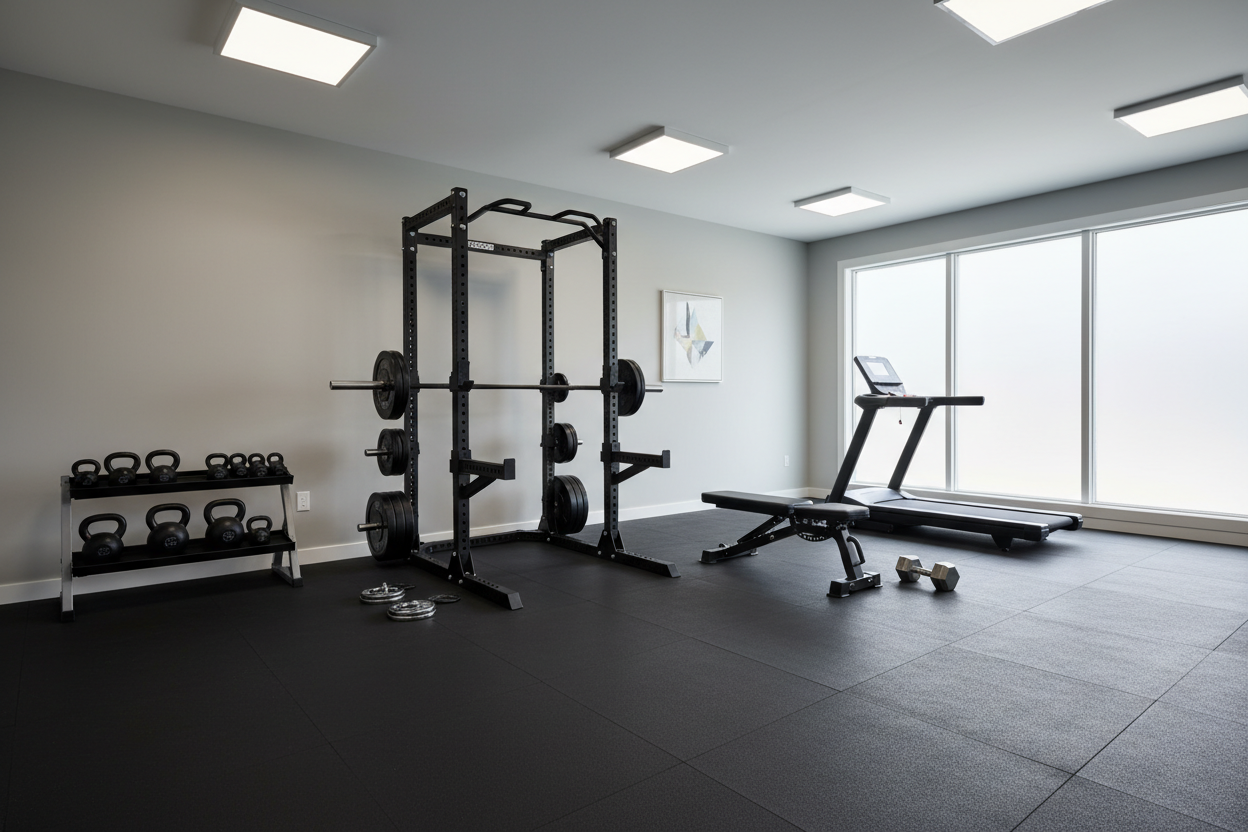
I stepped into my garage last Tuesday and almost tripped over a rusted 15-lb kettlebell I haven't touched since 2019. My home workout equipment situation had reached a breaking point. It wasn't a training space anymore; it was a storage unit for gear I bought because I thought I should own it, not because I actually used it. I realized that my environment was actively sabotaging my motivation to train.
I survived a year using cheap at home workout equipment during the lockdown era, but that survivalist mindset left me with a pile of junk. Cheap resistance bands that snap after ten reps, benches that wobble when you're holding 50-lb dumbbells, and those weird ab-rollers that just hurt your lower back. It was time for a purge. I needed a setup that felt like a professional facility, not a cluttered basement.
- The 90-day rule: If you haven't sweated on it in three months, sell it.
- Prioritize footprint: Space is your most valuable asset in a garage or spare room.
- Consolidate: One heavy-duty station beats five specialized gadgets.
- Quality over quantity: A single 20kg barbell is better than a dozen light kettlebells.
The Day the Clutter Finally Broke Me
There is a specific kind of frustration that comes with trying to hit a PR while surrounded by clutter. I was trying to set up for floor presses and had to move a literal pile of yoga mats and plastic-coated weights just to lie down. It kills the momentum of a session. You spend more time moving junk than you do lifting it. When your gym feels like a chore to navigate, you start finding excuses to skip the workout entirely.
Most of us start our home gym journey by grabbing whatever is on sale. We think variety is the key to progress. In reality, variety just leads to a messy floor and a distracted mind. I realized my best workouts happened when I had nothing but a rack, a bar, and some plates. Everything else—the vibrating massage platforms and the 'as-seen-on-TV' gadgets—was just taking up space where I should have been doing lunges.
The 90-Day Dust Test for Home Fitness Equipment
I implemented a ruthless rule: the 90-day dust test. If a piece of home fitness equipment has gathered a visible layer of dust, it’s dead weight. I looked at my plyo box—a massive wooden cube that I used exactly twice for step-ups before deciding I hated them. It was taking up four square feet of prime real estate. I could have put a plate tree there, but instead, it was just a shelf for my hydration drinks.
I realized why most workout equipment for home ends up on Marketplace. We buy things for the version of ourselves that does 45 minutes of mobility work every morning. If you aren't that person, sell the foam roller and buy more iron. I liquidated my 'mobility corner' and used the cash to buy a pair of 45-lb bumpers that I actually use every single week. If it doesn't serve your actual program, it shouldn't be in your room.
Making Single-Use Cardio Machines Pay Rent
Cardio equipment is the biggest offender in the space-wasting category. A treadmill is a massive commitment. If you aren't logging serious miles, it's just a very expensive clothes rack. I evaluated my home workout exercise equipment based on how much utility it provided per square foot. If it doesn't fold, it better be the centerpiece of my programming. I've seen guys with full-sized rowers in a one-bedroom apartment; unless you're an elite rower, that's a massive waste of space.
You need floor space for lunges, deadlifts, and just being able to breathe between sets. If your cardio gear doesn't 'pay rent' by being used at least three times a week, it’s time to evict it. I'm not saying you should ditch cardio, but you should choose tools that respect your boundaries. I swapped my bulky, non-functional elliptical for a more streamlined solution that actually fits my lifestyle.
Why the Folding Bike Survived the Cut
I’m not a total minimalist; I still need my Zone 2 work for heart health and recovery. The foldable upright exercise bike earned its spot because it respects the floor plan. When I’m done with a 20-minute flush, it folds up and slides into the gap between my rack and the wall. It’s out of sight and out of mind until I need it again.
It features 16 levels of magnetic resistance, which is plenty for a steady-state sweat while I catch up on podcasts. It’s quiet enough that I can ride while the kids are asleep, and the footprint is negligible compared to a stationary spin bike. It’s the perfect example of gear that provides high utility without demanding a permanent 5-foot radius of space. It’s functional, silent, and most importantly, it gets out of the way.
Consolidating Your At Home Workout Equipment
The biggest breakthrough in my audit was consolidation. I had a separate pull-up tower, a bench press station, and a set of squat stands. It was a mess of metal. I swapped all of that for a Smith machine home gym station. This single unit handles my heavy compounds, provides a stable pull-up bar, and includes integrated cable pulleys for accessory work like face pulls and tricep extensions.
This is how you optimize at home workout equipment. Instead of having five different pieces of gear that each do one thing poorly, you get one heavy-duty unit that does five things perfectly. The 14-gauge steel and 300-lb capacity on these stations mean I can actually train heavy without feeling like the whole rig is going to tip over. It turned my chaotic garage back into a functional training hall where I can move from a bench press to a pull-up in five seconds.
Building a Setup That Actually Breathes
Minimalism isn't about having nothing; it's about having exactly what you need to get the job done. My home exercise equipment now consists of a high-quality rack, a solid barbell, a set of plates, and my folding bike. That’s it. And honestly? My workouts have never been better. I don't spend ten minutes cleaning up or moving obstacles before I can start my first warm-up set.
When you build a cohesive home gym, you’re creating an environment where you actually want to spend time. You aren't fighting the room; you're using it. If you're currently tripping over a pile of half-broken gadgets or unused bands, do yourself a favor: grab a trash bag, open Facebook Marketplace, and start the audit. Your future gains depend on having a space that actually works for you.
FAQ
How much space do I really need for a home gym?
You can do a lot in an 8x8 foot area. The key is choosing gear that stacks or folds. If you have a dedicated garage space, aim to keep at least 40% of the floor clear so you can move around the equipment safely without banging your shins on iron.
Is budget equipment worth it?
Only if it's built with real steel. Avoid plastic-heavy gadgets. A budget barbell or a basic Smith machine is fine as long as the weight capacity matches your lifting goals. If you're squatting 300 lbs, don't buy a rack rated for 250 lbs.
How do I know if I should sell a piece of equipment?
Use the 90-day rule. If you haven't touched it in three months, you probably won't touch it in the next three. Sell it while it still has value and use the money for something that fits your current goals, like a better bar or heavier plates.
Share:
Can the PureSport Workout Bench Survive a Real Garage Gym?
I Finally Tried One of Those Trendy Digital Weight Machines