
I remember the first time I loaded 315 on a 'five-star' bench I bought on a whim. The frame groaned, the vinyl compressed until I felt the plywood, and I spent the whole set wondering if I was about to become a YouTube fail video. Most top-rated home gym equipment is designed for people who use it as a clothes rack three weeks after the New Year's resolution fades.
- Ignore the star count; look at the steel gauge (11-gauge is the gold standard).
- Avoid 'all-in-one' units that promise 50 exercises in a 4x4 footprint.
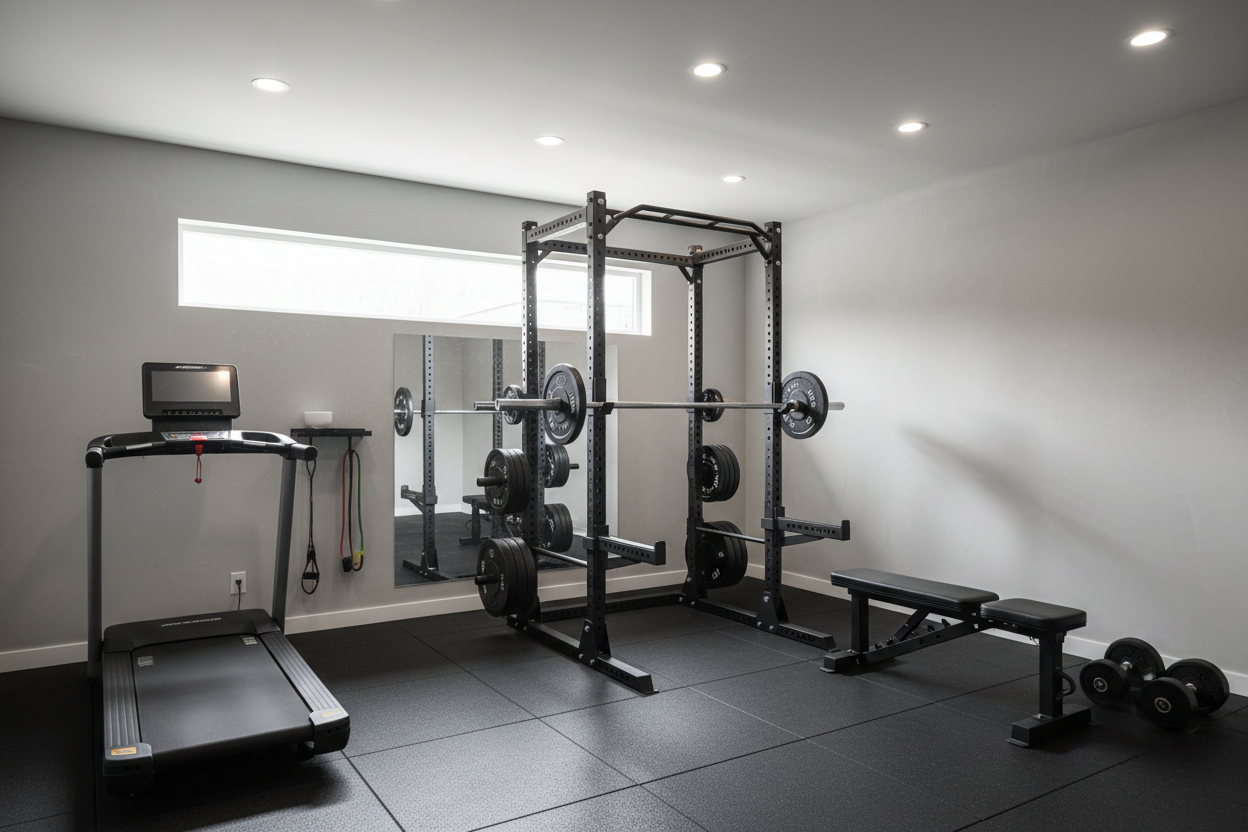
- Invest in the 'Big Three': a rack, a barbell, and a heavy-duty bench.
- Check the hardware—if the bolts look like they belong on IKEA furniture, skip it.
Why Five-Star Reviews Mean Nothing for Serious Lifters
People give five stars because the box arrived on time or the color matches their garage floor. They haven't actually dropped a loaded barbell from chest height onto the safety pins to see if they hold. Algorithm-driven review systems are skewed by beginners who are just happy they didn't get scammed on shipping.
When you are hunting for top rated home gyms, you have to read between the lines. A casual user's five-star experience is irrelevant if you plan on training four days a week for the next decade. Real durability is measured in weld penetration and steel thickness, not how many 'verified purchasers' liked the assembly instructions.
The Trap of the So-Called 'Ultimate All-In-One'
Marketing departments love the 'ultimate home gym' label. They cram pulleys, leg extensions, and pec decks into one shaky frame. The problem? These machines usually feature terrible 1:1 pulley ratios that feel like sandpaper and 14-gauge steel that wobbles when you breathe heavy. It is exactly why most compact gym for home setups snap under heavy weight once you actually start getting strong.
The cables on these units are often the first thing to go. They use thin, plastic-coated wires that fray and snap at the crimp points. If you want a setup that lasts, you need to prioritize structural integrity over a list of flashy features that you will never use anyway.
What Actually Matters When Buying Heavy-Duty Gear
Stop looking at the stars and start looking at the spec sheet. If a manufacturer doesn't list the steel gauge, assume it is thin, 14-gauge trash. You want 11-gauge steel for anything supporting your body or a loaded bar. This is how you filter out the fake top rated gym equipment that floods the market.
Check the hardware. Real gear uses 5/8-inch or 1-inch grade 5 or grade 8 bolts. Look at the welds—they should be clean, consistent 'stacks of dimes,' not messy globs of metal. If the rack uses thin crossmembers and tiny screws, it will eventually rack-shift under load, and that is a recipe for a hospital visit.
The Core Pieces That Actually Survive Real Abuse
A bulletproof setup starts with a power rack. It is the heart of the gym. Don't skimp here. Next, get a barbell with decent knurling and a high tensile strength (at least 190,000 PSI). A cheap bar will bend the first time you leave it loaded on the rack overnight.
For pressing, you need a stable base. I recommend something like the Adjustable Weight Bench Owb01 because it has the reinforced back-pad support that prevents that terrifying side-to-side wobble during heavy dumbbells presses. If you prefer a fixed-track system for isolation work, look at a Smith Machine Home Gym Station that uses real linear bearings instead of the cheap plastic rollers found in big-box stores.
How to Build Your Space Without Getting Scammed
The best weight systems for home are built piece by piece, not bought in a single box. My philosophy is simple: buy once, cry once. It is better to spend more on a high-quality rack now than to buy a flimsy one today and have to replace it (and your drywall) in two years.
Prioritize raw materials. If you see a piece of gear that is covered in plastic shrouds and 'innovative' features, it is usually hiding a weak frame. Stick to the basics that have worked for decades. You can find gear vetted for actual heavy lifting in this curated Home Gym collection. Focus on the steel, and the results will follow.
My Personal Fail
I once bought a 'top rated' barbell that had over 2,000 glowing reviews. I used it for three months of heavy deadlifts before it developed a permanent 'U' shape. The reviews were written by people who probably never put more than 135 pounds on the bar. I learned the hard way that 'popular' does not mean 'strong.'
FAQ
Is 11-gauge steel really necessary?
If you are squatting or benching over 225 pounds, yes. It provides the stability and weight capacity needed to keep the rack from tipping or bowing under load.
Why are all-in-one machines discouraged?
They try to do too much. By including 20 different stations, they compromise on the quality of the cables, pulleys, and frame. A simple rack and bench setup is more versatile and durable.
How do I know if a bench is stable?
Look at the footprint and the weight of the bench itself. A 40-pound bench will move. A 70- to 90-pound bench with a wide tripod or four-point base will stay planted.
Share:
Why Most Home Fitness Gyms Turn Into Expensive Clothes Hangers
Are Smith Machines Bad, or Are You Just Using Them Wrong?