
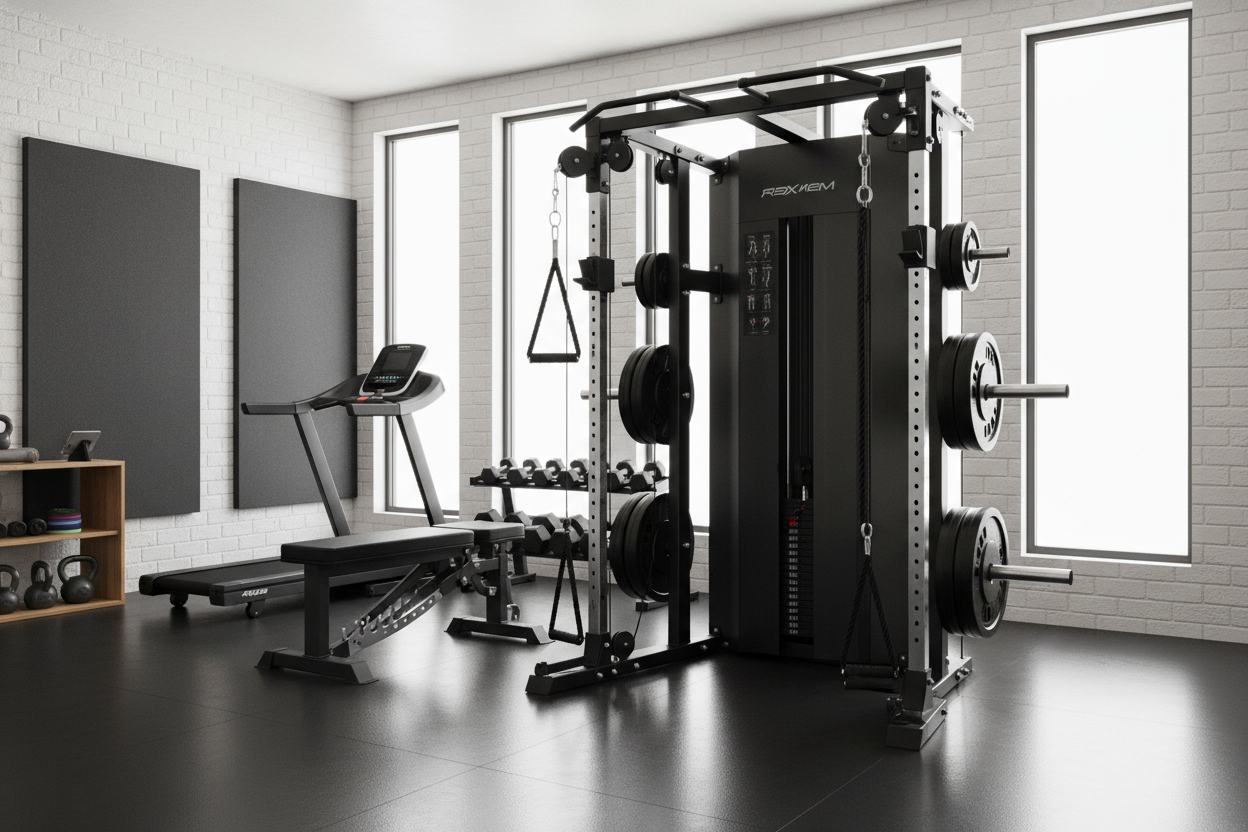
I remember the first time I tried to save a buck on a 'space-saving' rack I found on a late-night scrolling session. The box arrived, I spent four hours bolting it together, and the second I racked 225 pounds, the whole thing groaned like a sinking ship. If you are hunting for a compact gym for home, you are likely dealing with the same dilemma I was: limited square footage but a desire to actually lift heavy without the equipment folding like a lawn chair.
Quick Takeaways
- Always prioritize 11-gauge or 12-gauge steel over the flimsy 14-gauge stuff found in big-box stores.
- Check the dynamic weight capacity, not just the static rating—moving weight puts way more stress on the frame.
- Skip the bells and whistles; isolation machines eat space while compound-focused gear saves it.
- Measure your ceiling height before buying any vertical-stack machine.
The Dirty Secret About 'Space-Saving' Fitness Gear
Manufacturers know that 'small footprint' sells. They also know that most people buying a compact gym for home won't ever actually test the limits of the machine. To make these units fit into a bedroom corner, they often narrow the base and shorten the uprights. While this looks great in a catalog, it ruins the center of gravity. If you're doing heavy cable rows or pull-ups, a machine with a narrow base is going to tip or wobble. It’s physics, and no amount of marketing can change that.
The real difference when looking at high-end compact home gym systems is the weight of the unit itself. A commercial-grade machine is heavy because it has to be. If the entire machine weighs less than the person using it, you're asking for trouble. I look for units that use 2' x 3' or 3' x 3' steel tubing. Anything less feels like a toy when you're mid-set. I’ve seen 'compact' units that use plastic bushings instead of ball bearings in the pulleys—those will grind down to dust within a year of consistent use. Don't sacrifice your safety just to save six inches of floor space.
Weight Capacities Don't Lie (But Marketers Do)
When you see a compact gym machine rated for '800 lbs,' take it with a massive grain of salt. That is usually a static rating, meaning the frame won't collapse if you gently place 800 lbs on it and walk away. But training isn't static. When you drop a bar onto the J-cups or finish a heavy set of cable presses, the force exerted is much higher. You need to look at the steel gauge thickness. 11-gauge steel is the gold standard for serious home gyms. It’s roughly 1/8 of an inch thick and can handle the abuse of daily heavy lifting.
Then there are the cables. Most cheap compact home gym machine options use thin cables that feel 'stretchy' under load. You want 3/16' or 1/4' aircraft-grade cables with a 2,000-lb tensile strength. Also, pay attention to the pulley ratio. A 2:1 ratio means 100 lbs on the stack feels like 50 lbs in your hand. This is common in functional trainers, but if you're a heavy lifter, you might max out a small stack too quickly. I once bought a unit with a 4:1 ratio by mistake—I was literally pulling the entire weight stack for warm-ups. It was a total waste of money. Check the specs, ask about the ratio, and make sure the steel is thick enough to handle your PRs.
Ditch the Single-Use Isolation Stations
The biggest mistake I see in small-space gyms is trying to replicate a commercial club's 'circuit' with ten different machines. You don't have the room for a dedicated pec deck, a seated row machine, and a leg extension station. In a tight spot, versatility is king. You need a base that allows for the 'Big Three' (squat, bench, deadlift) while offering cable options for accessory work. Trying to cram isolation gear into a 10x10 room just leads to bruised shins and a cluttered mess.
Instead of five mediocre machines, I recommend investing in one heavy-duty Smith machine home gym station or a high-quality power rack with a lat pulldown attachment. A Smith machine setup is particularly effective for small spaces because it keeps the weight path vertical and contained, eliminating the need for a wide 'safety zone' around a free-weight barbell. It replaces the squat rack, the bench press station, and often includes pull-up bars and cable pulleys. It’s the most efficient way to use every square inch of your floor plan without sacrificing the ability to move heavy iron.
Leg Days in Tight Spaces
Leg day is usually the first casualty of a small home gym. Most people settle for goblet squats because they think a real leg press is out of the question. I used to think the same until I realized you don't need a seven-foot-long commercial sled. A compact leg press hack squat combo is the answer for those of us lifting in garages or spare rooms. These machines use a vertical or angled design to minimize the footprint while still letting you load up several hundred pounds of plates.
I’ve tested combos that take up less space than a standard loveseat. The key is finding one that doesn't compromise on the footplate size. If the footplate is too small, your heel will hang off, and you won't be able to hit your quads or glutes effectively. Look for a unit with a heavy-duty carriage and smooth linear bearings. I’ve made the mistake of buying a cheap one with nylon wheels—it sounded like a freight train and felt like I was pushing through sand. Go for the bearings; your knees will thank you.
The Spec Sheet Checklist for Small-Space Lifting
Before you pull the trigger on a compact home gym machine, run through this checklist. If the manufacturer doesn't list these specs, they are probably hiding something. I’ve learned to never trust a 'vague' description like 'heavy-duty steel.'
- Steel Gauge: Demand 11 or 12-gauge. If it's 14-gauge, it's for light fitness only.
- Footprint: Measure the base, but also the 'working area.' You need at least 2 feet of clearance around the machine to move safely.
- Pulley Material: Look for aluminum or high-grade nylon with ball bearings. Avoid 'plastic-on-plastic' bushings.
- Height: Many basements have 7-foot ceilings. Make sure your rack or functional trainer isn't 84.5 inches tall.
- Weight Stack vs. Plate Loaded: Plate-loaded machines are usually more compact and cheaper, but weight stacks are faster for drop sets.
- Hole Spacing: For racks, look for Westside spacing (1-inch gaps) through the bench zone so you can set your safeties perfectly.
My Blueprint for a 50-Square-Foot Iron Asylum
I once lived in a studio apartment where my 'gym' was a 5-foot by 10-foot sliver of floor next to my bed. I learned very quickly that if the gear isn't high-quality, the vibration and noise will drive your neighbors (and you) insane. My blueprint for a compact in home gym into 50 square feet centers on a single multi-function unit rather than a collection of small tools. I opted for a heavy-duty rack with a built-in cable system and a bench that could fold up and stand vertically when not in use.
The biggest mistake I made in that setup? I bought cheap, thin floor mats. When I dropped a 50-lb dumbbell, it sounded like a gunshot. Spend the extra money on 3/4-inch stall mats. It keeps the machine stable and protects your foundation. Building a compact gym isn't about how much gear you can fit; it's about how much quality you can squeeze into the space you have. Stick to the heavy steel, prioritize compound movements, and don't believe the hype on the $299 'all-in-one' miracles.
FAQ
Is a compact gym machine as good as commercial equipment?
If you buy a high-end unit with 11-gauge steel and quality pulleys, yes. If you buy a budget model from a department store, no. The feel of the movement—how smooth the cables are—is usually where the cheap machines fail.
How much space do I really need for a home gym?
You can get a world-class workout in 50 square feet. The trick is choosing a machine that allows you to perform multiple exercises in one spot, like a Smith machine or a functional trainer.
Can I deadlift on a compact gym floor?
Only if you have proper flooring. Use 3/4-inch rubber stall mats. Even then, if you're pulling 500+ lbs, you might want a dedicated lifting platform to protect your subfloor.
Share:
Why Barbell Snobs Are Wrong About the Advantages of Machine Weights
I Tested Every Machine to Build This Planet Fitness Upper Body Workout