
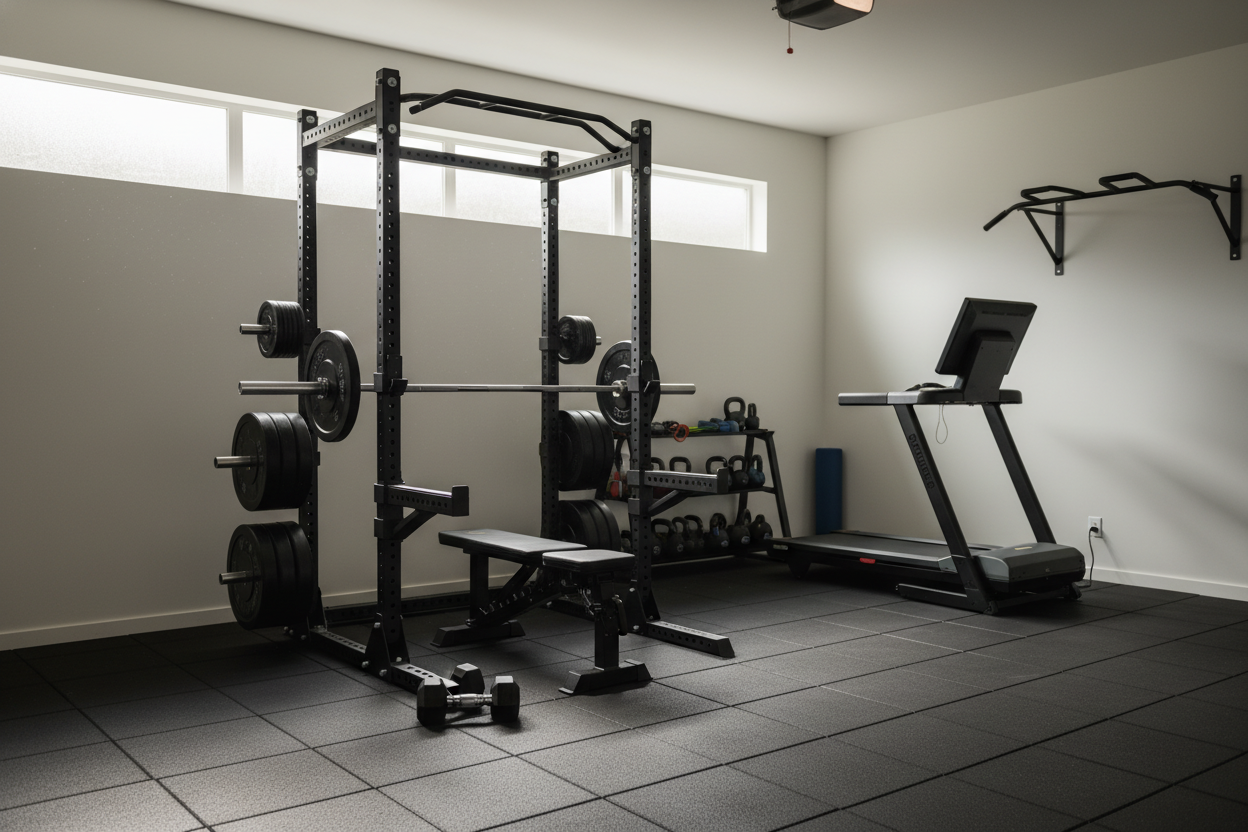
I’ve spent the last decade dragging cast iron into my garage and swearing at misaligned bolt holes. I know the exact smell of a fresh stall mat and the specific frustration of a freight driver refusing to bring a 400-pound pallet up a sloped driveway. Recently, I decided to see how the other half lives by calling up some companies that build home gyms to see if their turnkey promises match the massive price tags.
I reached out to three different providers to see what they’d charge to replicate my current setup. I wanted to see if the white-glove experience was actually a service for the elite or just a way to fleece people who don't own a socket wrench.
Quick Takeaways
- Expect a 30% to 50% premium over the retail price of equipment for project management.
- Custom flooring and lighting are the only areas where pros truly outshine a DIYer.
- Freight logistics are handled for you, saving hours of scheduling and heavy lifting.
- For most garage lifters, the design fee is a waste of money you could spend on a better barbell.
I Let the Pros Quote My Garage Setup
I sent my exact 20x20 garage floor plan to three national turnkey providers. I told them I wanted a four-post rack, a functional trainer, a full set of urethane dumbbells, and 8mm rubber flooring. I already knew the MSRP of this gear was roughly $8,500 if I clicked buy myself.
The quotes I got back were eye-watering. The lowest was $12,400, and the highest peaked at nearly $18,000 for custom branding and a specific lighting rig. It made me wonder if these services are worth the massive markup or if they just prey on people with more money than time.
What You Are Actually Paying For (The White-Glove Tax)
When you look at a professional quote, the equipment is rarely the most expensive line item. You’re paying for the logistics chain. This includes receiving the freight at a local warehouse, unboxing it, inspecting for shipping damage, and then truck-delivering it to your house in one go.
If you buy your own home gym gear, you are the warehouse. You have to be home for three different delivery windows, break down ten wooden pallets, and haul 1,000 pounds of steel from the curb to the garage. The builders charge about $1,500 to $3,000 just to take that headache away. They also tack on a design fee for a 3D render that looks cool but doesn't actually make your squats any heavier.
When Custom Home Gym Builders Actually Make Sense
I’ll be honest: there are times when I’d actually recommend custom home gym builders. If you’re doing a basement conversion that requires professional HVAC rerouting or you want flush-mounted flooring where the rubber meets the hardwood perfectly, call the pros. It’s also a safety play. If you’re installing a heavy Smith machine home gym station, having two or three guys who do this daily ensures the cables are tensioned right and the safety catches won't fail because you missed a washer.
Busy professionals who bill $500 an hour shouldn’t spend six hours building a power rack. For them, the math works. For the rest of us who enjoy the process of building the sanctuary, it’s a harder sell.
Why Most Lifters Should Just Buy the Iron Themselves
The average garage lifter has a specific budget. If you have $5,000 to spend, giving $2,000 of that to an installation crew means you’re settling for a cheap, bolt-together rack and iron plates that have a 5% weight tolerance. That’s a bad trade.
If you do the labor yourself, you can build the best home gym under 2000 and still have money left for a high-end barbell. Bolting a rack into concrete isn't rocket science; it's a Saturday afternoon and a rented hammer drill. Don't pay a premium for someone to do what you can learn on YouTube in ten minutes.
The Middle Ground: Hire Contractors, Not Gym Designers
If you want the gear but hate the labor, don't hire a gym design firm. Buy your specialized pieces, like a dedicated hip thrust machine or a selectorized cable tower, directly from the manufacturer. Most of these companies offer a room of choice delivery option for a couple hundred bucks.
Then, hire a local handyman or a couple of college kids to do the assembly. You’ll save the 40% project management fee and still keep your weekends free. You get the high-end equipment without the luxury lifestyle tax added to every bolt.
Personal Experience: My Pallet Nightmare
A few years back, I ordered a full functional trainer. It arrived on a double-wide pallet that the driver dropped at the end of my 50-yard driveway because his truck couldn't make the turn. It rained that night. I spent four hours in the dark, unboxing wet cardboard and carrying 20-lb guide rods one by one to the garage. That was the only moment I ever considered calling a pro builder. But once it was built, the pride of knowing I did it outweighed the backache.
FAQ
How much do gym builders charge for assembly?
Usually between 15% and 25% of the total equipment cost, or a flat rate of $150–$300 per major piece of equipment.
Do I need a professional to install gym flooring?
Only if you want seamless, wall-to-wall rubber that requires complex cuts around pillars or doorways. For a standard garage, stall mats from a farm supply store work fine.
Is the warranty better with a professional install?
Some companies offer an extended labor warranty if they build it, but the manufacturer's warranty on the steel remains the same regardless of who tightened the bolts.
Share:
The Truth About Finding the Best Adjustable Dumbbells Amazon Sells
Stop Pretending Free Weights Are Better Than Machines for Working Out