
I remember standing in my garage three years ago, staring at a 'total body' glider that I’d bought in a late-night moment of weakness. It took up six feet of floor space, squeaked like a dying bird, and provided about as much resistance as a stiff breeze. That is the reality of most types of exercise equipment for the home—it is designed to look good in a glossy catalog but fails the second you try to move real weight.
Quick Takeaways
- Free weights offer the highest ROI for your floor space and your bank account.
- If a piece of equipment claims to do 50 different exercises, it probably does all of them poorly.
- Safety is the most underrated spec; buy gear that won't collapse when you're pinned under a bar.
- Measure your ceiling height before buying any rack or functional trainer.
The Clutter Trap: Why Most Residential Gear Fails
The fitness industry loves a gimmick. They want to sell you a highly specific, single-use machine that targets your 'inner-left-oblique' because it’s easier to market than a heavy piece of iron. These gadgets usually end up as expensive laundry racks within six months.
When you are looking at different types of home exercise equipment, the goal should be versatility. You want tools that allow for compound movements—squats, presses, pulls. If a machine locks you into a weird, non-human path of motion, skip it. Your joints will thank you later.
Free Weights: The Undisputed Kings of the Garage
If I had to start over with zero gear, I’d buy a set of adjustable dumbbells and a kettlebell. That is it. Free weights force your stabilizer muscles to actually do some work, which is why they are the gold standard for building a physique that actually functions in the real world.
A pair of 50-lb dumbbells takes up about two square feet of space but offers thousands of workout variations. For those just starting out, focusing on basic exercise equipment for home like a solid bench and some iron plates is the smartest move you can make. You don't need a chrome-plated 100-piece set; you need enough weight to make the last rep of a set of ten feel like a struggle.
Power Racks: The Anchor of Any Serious Setup
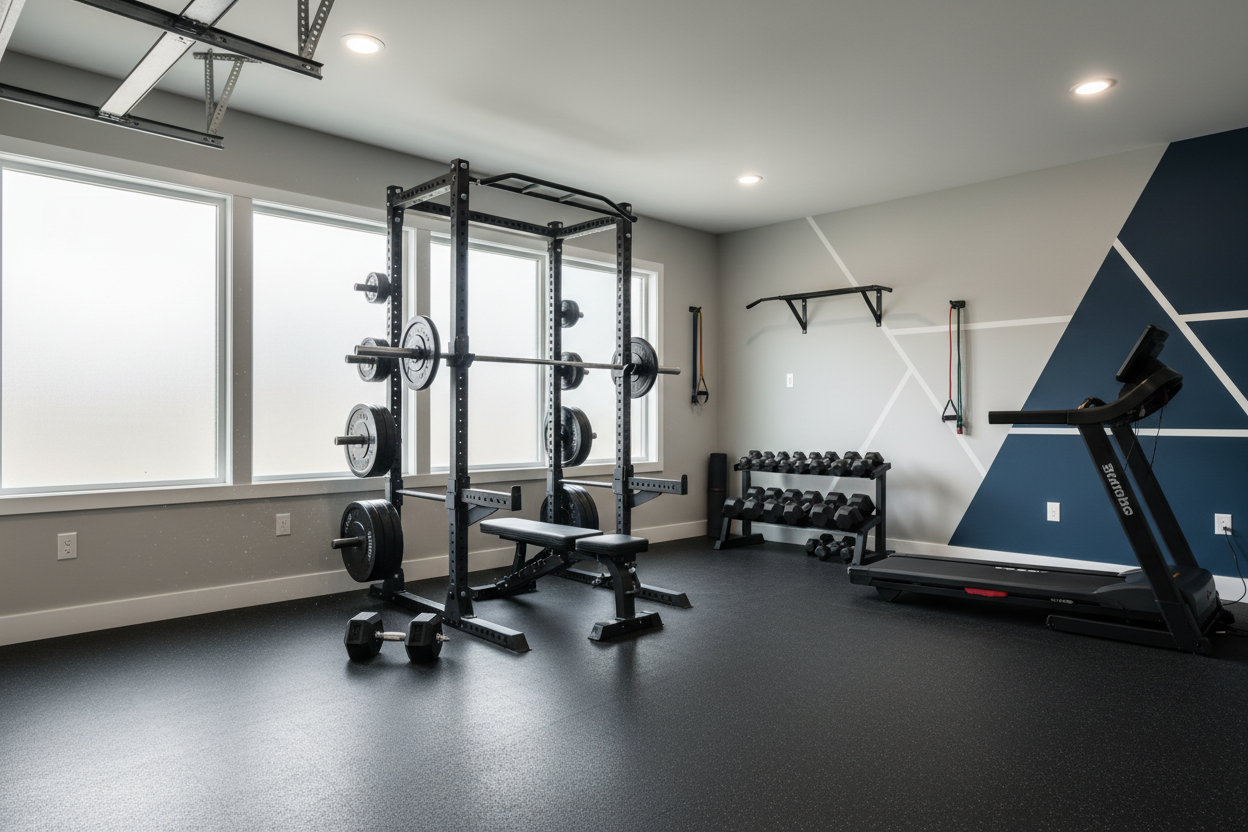
If you plan on squatting or benching heavy without a spotter, a power rack is your insurance policy. I’ve seen cheap, thin-walled racks wobble under a 225-lb load, and it is terrifying. Look for at least 11-gauge or 14-gauge steel with 2x3 or 3x3 posts.
A rack is the literal foundation of building a home gym that lasts a lifetime. It’s where you’ll do your pull-ups, your squats, and your overhead presses. It keeps the barbell off your neck if you fail a rep. If you have the footprint—usually about a 4x4 area—don't settle for a flimsy squat stand.
All-In-One Trainers: Are They Actually Worth the Footprint?
Functional trainers and multi-gyms are the heavyweights of the home gym world. They are expensive and they are massive. The trade-off is convenience; you can switch from a chest fly to a cable row in three seconds. However, cheap cable systems often feel 'crunchy' because they use plastic pulleys instead of aluminum.
If you want the safety of a machine but the versatility of a rack, a Smith machine home gym station is a solid middle ground. It allows you to push to failure on movements like incline press without needing a human standing behind you. Just make sure the linear bearings are high-quality, or the bar will catch and ruin your rhythm.
Cardio Machines: Getting Your Heart Rate Up Without Wasting Space
Most people buy a treadmill, use it for two weeks, and then realize they hate running in place. If you have a massive basement, fine. If you’re in a spare room or a tight garage, you need to be smarter. I prefer air bikes or rowers because they are 'work-dependent'—the harder you push, the harder they resist.
If you just need to get the blood moving while watching a game, a foldable upright exercise bike is the way to go. You can tuck it into a closet when you're done. It doesn't need to be a $2,000 smart-bike with a monthly subscription; it just needs a smooth flywheel and a seat that doesn't feel like a brick.
Final Verdict: How to Audit Your Own Training Needs
Stop buying gear for the person you 'hope' to become and start buying for the workouts you actually do. If you haven't run a mile in five years, don't buy a $3,000 treadmill. Start with a kettlebell and a sandbag. Build the habit first, then buy the heavy iron.
My biggest mistake was buying a cheap, bolt-together bench that felt like it was going to tip over every time I did a dumbbell press. I saved $50 and lost my confidence on every heavy set. Buy the best gear you can afford, even if it means your gym takes longer to finish. Quality steel doesn't lose its value.
FAQ
Is a Smith machine better than a power rack?
Neither is 'better,' but they serve different roles. A power rack is for raw strength and stability. A Smith machine is great for hypertrophy and training to failure safely. If you have the space, a combo unit is the dream.
How much space do I really need?
For a basic barbell setup, you need an 8-foot wide area to accommodate a 7-foot Olympic bar. For a compact dumbbell setup, a 6x6 rug is plenty.
Should I buy iron or rubber-coated plates?
Iron plates are thinner, so you can fit more on the bar, and they have that classic 'clink' sound. Rubber-coated (bumper) plates are better if you're training on a concrete floor and don't want to wake the neighbors.
Share:
Why the Best Home Gym Ideas Start With Structural Math
I Built a Gym Around a Body Solid Smith Machine With Lat Pulldown