
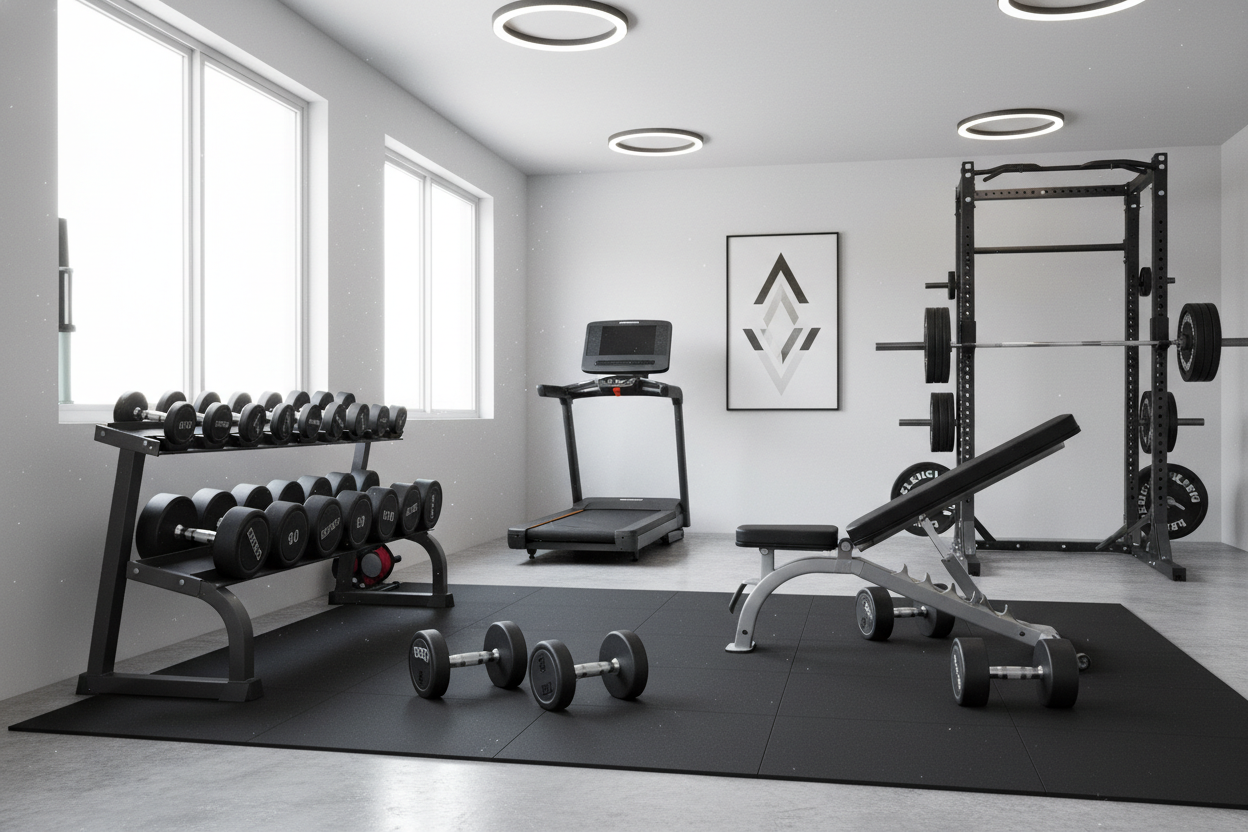
The sound wasn't a normal thud. It was a sharp, metallic crack that echoed through my garage like a gunshot. I was finishing a heavy set of chest presses with what I thought were good enough 80-pounders. I dropped them from about a foot off the ground—standard procedure for a heavy set—and watched in horror as the head of the right dumbbell literally sheared off the handle and rolled toward my water heater. That was the day I realized my budget commercial dumbbells were actually just expensive paperweights waiting to fail.
- Welded Construction: Commercial gear is friction-welded, meaning the head and handle are one piece.
- Urethane vs. Rubber: Urethane doesn't smell like a tire fire and won't crack after two years.
- Handle Precision: Expect 32mm straight handles with consistent knurling, not tapered chrome that gets slippery.
- Safety: If you lift heavy, a snapped handle isn't just an inconvenience; it is a trip to the ER.
The Breaking Point: How I Destroyed My 'Budget' Weights
I spent years trying to save a buck. I scoured marketplaces and big-box stores, convinced that iron is iron. I was wrong. The 80-pounder that failed me was a cheap cast iron hex dumbbell with a threaded handle. When it snapped, I saw the truth: the 'solid' iron was actually porous and full of air pockets. It was brittle garbage masquerading as strength equipment.
After that near-miss, I went down a rabbit hole of metallurgical specs and manufacturing processes. I Finally Built A Weight And Dumbbell Set That Doesnt Suck only after I stopped looking for the lowest price and started looking for the highest safety rating. If you are moving anything over 50 pounds, the structural integrity of the weight becomes a safety issue, not just a quality one.
What Actually Makes Commercial Dumbbells Different?
When you walk into a high-end athletic club, you aren't seeing the same Dumbbells you find at a local department store. True commercial weights are built to a different standard. The most obvious difference is the weight tolerance. Cheap weights can be off by as much as 5% to 10%. A '50-lb' dumbbell might actually weigh 46 pounds on one side and 52 on the other. Commercial sets usually have a +/- 1% tolerance.
Then there is the handle. Most consumer-grade weights use a contoured, tapered handle with thin chrome plating. It feels okay for a few reps, but once you start sweating, it turns into a bar of soap. Professional gear uses a straight 32mm handle with consistent, medium-grade knurling. It bites into your hand just enough to stay secure without tearing your skin off during high-rep sets.
The Truth About Pinned vs. Welded Construction
This is where the rubber meets the road—literally. Most mid-tier dumbbells use a pinned construction where the head is pressed onto the handle and secured with a metal pin. Over time, that pin bends. The head starts to rattle. Eventually, it fails. Commercial dumbbell sets in the top tier use friction welding. This process uses high-speed rotation to fuse the metal together at a molecular level. It is physically impossible for the head to come off because it is no longer two separate pieces of metal.
Are Full Commercial Dumbbell Sets Overkill for a Garage?
Let's talk about the elephant in the room: cost and space. A full 5-100 lb set of urethane commercial weights can easily run you $4,000 to $7,000 and requires about 10 feet of wall space for a three-tier rack. For most garage gym owners, that is overkill. I didn't buy a full set of the expensive stuff. Instead, I bought a Rubber Hex Dumbbell Set Ds01 for my 5-lb to 50-lb range, where dropping isn't as violent and the stress on the handles is lower.
I saved my 'premium' budget for the heavy pairs—the 70s, 80s, 90s, and 100s. These are the weights that take the most abuse and pose the highest risk if they fail. By mixing and matching, I got the safety of commercial gear where it mattered most without spending five figures on a rack that takes up half my floor space.
The Verdict: Who Should Actually Pay the Premium?
If you're just starting out or mostly doing lateral raises and curls, you don't need to spend the premium on urethane-welded monsters. But if you are doing heavy overhead presses, renegade rows, or any movement where the weight is over your face or under high impact, you need to prioritize construction. Stop Forcing Dumbbell Lifts 5 Weight Machine Exercises You Need if you find yourself reaching for heavy weights that feel 'sketchy' or loose.
Invest in quality for your 'working sets' and go cheap on the accessories. Your collarbones and your floor will thank you. Commercial gear isn't just about the flex; it's about knowing that when you drop a hundred-pounder, it’s going to bounce, not break.
FAQ
Do urethane dumbbells smell?
No. Unlike cheap rubber hex weights that can make your garage smell like a tire shop for six months, urethane is chemically stable and completely odorless.
Can I drop commercial dumbbells on concrete?
You shouldn't drop any weight on bare concrete if you want it to last, but commercial urethane weights are designed to handle the impact much better than cast iron, which can crack or chip.
Why are commercial handles thicker?
Most pro sets use a 32mm handle because it provides more surface area for your grip, which reduces hand fatigue and increases safety during heavy pressing movements.
Share:
How I'd Build a Beginner Weight Set for Teenager Lifters Today
The Brutal Truth About Buying a Home Gym Machine Used