
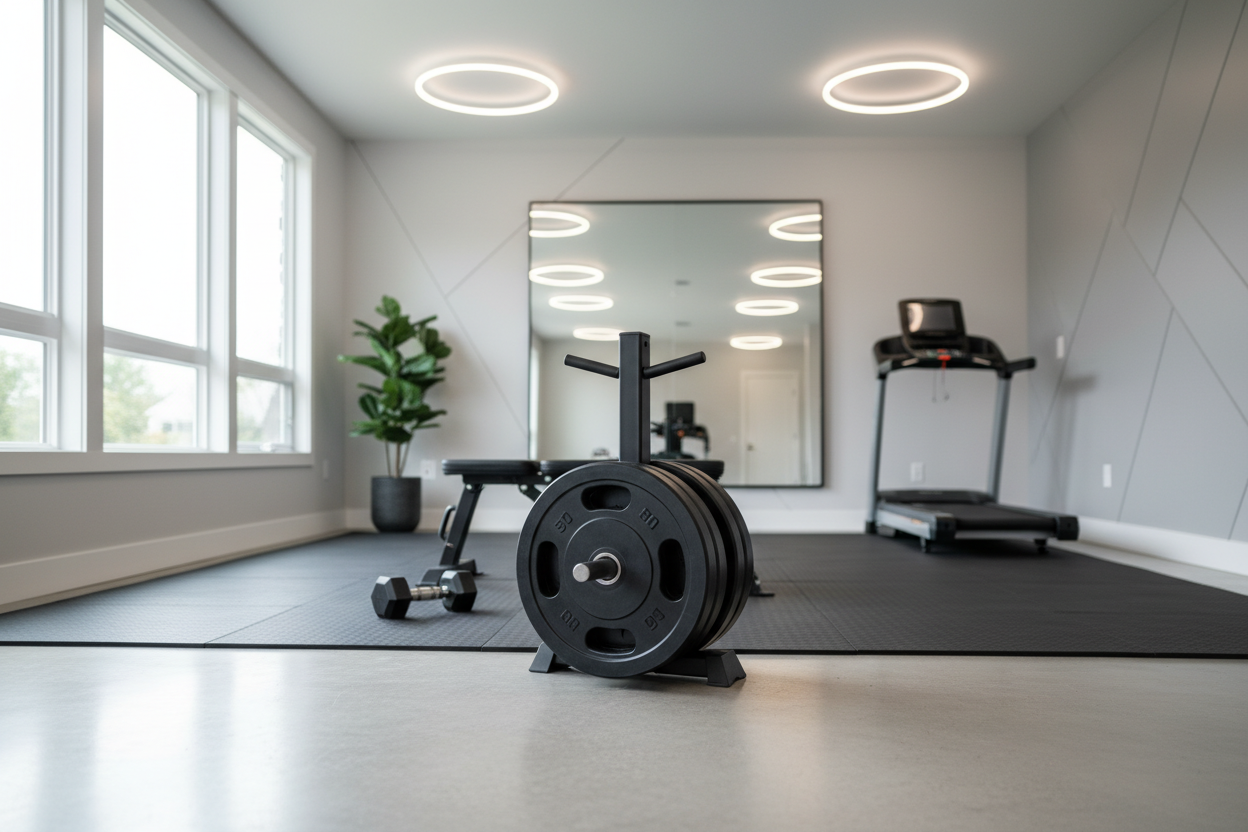
I remember my first home gym 'win.' I found a guy on Craigslist selling 300 lbs of iron for fifty bucks. I hauled it home, tried to slide a 45 on my new Olympic bar, and realized the hole was way too small. I had bought standard 1-inch plates for a 2-inch sleeve. It was a rookie move that cost me a week of training and a tank of gas. Since then, I have personally tested almost every style of iron and rubber under the sun. Choosing the right types of weight plates is not just about aesthetics; it is about whether you are going to crack your foundation or run out of room on your barbell sleeves before you hit your PR.
Quick Takeaways
- Cast Iron: Best for pure powerlifting and budget builds. They take up the least space on the bar but are loud and prone to rust.
- Bumper Plates: Mandatory if you do cleans, snatches, or overhead work. They protect your floor and your bar.
- Urethane: The luxury choice. Zero smell, nearly indestructible, and consistent weight accuracy.
- Machined Iron: The middle ground for people who want precision without the bulk of rubber.
I Bought the Wrong Plates So You Don't Have To
That Craigslist disaster was my entry into the world of 'Standard' vs. 'Olympic' equipment. Standard plates have a 1-inch hole and are meant for those skinny bars you see at big-box retailers. If you are serious about lifting, you want Olympic plates with a 2-inch center hole. Anything else is basically a paperweight once you upgrade to a real barbell.
I spent months trying to make those cheap plates work before finally admitting defeat. I realized that the different types of weight plates you choose dictate what kind of training you can actually do. You cannot drop iron plates from overhead without a death wish for your concrete floor, and you cannot fit 500 lbs of thick, cheap bumpers on a standard bar sleeve. I learned the hard way that saving fifty bucks upfront often costs you hundreds in the long run.
Wait, What Are the Circle Weights Called, Anyway?
If you are new to the iron game, you might be asking what are the circle weights called? In most gyms, they are just plates or discs. In the competitive world, especially in IWF circles, they are almost exclusively referred to as 'discs.' For those just starting their home gym journey, check out this quick guide to the name of weights to get the lingo down.
Beyond the basic name, you have fractional plates (the tiny ones under 1 lb), change plates (usually 1.25 lb to 5 lb), and full-sized plates. Understanding these different weight plates is the first step to building a rack that functions for your specific programming. You do not want to be stuck trying to hit a 5-lb PR when your smallest plate is a 10-lb disc.
The Different Types of Weight Plates I've Actually Tested
I have loaded my bar with everything from rusted 'deep dish' iron to high-end competition bumpers. Each has a specific utility. You would not use a sledgehammer to hang a picture frame, and you should not use iron plates for high-rep CrossFit WODs where the bar is constantly hitting the deck.
Cast Iron: The Loud, Old-School Standard
Cast iron is the backbone of the iron game. They are thin, which means you can stack 600+ lbs on a barbell without running out of sleeve space. They also make that satisfying 'clank' that makes you feel like you are training in a dungeon gym. The downside? They rust if your garage is damp, and the weight tolerance is often trash. A '45 lb' plate from a budget brand might actually weigh 43 lbs or 47 lbs, which messes with your training percentages.
Bumper Plates: The Garage Gym Savior
Bumpers are made of high-density rubber with a steel insert. They are all the same 450mm diameter, regardless of weight, which keeps the bar at a consistent height for pulls. I always recommend durable weight plates made of virgin rubber because they have a consistent dead bounce. Recycled 'crumb' rubber plates bounce like a superball, which is a great way to take a barbell to the shins during a missed lift.
Machined vs. Urethane: The Premium Upgrades
Machined plates are iron plates that have been milled down to a specific weight, usually within 10 grams of the target. They fit the bar tighter and do not rattle as much. Urethane plates are the gold standard. They do not smell like a tire shop, they do not scuff, and the coating is much tougher than standard rubber. If you have the budget to 'buy once, cry once,' urethane is the undisputed winner for longevity.
What Are Weight Plates Made Of? (And Why It Matters)
When asking what are weight plates made of, you are usually looking at cast iron, steel, or rubber. The material impacts the 'thickness' of the plate. Virgin rubber is denser and thinner than crumb rubber. This matters because if your 45lb bumpers are 4 inches wide, you will only be able to fit about 405 lbs on most bars. If you are a heavy deadlifter, that is a major limitation.
Is It Safe to Mix Different Weight Plates on the Same Bar?
I get this question all the time: 'Can I put my iron 25s outside my bumper 45s?' If you are benching on a sturdy adjustable weight bench, it is perfectly fine. The weights aren't hitting the floor, so the material doesn't matter. But for deadlifts, cleans, or snatches? Never. The iron plates are smaller in diameter, so when you drop the bar, the bumpers take 100% of the force. This will warp the steel inserts and eventually ruin your expensive bumpers.
My Final Verdict: Which Plates Should You Buy?
If you are a pure powerlifter on a budget, buy iron. If you do any Olympic lifting or CrossFit, you need at least a base set of bumpers. My personal setup? I use 45lb bumpers as my base and add machined iron plates for anything over 225 lbs. It keeps the noise down but keeps the bar profile thin enough for heavy pulls. Do not overthink it—just make sure they fit your bar and your floor can handle the impact.
FAQ
Do bumper plates fit on standard barbells?
No. Bumper plates have a 2-inch hole designed for Olympic barbells. Standard bars (1-inch) are too small and the plates will slide around dangerously.
Why are some 45lb plates bigger than others?
Iron plates vary in size based on weight. Bumper plates are designed to be a uniform 450mm diameter so the bar sits at the correct height for deadlifts and cleans regardless of the load.
Will iron plates damage my bar?
Not usually, but cheap iron plates with rough center holes can scratch your barbell's sleeves over time. Machined plates or those with stainless steel inserts are much smoother on your gear.
Share:
Can Compact Muscle Building Machines Actually Deliver Real Size?
Why the Best At Home Total Body Workout Ignores Muscle Splits