
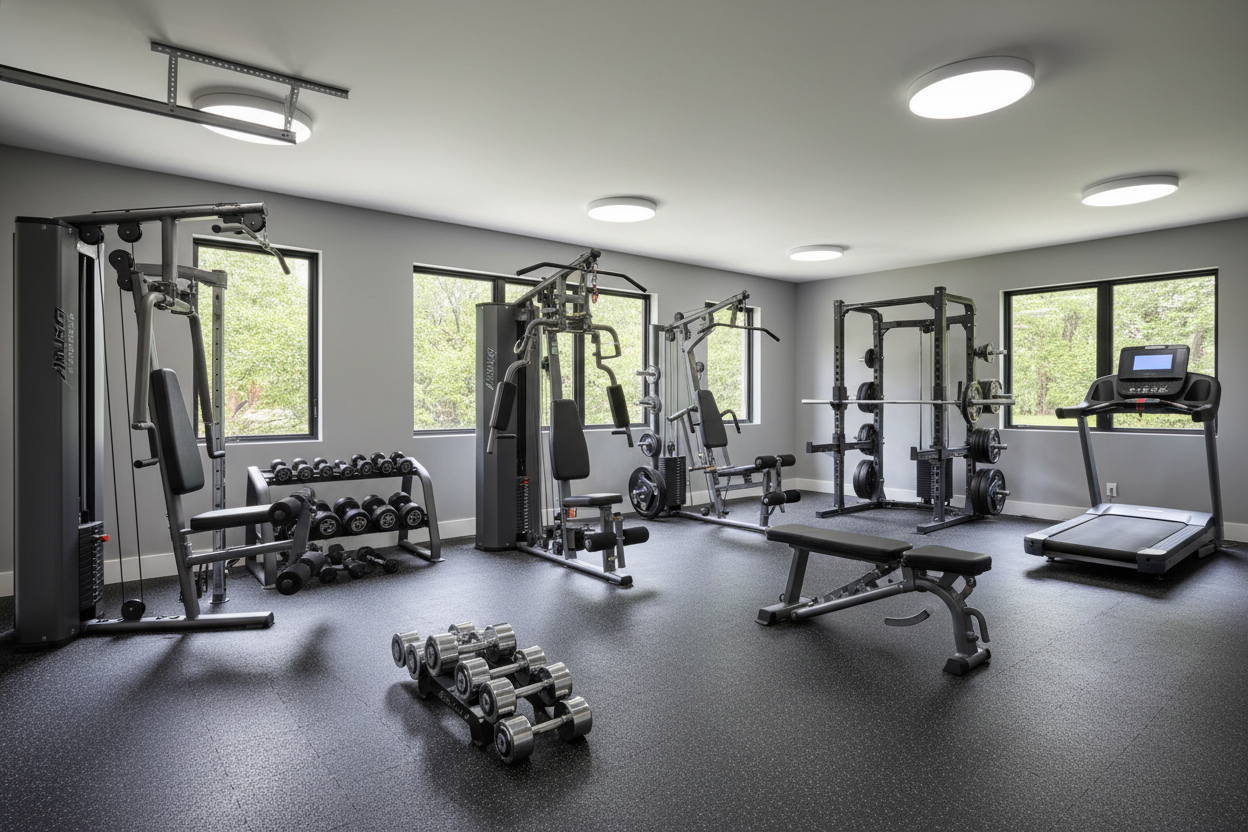
I remember the exact moment I gave up on commercial gyms. It wasn't the smell or the music; it was the 'Out of Order' sign taped to the only functional cable crossover for the third week in a row while the manager told me rates were going up. I went home and spent six hours researching weight lifting machines for home. I thought I'd buy one rig, park it in the garage, and be set for life. Seven machines and three years of trial-and-error later, I realized most 'all-in-one' systems are built for people who use them as laundry racks, not for people who actually lift heavy.
Quick Takeaways
- Most multi-station rigs compromise on biomechanics to fit more features into a small footprint.
- Plate-loaded machines offer a more 'raw' feel and higher weight capacity than cheap selectorized stacks.
- Always check your pulley ratios; a 2:1 ratio means you are only lifting half the weight on the stack.
- Independent arm movement is essential to prevent muscle imbalances and joint strain.
The 'Do-It-All' Trap: Why Most Multi-Station Rigs Feel Terrible
The marketing for a typical home gym system workout station is seductive. They promise 50 exercises in a 4x4-foot space. But here is the reality: when you try to make one pivot point work for a chest press, a row, and a leg extension, you end up with a machine that does none of them well. I have sat on machines where the 'chest press' started so far behind my shoulders that I felt a pec tear coming on before the first rep. Others have leg developers that hit your mid-shin instead of your ankles because the frame is too short for anyone over 5'9'.
Cheap weight systems for home gym use often rely on thin 14-gauge steel. When you are pushing 200 pounds, that steel flexes. You can feel the frame shifting under you, which is the last thing you want when you are training to failure. These units use plastic bushings instead of ball bearings, leading to a 'stuttering' movement that kills your mind-muscle connection. If the machine feels like it is fighting you rather than the weight, it is a lemon. I have wasted plenty of Saturday mornings assembling these 500-piece puzzles only to realize the range of motion was designed by someone who has never touched a barbell.
Leverage vs. Cables: Choosing Your Home Weight System
When you are looking for a weight machine for home, you generally have two choices: cables or leverage arms. Cables provide constant tension, which is incredible for accessory work and isolation. However, a high-quality selectorized home weight system with a 200-lb stack and smooth travel usually starts at a price point that makes most people flinch. If you go cheap on cables, you get 'sticky' travel and cables that jump off the tracks.
This is why I eventually transitioned toward leverage-based machines. Leverage arms use physical pivot points and weight pegs for plates. They feel more 'industrial' and mimic the strength curve of free weights much better than a low-end cable system. There is a reason many serious lifters eventually look for a simple free weight home gym system. You get the safety of a machine with the raw, heavy feedback of iron. Plus, leverage machines have fewer moving parts to break. No cables to snap, no pulleys to crack—just steel and plates.
If you prefer the versatility of cables for face pulls and lat pulldowns, you need to be prepared to maintain them. I spent months lubing guide rods on a mid-range gym system for home just to keep the weight stack from sticking halfway through a rep. In contrast, my plate-loaded leverage rig has required zero maintenance in two years. It just works.
Why Pulley Ratios Are Lying to You
You see a home weight lifting gym advertised with a 300-lb weight stack and think, 'That is plenty.' Not so fast. Most home units use a 2:1 pulley ratio. This means for every 10 pounds on the stack, you only feel 5 pounds of actual resistance. It makes the weight move twice as far, which is great for functional movements, but it effectively halves your strength ceiling. I once bought a 'heavy' home weight system only to find I could max out the entire stack on tricep pushdowns within a week. If you are a strong lifter, look for 1:1 ratios or plate-loaded systems where the math is honest.
The Independent Arm Advantage
One of the biggest mistakes I made early on was buying a machine with a fixed, single-bar press arm. If your left side is weaker than your right (and it probably is), the dominant side will take over the lift. Over a year of training, this led to a noticeable imbalance in my physique and a nagging pain in my right rotator cuff. Fixed-path machines don't care about your specific limb lengths or joint health; they force you to follow their track.
Now, I won't buy anything that doesn't offer unilateral movement. Using something like the Weight Bench Chest Press Machine Independent Arms Z1 Pro changed the way I train at home. Independent arms force each side of your body to carry its own weight. It mimics the freedom of dumbbells but with the stability and safety of a machine. If you are serious about building a home weight lifting gym, independent arms are a non-negotiable feature. They allow for a converging movement pattern—meaning the handles come together at the top of the rep—which is how your chest muscles actually want to contract.
Is a Smith Machine the Ultimate Compromise?
The Smith machine gets a lot of hate from 'purists,' but in a home setting where you often train alone, it is a godsend. A Smith Machine Home Gym Station serves as a built-in spotter. You can squat, press, and lunge to absolute failure, and with a quick flick of the wrist, the bar is locked and safe. It is the ultimate multi use home gym equipment for the solo garage athlete.
The key is finding a Smith machine that uses linear bearings rather than cheap plastic rollers. I tested a hybrid rack that felt like sliding a pipe through sand. It was miserable. But a high-quality Smith station with a counterbalanced bar feels weightless and smooth. It allows you to focus entirely on the muscle rather than stabilizing the load, which is why bodybuilders have used them for decades. If you have limited space and can only fit one large piece of equipment, a hybrid Smith machine with a built-in cable system is usually the smartest use of floor space.
My 3 Non-Negotiables for Buying a Gym System for Home
After assembling, testing, and eventually selling off half a dozen rigs, I have narrowed my criteria down to three points. First: 11-gauge steel. If the manufacturer doesn't list the gauge, it is probably 14-gauge (thinner). 11-gauge is what you find in commercial gyms; it is heavy, it doesn't vibrate, and it lasts forever. Second: Aluminum pulleys. Plastic pulleys are the first thing to fail on any home gym weight system. They crack under heat and friction. Aluminum is a 'buy once, cry once' upgrade.
Third: A footprint that actually fits your life. A home gym weight system might look small in a 20,000-square-foot warehouse photo, but in a 10x12 spare bedroom, it's a monster. I always tell people to tape out the footprint on their floor with blue painter's tape before clicking buy. Don't forget to account for the 'working space'—you need room to load plates and move around the machine without hitting a wall.
The Final Verdict on Which Rig Stayed in My Garage
The rig that finally survived my purge wasn't the one with the most bells and whistles. It was the one that felt the most solid. I eventually settled on a heavy-duty leverage system with independent arms and a high-quality cable attachment for lat work. It doesn't do 50 exercises; it does 10 exercises perfectly. If you are ready to stop wasting money on flimsy equipment and start building a real Home Gym, prioritize build quality over the number of attachments. You want a machine that challenges you, not one that annoys you every time you sit down to train.
FAQ
Do home weight machines require a lot of maintenance?
If you buy a cable-based system, you'll need to lubricate the guide rods with silicone spray every few months and check for cable fraying. Plate-loaded leverage machines are almost maintenance-free—just keep the dust off them.
Can I build as much muscle with a machine as with free weights?
Absolutely. Your muscles don't know the difference between a 45-lb plate on a bar and a 45-lb plate on a lever arm. Machines are actually better for hypertrophy in many cases because they allow you to push to failure more safely.
Are 'all-in-one' machines worth the money?
Only if you buy a high-end version. The cheap ones try to do too much and end up being 'jack of all trades, master of none.' If you have the budget, buy a dedicated rack or a high-quality Smith station instead.
Share:
I Refuse to Recommend a Cheap Olympic Bar and Weights Set
Why I Actually Use 17.5 lb Dumbbells More Than My 20s