
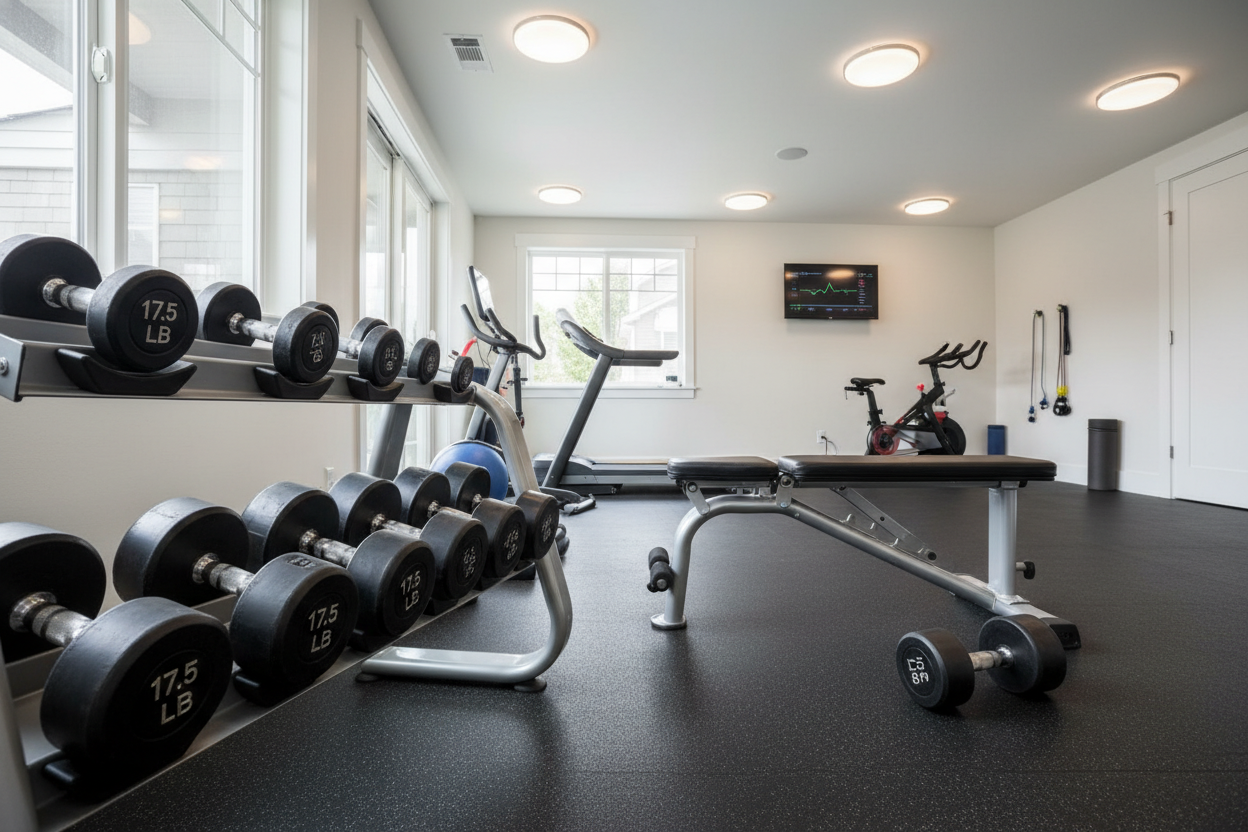
I remember the exact Tuesday my ego took a hit. I was cruising through lateral raises with 15s, feeling like a Greek god, until I tried to jump to the 20s. My form immediately went from 'pro athlete' to 'wounded bird flapping for its life.' That is the day I realized that 17.5 lb dumbbells aren't just for people who can't commit—they are the secret to actually growing your shoulders without trashing your joints.
- The 5-pound jump from 15 to 20 is a massive 33% increase in load.
- Isolation movements like rear delt flyes and lateral raises fail instantly when you over-weight them.
- A 17.5 lb weights set provides the micro-loading necessary for hypertrophy.
- Fixed rubber hex is superior for supersets, but adjustables save your floor space.
The Brutal Math of a 5-Pound Jump
In the strength world, we treat five pounds like a rounding error. If you are squatting 400, adding five pounds is barely a 1% change. But in the world of isolation, that math is a nightmare. Moving from 15 to 20 pounds is a 33% spike. Imagine trying to increase your bench press by 33% in one week. You would end up in the ER.
This is where the 17.5 pound dumbbell becomes your best friend. It bridges that gap, turning a 33% jump into a manageable 16% increase. It sounds small, but that difference is what keeps your traps from taking over the movement and keeps the tension exactly where you want it. I have seen too many guys stall for months because they refuse to buy a 17 lb dumbbell, thinking they can just 'power through' the 20s. They can't.
The Lifts That Actually Need Micro-Jumps
If you are doing heavy rows or goblet squats, you don't need 17.5 weights. But for the 'pretty muscles'—the ones that require strict form—these are non-negotiable. I use my 17.5 lb dumbbells set of 2 for high-volume lateral raises and face pulls. These muscles are small; they don't have the leverage to handle massive jumps without recruiting every other muscle in your upper body.
When you are expanding your dumbbell collection, you have to prioritize the weights where your progress usually hits a wall. For me, that is always the 15-to-25 range. Strict curls and rotator cuff work also benefit from this. Using 17 lb weights allows you to maintain a slow eccentric phase, which is where the real muscle growth happens anyway.
Fixed Hex vs. Adjustables for Odd Weights
I have a love-hate relationship with adjustable dumbbells. On one hand, dialing in an adjustable set that offers 2.5-lb increments is a lifesaver for small garage gyms. It keeps the clutter down and gives you every weight from 5 to 50. If you are on a budget or working in a 10x10 spare bedroom, that is the play.
However, there is something to be said for a fixed rubber hex 17.5 pound dumbbell. When I am mid-superset, I don't want to fiddle with a dial or a pin. I want to drop the 20s and immediately grab the 17.5s. Fixed dumbbells are more durable—you can drop them (within reason) and they don't have plastic gears that might shatter. If you find yourself reaching for dumbbells 17.5 every single workout, buy the fixed pair. Your sanity is worth the extra fifty bucks.
Are Half-Sizes Just Expensive Clutter?
I get the minimalist argument. You want a clean rack with nice, even numbers. But 'clutter' is only clutter if you don't use it. In a proper hypertrophy program, you are constantly chasing that sweet spot of 8 to 12 reps. If you can do 12 reps with 15s but only 4 reps with 20s, you are stuck in no-man's-land. You aren't getting the volume you need.
The truth is, you don't need a massive commercial rack to see results. You just need the right tools for the job. A 17.5 lb weights set might look 'odd' on the rack, but it will be the most-used pair in your gym for everything from rear delt work to overhead extensions. Stop worrying about the aesthetics of your weight rack and start worrying about the stimulus you're giving your muscles.
My Personal Experience
I spent two years trying to master the 20-lb lateral raise. I cheated, I swung, and I eventually developed a nagging pain in my left AC joint. I finally swallowed my pride and bought a pair of 17.5s. Within three weeks, the pain was gone because I was actually using my delts instead of my momentum. My only regret was waiting so long because I thought half-sizes were for 'beginners.' I was wrong—they are for people who actually want to progress.
FAQ
Can I just use wrist weights instead of buying 17.5s?
You can, but it is clunky. Adding a 2.5-lb wrist weight shifts the center of gravity and feels awkward during rotations. A dedicated 17.5 lb dumbbell is balanced and much safer for your wrists.
Is a 17 lb dumbbell the same as a 17.5?
Usually, when people search for 17 pound dumbbells, they are actually looking for the 17.5 standard. Most manufacturers stick to 2.5-lb increments (12.5, 15, 17.5, 20). If you find a true 17, go for it, but 17.5 is the industry standard.
Should I buy iron or rubber hex for 17.5s?
Go rubber hex. They don't roll away when you set them down between sets, and they are much quieter if you're training in a garage or apartment early in the morning.
Share:
I Tested 7 Weight Lifting Machines for Home (And Kept Just One)
Stop Staring at Dumbbells: Use Beginner Gym Workout Machines Instead