
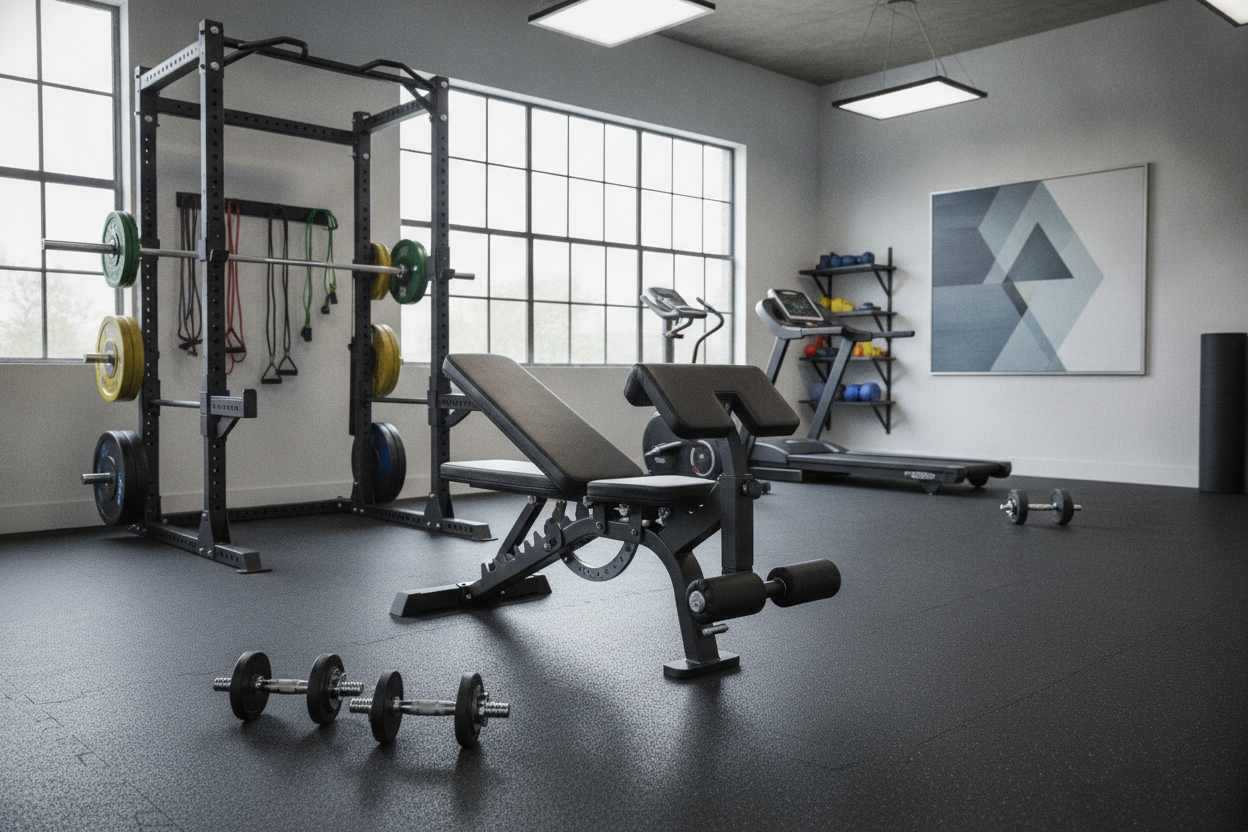
I remember the day I thought I could save $2,000 and 50 square feet by buying every possible accessory for my cheap incline bench. I ended up with a pile of scrap metal that wobbled like a drunk toddler. If you're looking for a weight bench attachment, you're likely trying to maximize a small space, but most of these 'all-in-one' solutions are biomechanical nightmares.
- Most attachments have terrible leverage and strength curves.
- If your bench isn't heavy (75lb+), adding a front-loaded attachment is a tipping hazard.
- Preacher curl pads are the safest bet for stability.
- Leg developers are okay, but rarely match the feel of a commercial machine.
The Dirty Secret About Modular Bench Add-Ons
The dream is simple: one footprint, ten exercises. You see the glossy photos of a guy doing lat pulldowns, leg extensions, and chest flies all on one piece of equipment. The reality is 1-inch thin foam rollers that bruise your shins and a 'lat tower' that feels like dragging a brick through gravel.
Most modular systems use a single pop-pin to hold 100+ pounds of leverage. Physics doesn't like that. When you're mid-set, that tiny bit of 'play' in the attachment receiver translates into a wobbly, distracting mess. You end up spending more energy stabilizing the equipment than actually taxing your muscles.
The 'Must-Have' Attachments That Actually Suck
Marketing photos show guys with 20-inch arms using fly attachments. In reality, those pivoting arms never line up with your actual shoulder joint. The resistance is usually highest at the start and drops to zero at the top—exactly the opposite of what you want for chest hypertrophy.
If you want machine-style chest isolation, you need a bench with independent pressing arms, not a flimsy plug-in fly attachment that puts all the tension on your tendons instead of your pecs. The same goes for most lat towers that plug into the front; the cable angle is usually so awkward you're basically doing a weird, upright row instead of a true pulldown.
The Only Two Attachments I Actually Recommend
I've owned six different modular benches over the last decade. Only two attachments have stayed in my rotation because they actually replicate the feel of a standalone machine without taking up a 4x6 foot footprint.
The Preacher Curl Pad (If Built Right)
It's hard to mess up a pad, but most companies try. You need a post that fits the receiver with zero 'slop.' If the pad swivels mid-set, you're begging for a wrist strain. Look for high-density foam that doesn't bottom out under a 100-lb EZ-bar. A good preacher attachment should have a wide enough pad so your elbows don't slide off when you're grinding out those last few reps.
The Leg Extension and Curl (With One Major Caveat)
This is the holy grail of home gym accessories, but it's rarely perfect. The pivot point must align with your knee joint. If it's too low, the roller will crawl up your shins, making 50 lbs feel like 100 lbs of friction. Also, check the weight sleeve length; if it's only 8 inches, you'll run out of room for iron plates fast.
While these are okay for isolation work, you might find compact leg press attachments or dedicated machines offer a better range of motion for heavy lifting. Most bench-mounted leg developers struggle with the 'drop off' at the top of a leg extension where the tension just disappears.
Your Attachment Is Only as Good as Your Base
You can't put a Ferrari engine in a lawnmower. If you're loading 150 lbs onto a leg developer, that weight is hanging way off the front of your frame. A lightweight, 40-lb bench will tip over the second you sit down. It's basic physics: the center of gravity shifts too far forward.
You need a heavy-duty adjustable weight bench with a wide front stabilizer and at least 11-gauge or 12-gauge steel. If your current frame is made of thin tubing and shakes when you just sit on it, stop buying accessories. You're better off upgrading your weight bench to a commercial-grade foundation first. A solid base makes every attachment feel 50% more stable.
Personal Experience: The Catapult Incident
I once tried a 'lat tower' attachment that plugged into a 2x2-inch bench I bought on clearance. The first time I loaded 150 lbs and reached up to grab the bar, the entire bench tilted forward. The weight stack nearly took out my water heater. I learned that day: if the attachment weighs more than the bench, you're building a catapult, not a gym. Always check the footprint before you load the plates.
FAQ
Will any attachment fit my bench?
No. Most use 2x2 or 3x3 posts, but hole spacing and pin sizes vary by brand. Always measure your receiver opening before buying.
Are they worth the money?
Only if you have zero space for dedicated machines. They are a compromise, not a replacement for commercial equipment.
Can I use Olympic plates?
Most attachments come with 1-standard posts for standard plates. You'll usually need to buy a plastic adapter sleeve to keep your 2-inch Olympic plates from rattling around.
Share:
I Found a Machine Similar to Elliptical That Doesn't Suck
Are the Articulated Arms on the Hoist V3 Actually Worth the Cash?